
In 2026, brands face a media landscape that is more competitive and data-driven than ever. Success hinges on mastering media leads, as they now drive sales pipelines and deliver measurable marketing ROI.
Traditional approaches no longer guarantee results. Evolving platforms, stricter privacy rules, and AI-driven targeting have transformed how media leads are generated and converted.
This guide will uncover the most effective strategies, tools, and frameworks for consistently attracting and converting high-value media leads.
Ready to take control? Dive in to discover proven steps for dominating media lead generation, from channel selection to AI-powered optimization.
You will find a complete roadmap for media leads success in 2026, including emerging trends, targeting strategies, multi-channel tactics, advanced measurement, and expert growth tips.
The Evolving Landscape of Media Leads in 2026
The world of media leads is transforming rapidly as we approach 2026. Brands and marketers must keep pace with a landscape defined by shifting consumer behavior, emerging technologies, and stricter privacy laws. Understanding these changes is the first step toward building a resilient and effective media leads strategy.
Key Trends Shaping Media Lead Generation
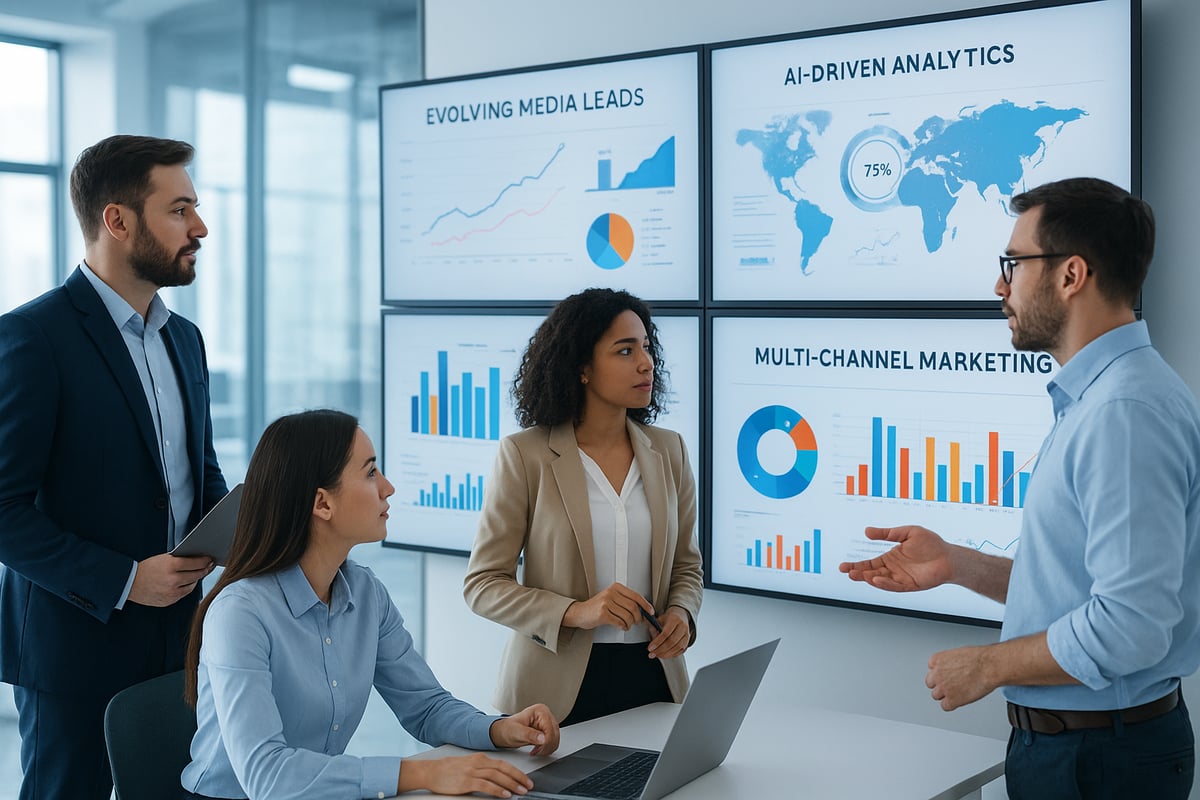
Digital media consumption is at an all-time high, directly influencing how media leads are sourced and nurtured. As privacy regulations like GDPR and CCPA take center stage, the industry is shifting from third-party data toward first-party and zero-party data collection. This transition is forcing marketers to rethink their data strategies for capturing high-quality media leads.
Artificial intelligence and machine learning are now essential for predictive lead scoring and precise targeting. Brands are leveraging AI to identify high-intent buyers and optimize campaigns in real time. At the same time, niche platforms such as Reddit and Quora are gaining traction for targeted lead capture, offering access to specialized audiences often overlooked by broader channels.
Omnichannel engagement is more crucial than ever. Media leads now flow through social, search, display, connected TV, and audio, requiring brands to orchestrate messaging across all touchpoints. For example, LinkedIn stands out as the highest-converting B2B lead source, with 77% of marketers ranking it number one. According to 2026 Lead Generation Statistics, 60% of B2B buyers use social media to research vendors before contacting sales, further highlighting the importance of digital channels for media leads.
Challenges and Opportunities
The path to capturing quality media leads is not without obstacles. Buyer journeys are increasingly fragmented, spanning multiple platforms and devices, which complicates attribution and engagement. Rising ad costs and heightened competition for attention make it harder for brands to stand out in crowded spaces.
However, these challenges also create new opportunities. By combining content syndication with intent-based targeting, marketers can significantly improve the quality of media leads. This approach ensures content reaches the right audience at the right stage of the decision process.
Brands that align their lead generation efforts with the evolving research habits of buyers are seeing up to three times higher conversion rates. This means understanding not just where prospects are, but how and when they consume content. The future of media leads lies in adapting quickly, harnessing advanced technology, and meeting buyers on their terms.
Defining and Targeting Your Ideal Media Leads
Defining and targeting your ideal media leads is the foundation for a successful lead generation strategy. Without a precise understanding of who you want to reach, even the best campaigns can miss the mark. In 2026, precision and personalization are more important than ever.
Understanding Your Ideal Customer Profile (ICP)
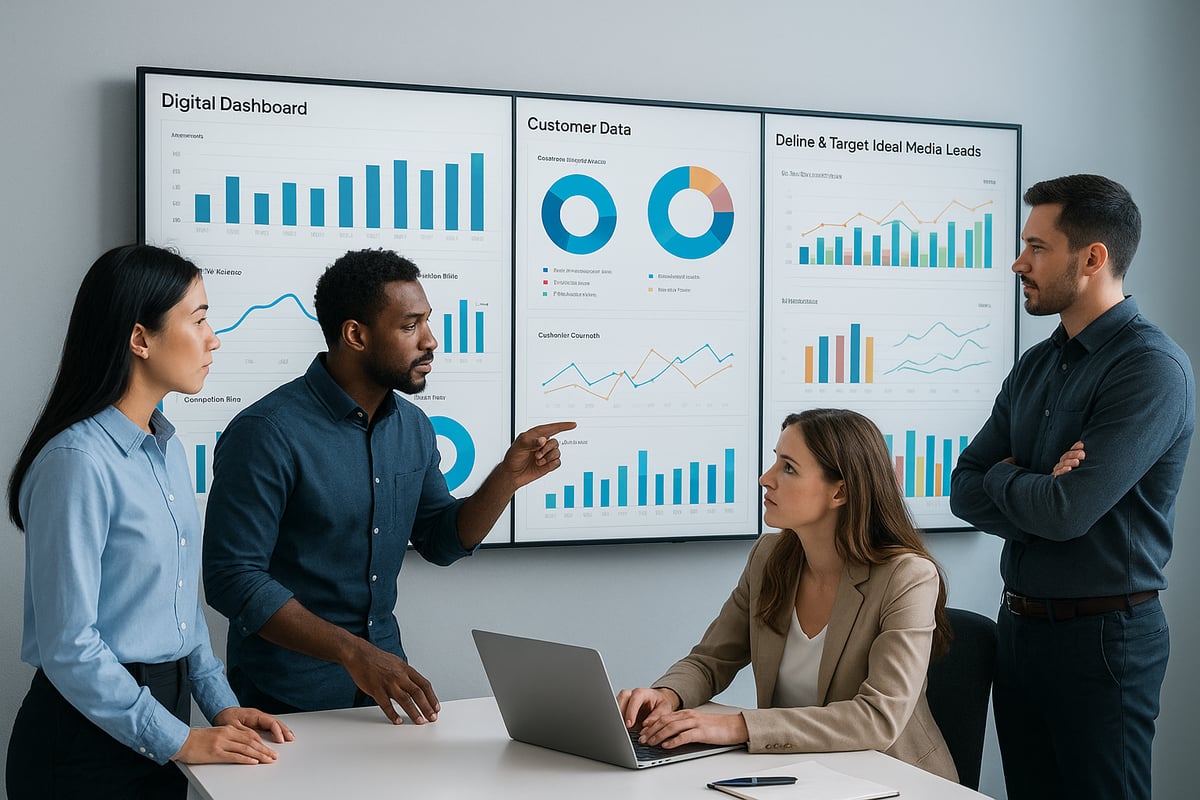
Start by building a detailed Ideal Customer Profile (ICP). This involves pinpointing key demographics, firmographics, psychographics, and buying triggers that define your best-fit customers. Use CRM and analytics data to refine your ICP, updating it as new insights emerge.
Segment your targets by roles, such as decision-makers (CIOs, VPs) and influencers (analysts, managers). This differentiation enables you to tailor messaging and offers, increasing the likelihood of capturing high-quality media leads. Industry benchmarks show that 70% of top-performing media leads come from accurate ICP targeting.
For a deeper dive into proven methods for generating high-quality media leads, check out these qualified lead generation methods. Continually refine your ICP to ensure every campaign is focused on the right audience.
Advanced Segmentation and Personalization
Once your ICP is set, advanced segmentation is the next step. Leverage behavioral data and intent signals to create micro-segments within your audience. This allows you to deliver highly relevant messages across platforms, increasing engagement and conversion rates for your media leads.
Dynamic segmentation lets you build audiences on platforms like LinkedIn, Meta, and YouTube in real time. Lookalike modeling helps you expand your reach by finding new users similar to your highest-converting media leads. Personalization at scale can boost engagement by up to 40 percent, making your campaigns stand out in crowded digital spaces.
- Use behavioral triggers to adjust messaging
- Build audience segments for each platform
- Test and refine segments regularly
Channel Selection for Maximum Impact
Selecting the right channels is crucial for engaging media leads at every stage of the funnel. Match each channel to the buyer’s intent and stage, ensuring your message aligns with their needs.
Here’s a quick comparison:
| Platform | Funnel Stage | Strength |
|---|---|---|
| Conversion | High-quality B2B leads | |
| YouTube | Education | Mid-funnel engagement |
| Meta | Retargeting | Scalable audience reach |
For example, LinkedIn excels at driving conversions, while YouTube is ideal for education and awareness. Meta platforms are highly effective for retargeting and re-engagement. By aligning your media leads strategy with the right platforms, you maximize impact and ROI.
Integrating First-Party Data for Better Targeting
First-party data is a game-changer for targeting media leads in 2026. Build your data assets by collecting information from email lists, website visitors, and customer interactions. This data is more reliable and privacy-compliant than third-party sources.
Activate your first-party data to create custom audiences and retarget users who have shown interest. Brands that leverage first-party data see double the lead qualification rates compared to those relying solely on external data. Use retargeting strategies and personalized messaging to keep your media leads engaged and moving through the funnel.
Regularly update and optimize your first-party data practices to stay ahead of privacy regulations and maintain trust with your audience.
Step-by-Step: Building a High-Performance Media Lead Generation Strategy
To achieve consistent growth with media leads, you need a systematic approach that aligns strategy, technology, and execution. Below is a proven step-by-step framework for building a high-performance media lead generation engine in 2026.

Step 1: Audit and Align Your Media Channels
Begin by evaluating all current media channels to understand their effectiveness for generating media leads. Analyze which platforms drive the highest quality prospects and where audience overlaps exist.
Use a simple table to compare performance metrics and identify redundancies:
| Channel | Lead Volume | Lead Quality | Cost per Lead |
|---|---|---|---|
| High | Excellent | Moderate | |
| Meta | Medium | Good | Low |
| YouTube | Medium | Fair | Low |
Focus on 2–3 core channels that deliver the most value for media leads. Eliminating underperformers helps you maximize budget and impact.
Step 2: Craft Compelling Lead Magnets and Offers
Next, develop targeted lead magnets that speak to your audience's needs at every stage. Whitepapers, webinars, free trials, and exclusive reports are all effective for attracting media leads.
Align each offer with specific pain points and funnel stages. For instance, use a gated webinar for decision-stage prospects and an eBook for those in the awareness phase.
Remember, tailored offers for media leads consistently outperform generic content. Keep testing new formats to see what resonates most with your audience.
Step 3: Optimize Landing Pages and Conversion Paths
High-converting landing pages are essential for capturing media leads. Prioritize clarity, social proof, and minimal friction throughout the conversion process.
Implement A/B testing on headlines, calls-to-action, and form fields. Data shows that reducing form fields from seven to three can boost conversion rates by up to 50 percent.
Every element on your landing page should guide visitors smoothly toward becoming media leads. Use testimonials and visual cues to reinforce credibility.
Step 4: Implement Multi-Touch Nurturing Sequences
Lead nurturing is crucial for moving media leads through your pipeline. Set up multi-touch sequences that include email drip campaigns, retargeting ads, and even SMS reminders.
Personalize each sequence based on user engagement and behavior. For example, tailor follow-up content according to which lead magnet was downloaded.
Multi-touch nurturing not only increases conversions but also builds lasting relationships with media leads, ensuring they stay engaged until ready to buy.
Step 5: Leverage Intent-Based and Programmatic Advertising
Take advantage of intent data and programmatic ad buying to reach in-market buyers with precision. Monitor search signals, content consumption, and engagement patterns to identify high-intent media leads.
Programmatic advertising enables scalable and cost-efficient targeting. These campaigns typically achieve a 30 percent lower cost per lead while maintaining quality.
By focusing on intent-based strategies, you ensure that your budget is spent on the media leads most likely to convert.
Step 6: Qualify, Score, and Route Leads Effectively
Implement lead scoring models that combine demographic and behavioral data for accurate qualification. Automated systems can route media leads to the right sales or nurture streams in real time.
AI-driven scoring reduces manual workload and increases speed to conversion. For an in-depth look at qualification best practices, explore lead generation and qualification.
Efficient lead routing ensures media leads are never lost or neglected, improving overall ROI.
Step 7: Integrate with CRM and Marketing Automation
Seamless integration between your CRM and marketing automation platforms is vital for tracking media leads. This connection enables automated reminders, follow-ups, and real-time reporting.
Companies with full integration see up to a 20 percent increase in lead-to-appointment rates. Data flows without friction, making it easier to optimize campaigns and measure success.
A well-integrated tech stack empowers your team to nurture media leads at scale and close more deals efficiently.
Harnessing AI, Automation, and Data for Media Leads Success
The future of media leads is deeply intertwined with the rapid evolution of AI, automation, and data analytics. Brands that harness these technologies can expect to generate, qualify, and convert higher-value media leads at scale. In this section, we will explore how each pillar drives measurable results, future-proofs your strategy, and ensures compliance in a complex landscape.

AI-Powered Targeting and Personalization
AI has transformed how brands identify and engage media leads. Predictive analytics enable marketers to pinpoint high-intent audiences by analyzing thousands of data points in real time. These insights allow for dynamic content personalization, ensuring that each prospect receives messaging tailored to their needs and behaviors.
For example, AI-powered campaigns often deliver double the engagement rates compared to traditional targeting. Tools like AI agents, which automate the research and outreach process, are dramatically increasing efficiency and accuracy in media leads generation. To learn more about how AI agents are redefining lead generation workflows, explore AI Agents in Lead Generation.
With the right AI stack, you can continuously improve targeting, optimize messaging, and boost conversion rates.
Automated Lead Nurturing and Follow-Up
Speed and consistency are crucial for nurturing media leads. Automated workflows, such as trigger-based emails and SMS reminders, ensure immediate and relevant follow-up. Chatbots and virtual assistants provide 24/7 engagement, answering common questions and capturing additional information from prospects.
Statistically, responding to a new media lead within two minutes can double your appointment rates. Automation platforms enable seamless handoffs between channels and personalize nurture sequences based on real-time engagement data.
This approach not only improves lead quality but also reduces manual workload for your team.
Advanced Attribution and Analytics
Accurate measurement is at the core of optimizing media leads strategies. Multi-touch attribution models help assign value to each interaction along the buyer’s journey, providing a clear picture of what drives conversions.
Real-time dashboards allow marketers to monitor campaign performance and adjust tactics on the fly. Brands using AI-driven attribution can shift up to 30 percent more budget to top-performing channels, maximizing ROI on media leads investments.
Utilizing these insights ensures that every dollar spent is accountable and effective.
Data Privacy and Compliance
With increasing privacy regulations such as GDPR and CCPA, brands must prioritize transparency when capturing media leads. Adopting compliance-first strategies means using clear opt-ins, secure data storage, and open communication about data usage.
A simple comparison of compliance features:
| Feature | GDPR/CCPA Required | Best Practice |
|---|---|---|
| Explicit Opt-In | Yes | Yes |
| Data Portability | Yes | Yes |
| Transparent Use | Yes | Yes |
Building trust through compliance directly impacts both lead quality and conversion rates for media leads.
Future-Ready Tech Stack
To stay ahead, brands must continuously evaluate and upgrade their marketing technology stack for media leads success. Integrating customer data platforms (CDPs), data management platforms (DMPs), and AI analytics provides end-to-end visibility into the lead journey.
A future-ready stack enables seamless data flow, smarter segmentation, and real-time optimization. Combining these tools ensures your brand can adapt quickly to changes in platforms, regulations, or buyer behavior, keeping your media leads pipeline strong and sustainable.
Multi-Channel Media Lead Generation: What Works in 2026
The landscape for media leads in 2026 is defined by strategic channel integration, targeted messaging, and data-driven precision. Brands that master multi-channel approaches are consistently outperforming those using single-channel tactics. Let’s explore what’s working now.
Social Media Platforms: LinkedIn, Meta, YouTube, Reddit, Quora
Social media remains a powerhouse for media leads, but the key is matching each platform to your specific goals.
| Platform | Best Use Case | Lead Quality | Funnel Stage |
|---|---|---|---|
| B2B, direct outreach | Highest | Conversion | |
| Meta | Scale, retargeting | High | Retargeting |
| YouTube | Education, awareness | Medium | Mid-funnel |
| Reddit/Quora | Niche, technical | Variable | Research |
LinkedIn is the top choice for B2B media leads, with 77% of marketers ranking it highest for lead quality. Meta’s platforms excel at scalable reach and retargeting, while YouTube is ideal for educational content. Niche platforms like Reddit and Quora offer unique opportunities for capturing high-intent audiences. To stay ahead of social trends, review the latest Future of Social Media Lead Gen for AI-driven personalization strategies.
Content Syndication and Native Advertising
Content syndication is a proven tactic for distributing gated assets across trusted third-party sites, expanding the reach and quality of media leads. Native advertising blends seamlessly into publisher environments, creating a non-intrusive experience that increases engagement and conversions.
Data shows that content syndication delivers 1.5x higher lead quality compared to single-channel ads. To optimize performance, align your syndication strategy with your audience’s research habits and prioritize transparency. For actionable guidance on mastering these channels, explore media advertising best practices.
Search and Programmatic Display
Intent-based search campaigns remain essential for capturing media leads at the moment of highest purchase intent. Programmatic display advertising provides scale and precision, allowing for real-time audience targeting and budget optimization.
A multi-channel approach to search and display doubles conversion odds compared to single-channel efforts. Brands leveraging both see measurable improvements in lead quality and cost efficiency. Regularly review channel performance to reallocate spend where media leads results are strongest.
Omnichannel Nurturing and Retargeting
The most successful brands coordinate messaging across email, SMS, social, and display, ensuring a consistent experience for every prospect. Omnichannel nurturing keeps your brand top-of-mind throughout the buyer journey, while retargeting brings back warm prospects who need an extra touch.
Brands using omnichannel nurture see up to 89% higher retention rates for media leads. This approach builds trust, boosts conversion, and maximizes the value of each lead. As platforms and buyer behavior evolve, ongoing testing and optimization are key to sustained growth.
Measuring, Optimizing, and Scaling Media Lead Success
Mastering measurement, optimization, and scalable growth is crucial for brands aiming to dominate in media leads. As competition intensifies, knowing exactly how to track, refine, and amplify your approach is the difference between stagnation and sustainable pipeline growth.
Setting KPIs and Success Metrics
To effectively measure media leads, define clear KPIs that reflect both efficiency and quality. Core metrics include cost per lead (CPL), lead quality score, conversion rate, and pipeline velocity. Benchmark these against current industry standards for 2026 to ensure your targets are both ambitious and realistic.
| Metric | Top Performer Benchmark (2026) |
|---|---|
| Cost per Lead (CPL) | 20-40% below industry average |
| Lead Quality Score | 85+ out of 100 |
| Conversion Rate | 18-25% |
| Pipeline Velocity | 3x faster than average |
Setting these success metrics allows you to track progress, identify bottlenecks, and ensure every media leads campaign is driving tangible business results.
Attribution and Revenue Tracking
Understanding the true impact of media leads means connecting every touchpoint to closed revenue. Leverage multi-touch and last-touch attribution models to see which channels and strategies generate the highest ROI. Closed-loop reporting links media leads to sales outcomes, providing full-funnel visibility and enabling smarter budget allocation.
Brands that implement accurate attribution see a 25 percent increase in marketing ROI. For those looking to further automate and enhance attribution, Generative AI in B2B Lead Generation offers insights into how AI is revolutionizing performance tracking and optimization.
Continuous Testing and Optimization
Ongoing testing is vital for maximizing the performance of media leads. Use A/B and multivariate testing to refine ads, landing pages, and nurture streams. Weekly tests enable rapid improvements, with top brands seeing a 30 percent faster boost in lead quality.
Integrate insights from SEO lead generation strategies to enhance your optimization process, ensuring your tactics remain effective as digital channels evolve. AI-powered analytics can further accelerate iteration and budget reallocation for media leads campaigns.
Scaling What Works
Once you have identified your most effective media leads channels and tactics, direct more resources toward them. Doubling down on proven strategies ensures consistent pipeline growth, while expanding into new platforms using established frameworks reduces risk and accelerates results.
Systematic scaling, based on data and ongoing optimization, leads to compounding growth for media leads acquisition.
Expert Tips for 2026
Stay agile by continuously monitoring emerging platforms and evolving buyer behaviors. Invest in team training and martech upskilling to keep your media leads strategy ahead of the curve.
- Regularly review peer benchmarks and industry reports.
- Foster a culture of experimentation and learning.
- Prioritize compliance and data privacy to build trust.
By following these best practices, brands can measure, optimize, and scale their media leads for maximum impact in 2026.