
CTV advertising is reshaping how brands reach audiences in the streaming era. With over 86 million US households projected to stream through connected TV by 2025, the opportunity to advertise on ctv has never been more critical. This guide is designed to equip marketers, agencies, and brands with the latest insights, proven frameworks, and future-focused tactics for CTV advertising success in 2026.
You will learn the fundamentals, how to select the right platforms, master targeting, create compelling ads, measure success, manage budgets, and stay ahead of emerging trends. Ready to unlock measurable results and maximize ROI? Dive in and discover how to thrive in the connected TV revolution.
Understanding CTV Advertising: The 2026 Landscape
Connected TV (CTV) is revolutionizing digital marketing, providing brands with innovative ways to advertise on ctv and reach audiences in their living rooms. As we approach 2026, understanding the evolving CTV landscape is crucial for marketers aiming to stay competitive. Let us break down what CTV is, why it is capturing more ad dollars, the main ad formats, and the unique challenges you should anticipate.

What Is CTV and How Does It Work?
CTV, or Connected TV, refers to any television set connected to the internet and capable of streaming digital video content. This includes smart TVs, streaming sticks like Roku or Amazon Fire TV, and gaming consoles such as Xbox or PlayStation.
Unlike traditional linear TV, which delivers scheduled programming via cable or satellite, CTV allows users to stream content on demand. It is distinct from OTT (over-the-top) platforms, which deliver video content via the internet but can be accessed on various devices, not just TVs.
A major innovation for those who advertise on ctv is dynamic ad insertion. This technology enables advertisers to serve tailored ads in real time based on viewer data. Programmatic buying further streamlines this process, using automated systems to purchase and place ads across multiple channels, maximizing efficiency.
Because of these advancements, performance measurement is now possible in real time. Marketers can track impressions, completion rates, and conversions almost instantly. With smart TVs and streaming sticks present in more than 80 percent of US homes, and CTV viewers expected to surpass 86 million households by 2025, CTV has become the new "prime time" for digital advertisers. For more on how CTV is transforming advertising, see Connected TV is transforming advertising.
Why CTV Is Dominating Ad Budgets
The shift from traditional TV to streaming platforms has fundamentally changed where advertisers invest. As more viewers cut the cord and embrace streaming, brands are eager to advertise on ctv to reach younger, affluent, and tech-savvy audiences.
CTV boasts significantly higher attention and engagement rates, with studies showing 82 percent for CTV compared to 69 percent for linear TV. Advertisers benefit from precision targeting, reduced ad waste, and measurable results, making every dollar count.
Industry data highlights the rapid ascent of CTV: ad revenue is projected to reach 42.5 billion dollars by 2028. Major streaming services like Netflix, Hulu, and Disney Plus are launching ad-supported tiers, expanding opportunities for brands to advertise on ctv. Early adopters enjoy competitive advantages, such as lower CPMs and greater share of voice in a less crowded market.
Key CTV Ad Formats and Placement Types
When you advertise on ctv, you can choose from several engaging ad formats:
| Format Type | Description | Example Use Case |
|---|---|---|
| In-stream video | Pre-roll, mid-roll, post-roll ads | Movie trailers before content |
| Interactive/shoppable | Viewers interact via remote or QR code | Scan to buy featured products |
| Contextual overlays | Sponsored banners over content | Brand sponsorship during live events |
| Skippable/non-skippable | Option to skip after a few seconds | Non-skippable for high-impact ads |
A notable trend is interactive CTV ads, which empower viewers to engage directly using their remote or a QR code. These formats are specifically designed for immersive, living room experiences, driving both awareness and measurable action.
Challenges Unique to CTV Advertising
Despite its promise, there are challenges for those who advertise on ctv. Data fragmentation and a lack of standardization across platforms can create hurdles for campaign management. Frequency capping is often inconsistent, leading to viewers seeing the same ad multiple times.
Measurement and attribution remain complex, especially in a privacy-conscious, cookieless environment. Regulations like GDPR and CCPA add layers of compliance. For instance, when data is fragmented, a single viewer may encounter the same ad repeatedly, diminishing effectiveness.
The industry is making strides toward standardized data and privacy-compliant targeting, but ongoing collaboration is essential. Staying informed and adaptable will help you advertise on ctv effectively amid these challenges.
Step-by-Step Guide: How to Advertise on CTV in 2026
Successfully navigating the evolving landscape to advertise on ctv requires a precise, step-by-step approach. Whether you are a brand, agency, or marketer, following a proven process will ensure your campaigns achieve measurable results and stand out in a crowded streaming environment.

1. Set Clear CTV Campaign Objectives
Before you advertise on ctv, define your campaign’s primary goals. Are you aiming for brand awareness, lead generation, website visits, conversions, or in-person store visits? Align these objectives with your overall marketing KPIs to ensure consistency and clarity.
For example, a healthcare provider might want to increase appointment bookings through a targeted CTV campaign. Establishing clear goals will inform every other step, from creative direction to performance measurement.
Consider these tips:
- List out specific, measurable outcomes.
- Ensure objectives are time-bound and realistic.
- Map campaign goals to broader business priorities.
Having clarity in your objectives sets a strong foundation for your efforts to advertise on ctv.
2. Identify and Segment Your Target Audience
To advertise on ctv effectively, leverage robust data sources for audience segmentation. Use first-party data, CRM insights, and predictive modeling to pinpoint your ideal viewers. CTV enables targeting based on demographics, behaviors, location, and interests, far beyond what traditional TV allows.
Imagine a local business targeting households by ZIP code or a national brand segmenting by lifestyle. As third-party cookies phase out, first-party data becomes even more valuable for advertisers.
Audience segmentation checklist:
- Analyze existing customer data for trends.
- Use geotargeting for local reach.
- Combine behavioral and demographic filters for precision.
The ability to advertise on ctv with such granularity ensures your message resonates with the right audience, maximizing relevance and impact.
3. Choose the Right CTV Platforms and Buying Methods
Selecting the right platforms is crucial when you advertise on ctv. Options include direct buys with streaming services like Hulu, YouTube TV, or Paramount+, and programmatic buying through DSPs for greater scale and automation.
Evaluate each platform’s inventory quality, targeting options, and brand safety measures. For instance, using a DSP can give you access to premium inventory across multiple streaming apps, making your campaign more efficient.
Key considerations:
- Direct buys offer control but less scale.
- Programmatic buying provides broader reach and dynamic pricing.
- Ensure platforms support desired targeting and creative features.
The right mix helps you advertise on ctv with both precision and efficiency, setting the stage for campaign success.
4. Develop High-Impact CTV Creative
When you advertise on ctv, compelling creative is essential. Invest in TV-quality production values and storytelling that fits the living room experience. Optimal ad lengths are typically 15 to 30 seconds to maintain attention and drive retention.
Incorporate clear, actionable calls-to-action such as QR codes, short URLs, or phone numbers. For example, a CTV ad with a QR code can drive viewers directly to a booking page or website.
Creative best practices:
- Maintain brand consistency across digital and TV channels.
- Use high-definition visuals and professional audio.
- Tailor messages for household viewing environments.
Creative tailored for CTV not only increases recall but also encourages viewers to take action, making your efforts to advertise on ctv more impactful.
5. Launch, Optimize, and Scale Your CTV Campaigns
Now you are ready to launch and refine your efforts to advertise on ctv. Start with a defined budget and run campaigns for at least 30 days to collect meaningful data. Monitor metrics like completion rates, reach, engagement, and conversions.
Apply A/B testing to optimize creative and targeting strategies. Use real-time performance insights to adjust your approach for better results. For more detailed strategies and practical examples, explore these CTV ads campaign strategies.
Optimization checklist:
- Regularly review campaign performance data.
- Adjust targeting to focus on high-performing segments.
- Scale up budgets after verifying results.
Continuous optimization is the key to maximizing ROI as you advertise on ctv in a rapidly changing market.
Advanced CTV Targeting and Measurement Strategies
Mastering advanced targeting and measurement is crucial as you advertise on ctv in 2026. With evolving technology and new privacy standards, marketers must adopt innovative strategies to reach audiences efficiently and prove campaign impact.

Leveraging First-Party and Contextual Data
The shift toward privacy-first advertising has made first-party data essential as you advertise on ctv. Brands now rely on CRM records, loyalty programs, and user registrations to target audiences with precision. Contextual AI further enhances this by analyzing streaming content genres, ensuring ads appear alongside relevant shows or movies.
Over 50 percent of CTV inventory is already cookieless, so contextual targeting is a powerful alternative. For example, advertisers can reach viewers watching fitness content with health-related ads. Combining first-party and contextual data not only drives relevance but also helps maintain compliance with privacy regulations.
This approach is a cornerstone for future-proofed CTV campaigns, especially as third-party cookies phase out.
Cross-Device and Omnichannel Integration
To maximize results when you advertise on ctv, integrate your campaigns across devices and channels. Today’s viewers often start on a smart TV, then continue their journey on mobile or desktop. Coordinating CTV ads with social, search, and display campaigns creates a seamless brand experience.
Cross-device attribution tools track user journeys, showing how a CTV impression leads to action on another device. For instance, a viewer might see your ad on TV before making a purchase on their smartphone. Omnichannel strategies increase engagement, ensuring your message resonates wherever your audience interacts.
This holistic approach enhances both reach and attribution accuracy, making every ad dollar work harder.
Measuring CTV Success: Key Metrics and KPIs
Effective measurement is non-negotiable as you advertise on ctv. Unlike traditional TV, CTV offers real-time analytics and transparent reporting. Here are key performance indicators to track:
| Metric | Description |
|---|---|
| View Completion Rate | % of viewers watching the full ad |
| Incremental Reach | New audiences reached beyond linear TV |
| Website/Store Attribution | Conversions tracked across devices |
| Conversion Rate | Online purchases, bookings, or calls |
| CPM/CPCV/CPA | Cost benchmarks for efficiency |
For example, a healthcare brand might see a 20 percent lift in website visits after launching a CTV campaign. Prioritize metrics that align with your objectives, and use cross-device tracking to capture the full impact of your efforts.
Overcoming Data Fragmentation and Frequency Issues
Data fragmentation is a unique challenge for those who advertise on ctv. Since multiple platforms handle their own data, viewers may see the same ad repeatedly, leading to wasted impressions and fatigue. To address this, brands are adopting standardized measurement frameworks and frequency capping.
Collaborating with partners for unified reporting and transparency is essential. Industry initiatives, such as the IAB Tech Lab’s new CTV Ad Portfolio and programmatic guide, are driving standardization. By consolidating media buys through a single DSP, you can reduce repetition and gain a clearer view of campaign performance.
These efforts are paving the way for more accurate measurement and efficient spending.
Privacy, Brand Safety, and Compliance in CTV
As you advertise on ctv, maintaining privacy and brand safety is critical. Regulations like GDPR, CCPA, and HIPAA demand strict data handling and transparency. Brands must use privacy-compliant targeting solutions and prioritize user consent.
Brand safety tools help avoid ad placements near inappropriate content, protecting your reputation. For healthcare advertisers, privacy-first targeting is a must to ensure compliance with sensitive data regulations.
In summary:
- Always adhere to regional privacy laws
- Use advanced brand safety filters
- Regularly audit partners for compliance
These best practices safeguard your campaigns and build consumer trust for long-term CTV success.
CTV Creative Best Practices for Maximum Engagement
To advertise on ctv effectively in 2026, brands must prioritize creativity and relevance. CTV viewers expect immersive, engaging experiences that blend the best of traditional television with digital interactivity. This section explores the essential creative strategies to maximize engagement, drive results, and make your CTV campaigns stand out in a crowded landscape.
Storytelling for the Big Screen
The living room remains the heart of storytelling, and to advertise on ctv successfully, marketers must craft narratives that resonate in this environment. Powerful stories that evoke emotion and relatability hold viewers’ attention and foster brand recall. For healthcare brands, for example, patient success stories can build trust and inspire action.
Consider the pacing and visuals: slow builds, authentic scenarios, and strong characters work best. TV-quality storytelling is not just about entertainment, but about forging connections that translate into measurable outcomes. For more inspiration, explore these CTV advertising examples showcasing what works on the big screen.
Production Quality and Technical Requirements
High production value is non-negotiable when you advertise on ctv. Audiences expect crisp HD video, crystal-clear audio, and seamless editing. Meeting platform specifications for file size, aspect ratio, and length is critical to avoid delivery errors or playback issues.
For example, a 1080p video in an accepted file format ensures your ad appears professional and polished. Poor quality creative can quickly undermine your brand’s perception, especially on the large screens where every detail is magnified. Invest in professional production to make your message stand out.
Designing Action-Oriented CTAs
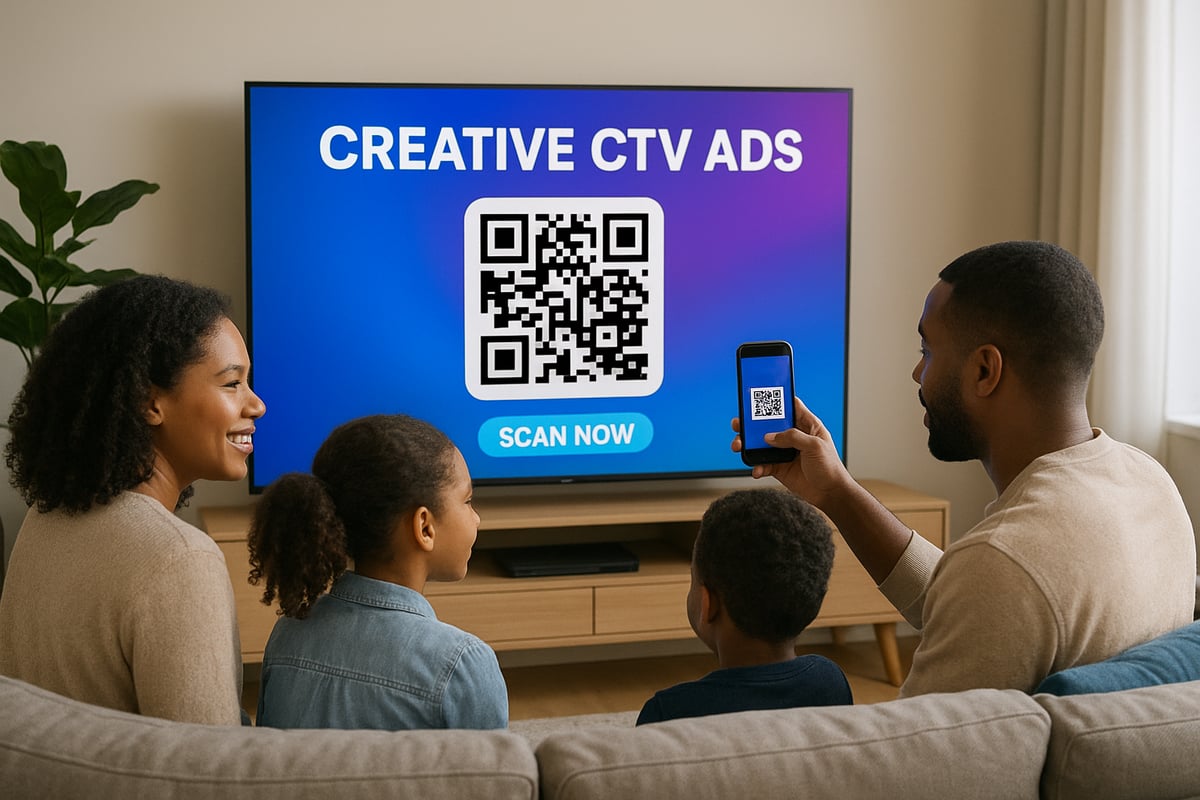
To advertise on ctv with measurable impact, incorporate clear and compelling calls to action (CTAs). QR codes, short memorable URLs, and SMS prompts bridge the gap between TV and digital, allowing viewers to engage instantly or at their convenience.
Encourage both immediate and delayed actions, such as booking an appointment or learning more. In fact, QR code scans from CTV ads have risen 40% year-over-year, highlighting their effectiveness. Actionable CTAs not only drive engagement but also provide valuable data for campaign optimization.
Ad Length, Frequency, and Placement Optimization
Optimizing your approach when you advertise on ctv means testing ad lengths, managing frequency, and selecting the right placements. Compare 15-second and 30-second spots to determine which delivers better attention and retention for your audience.
Apply frequency caps to avoid viewer fatigue, ideally aiming for 2 to 3 exposures per week. Placement matters too: while mid-roll ads can outperform pre-rolls for conversions, the best approach depends on your goals and platform. Use campaign data to refine your strategy and maximize impact.
Creative Personalization and Localization
Personalization is key if you want to advertise on ctv and achieve maximum engagement. Adapt messaging for local markets or specific audience segments using dynamic creative optimization. For multi-location healthcare providers, for instance, localized offers can drive higher response rates.
Tailoring creative content based on location, demographics, or viewing behavior increases relevance and conversion potential. Personalization transforms passive viewers into active participants, delivering stronger results for every CTV campaign.
Budgeting, Buying, and Scaling CTV Campaigns
Planning to advertise on ctv requires a clear understanding of costs, budgeting, buying strategies, and how to scale campaigns effectively. In this section, you will learn how to navigate CPM ranges, allocate budgets, choose between direct and programmatic buying, manage frequency and reach, and scale campaigns for multi-location brands.
CTV Ad Pricing Models and Cost Benchmarks
When you advertise on ctv, understanding pricing models is crucial. The most common metric is CPM, or cost per thousand impressions, which typically ranges from 10 to 50 depending on factors such as targeting, inventory quality, and seasonality.
Here is a quick summary of typical CPM ranges:
| Targeting Level | CPM Range ($) |
|---|---|
| Broad/National | 10-20 |
| Demographic/Interest | 20-35 |
| Geo/Behavioral | 30-50 |
Major metro areas, premium inventory, or peak seasons may command higher CPMs. However, the ability to precisely advertise on ctv can offset higher unit costs by reducing wasted impressions.
CTV CPMs remain competitive with premium digital video, making it a cost-effective choice for brands aiming for impact. Strategic targeting and creative optimization are key to maximizing value.
Setting and Allocating Your CTV Budget
To effectively advertise on ctv, start by determining your minimum effective budget. For small to midsize businesses, this usually means at least 1,000 per month. Divide your budget into phases: initial testing, learning, then scaling once you see positive performance.
A typical approach includes:
- Allocating 20-30 percent for the first 30-day test campaign
- Using results to optimize creative and targeting
- Increasing spend gradually as you gain confidence
This phased method allows you to control risk and grow your investment as outcomes improve. Remember, continuous campaign evaluation ensures you only scale what works.
Choosing Between Direct and Programmatic Buys
When you advertise on ctv, you can choose direct buys with specific streaming platforms or use programmatic channels for broader reach and efficiency. Direct buying offers more control over context and content, but it may limit scale.
Programmatic buying, on the other hand, provides dynamic pricing and access to premium inventory across multiple platforms. For example, using platforms like The Trade Desk and CTV enables brands to automate and optimize their buys efficiently.
Most advertisers blend both approaches, leveraging direct deals for high-impact placements and programmatic for scale and flexibility. Assess your goals and resources before deciding on a mix.
Managing Frequency, Waste, and Incremental Reach
A key part of your strategy to advertise on ctv is managing ad frequency and minimizing waste. Set frequency caps to avoid overexposing viewers, ideally limiting to two or three exposures per week.
Use incremental reach analysis to identify unique audiences you are gaining beyond linear TV. This helps you understand the true value and efficiency of your CTV campaigns.
Efficient buying strategies, such as consolidating your media through a single DSP, can further reduce waste and improve transparency. Always review reporting to optimize ongoing performance.
Scaling CTV for Multi-Location and Franchise Brands
Scaling your efforts to advertise on ctv across multiple locations requires both centralized oversight and localized execution. Dynamic creative allows franchise or multi-site brands to tailor messages for each market while maintaining brand consistency.
A healthcare system, for example, might run geo-targeted CTV ads that highlight services at specific locations. Scalable frameworks ensure consistent results as campaigns expand.
The Future of CTV Advertising: Trends and Innovations for 2026
The future of advertise on ctv is rapidly evolving as technology, data, and consumer habits transform the streaming landscape. Brands that stay ahead of these trends will unlock powerful opportunities for growth, engagement, and measurable impact. Understanding where the industry is headed is essential for anyone looking to advertise on ctv effectively in 2026.
AI-Driven Targeting and Optimization
Artificial intelligence is set to revolutionize how marketers advertise on ctv. With machine learning, advertisers can segment audiences in real time, analyze viewing behaviors, and predict intent for more precise targeting. AI-powered platforms dynamically adjust bids and creative assets, ensuring ads reach the right viewers at the right moment.
For example, a retailer can use AI to optimize ad delivery based on purchase intent signals, maximizing ROI. As advertisers compete for premium inventory, those who leverage AI for campaign optimization will gain a measurable edge. The ability to advertise on ctv with this level of sophistication is becoming a must-have for brands in 2026.
Emerging Ad Formats and Interactivity
The next wave of CTV innovation is all about interactivity. Shoppable ads, voice-activated experiences, and remote-enabled engagement are transforming passive viewing into active participation. Brands can now advertise on ctv by inviting viewers to click, speak, or scan QR codes, bridging the gap between TV and e-commerce.
Interactive ads are projected to grow by 30% by 2027, with major platforms rolling out new formats. For example, viewers may soon purchase products directly from their TV screens. As ad-supported streaming grows, advertisers who experiment with these formats early will capture more engaged audiences. According to the US CTV advertising forecast to grow 13% to $26.6B in 2025, this innovation is fueling significant industry expansion.
Cross-Platform Attribution and Measurement Advances
As brands advertise on ctv, the need for unified measurement becomes critical. Traditional TV metrics no longer suffice in a world where viewers jump between screens. The future lies in cross-platform attribution models that connect CTV exposure to online and offline actions, such as website visits or in-store purchases.
Real-time dashboards will empower marketers to track campaign performance across devices, channels, and touchpoints. For example, attributing a retail sale to a CTV ad seen days before on a smart TV. As measurement tools advance, brands will gain a holistic view of their advertising impact, making it easier to justify and optimize their invest to advertise on ctv.
Privacy, Regulation, and Industry Collaboration
Privacy regulations are reshaping how brands advertise on ctv. Laws like GDPR and CCPA require strict data handling and transparent targeting practices. Industry groups are working toward universal standards, promoting data sharing, transparency, and compliance.
Initiatives from organizations such as OpenAP and the IAB aim to create a more unified, privacy-first ecosystem. As collaboration increases, advertisers will benefit from more consistent measurement and safer brand environments. Staying informed and adaptable is crucial for any organization planning to advertise on ctv in the years ahead.
Resources and Next Steps for CTV Success
Stepping confidently into the future of marketing requires the right resources and a clear roadmap. To successfully advertise on ctv, brands must combine robust technology, skilled teams, industry awareness, and a disciplined action plan. Each of these elements plays a vital role in driving measurable results.
Building Your CTV Advertising Tech Stack
An effective tech stack is the backbone for brands that want to advertise on ctv efficiently. Start by integrating a demand-side platform (DSP) for campaign buying, an ad server for delivery, and an attribution platform for tracking results.
Connect these tools with your CRM and analytics systems to unify audience data and performance insights. For example, a single dashboard can streamline campaign management, reporting, and optimization. Investing in a seamless tech stack reduces friction, increases transparency, and empowers smarter decisions when you advertise on ctv.
Training Teams and Partnering with Experts
The landscape to advertise on ctv is evolving rapidly. Upskilling your internal teams in CTV strategy, creative best practices, and measurement frameworks is essential. Ongoing education ensures everyone is aligned with the latest developments and platform requirements.
For advanced targeting or scaling, many brands benefit from external expertise. Consider choosing a CTV ad agency with a proven track record to maximize your campaign’s impact. The right partner brings specialized knowledge, accelerates your learning curve, and helps you advertise on ctv with confidence.
Staying Ahead: Monitoring CTV Industry Trends
To advertise on ctv successfully, staying informed is non-negotiable. Subscribe to trade publications, attend industry conferences, and join relevant forums to keep up with platform updates, regulatory changes, and creative innovations.
Monitor new ad-supported streaming services and emerging formats as they launch. Agile marketers who regularly adapt their approach are best positioned to capitalize on the latest opportunities. When you advertise on ctv, being proactive about trends ensures your strategy remains competitive.
Action Plan: Launching Your Next CTV Campaign
A disciplined action plan is the final step to advertise on ctv effectively. Begin by defining your campaign goals, selecting the right platforms, and crafting compelling creative. Set a clear budget and establish benchmarks for success.
Use a checklist to track each step, and schedule regular reviews to refine your targeting and creative based on performance data. Continuous improvement is the hallmark of CTV excellence. Brands that advertise on ctv with a structured, iterative approach see the greatest long-term returns.