
Imagine your business generating leads around the clock, with a digital presence that never sleeps. A website can transform passive visitors into highly qualified prospects, opening the door to remarkable growth.
In 2026, building a lead generation website is no longer optional if you want to stay ahead in a competitive landscape. This guide breaks down the process, offering a clear, step-by-step blueprint for creating a site that consistently converts.
You’ll discover the core principles of lead generation websites, must-have features, the latest design and UX innovations, and advanced optimization strategies. We’ll also address compliance and privacy considerations to ensure your success.
Ready to turn opportunity into results? Follow this guide to unlock the full potential of building a lead generation website for your business.
Understanding Lead Generation Websites in 2026
Creating a successful business in a digital-first world starts with building a lead generation website that moves prospects from curious visitors to qualified leads. In 2026, this approach is more than a trend—it is the foundation for scalable growth and competitive advantage.

What is a Lead Generation Website?
A lead generation website is specifically designed to capture visitor information and turn that data into actionable leads for your business. Unlike traditional websites, its main role is to serve as a bridge between marketing efforts and sales outcomes.
When building a lead generation website, the typical data collected includes names, email addresses, phone numbers, and specific service interests. Advanced sites may also gather demographics or user preferences for deeper personalization. For example, a healthcare clinic might use its site to capture patient inquiries, while a franchise system could gather details from potential business partners.
According to WPForms, nearly 50% of marketers report that web forms are their highest-converting lead generation tool. For a deeper dive into the fundamentals, the Lead Generation Website Guide offers a comprehensive overview of how these sites operate.
Key Goals and Metrics
The primary goal when building a lead generation website is not just to drive traffic, but to maximize the number of qualified leads. This means focusing on visitors who are truly interested and likely to convert, rather than just boosting page views.
Key metrics to monitor include conversion rate, cost per lead, lead quality, and time-to-response. By tracking these data points, you can make informed, data-driven improvements. For instance, analytics might reveal an underperforming page, prompting you to refine its offer or design. Setting clear goals at the start of building a lead generation website ensures every design and content decision has a measurable impact.
Why Lead Generation Websites Matter in 2026
In 2026, increased competition across most industries means that simply having a web presence is not enough. Building a lead generation website allows businesses to stand out and capture buyer intent at the earliest stage of the customer journey.
As more buyers begin their research online, speed and personalization become critical. For example, healthcare providers and franchise brands rely heavily on digital channels to acquire new clients or partners. Investing in building a lead generation website is now a necessity for sustainable growth, not just a luxury.
How Lead Gen Sites Differ from Brochure or E-Commerce Sites
Building a lead generation website requires a different mindset than creating a brochure site or an online store. The focus is on conversion rather than just sharing information or making direct sales.
These sites minimize distractions, use clear calls to action, and streamline navigation. Trust signals, such as testimonials and lead magnets, are front and center. For example, a law firm might feature a dedicated consultation booking page, while a standard info site would only provide contact details. Specialized design choices in building a lead generation website consistently deliver higher ROI and drive results.
Essential Features and Elements of High-Converting Lead Generation Websites
To succeed at building a lead generation website, you need more than just a contact form and a catchy design. High-converting sites blend trust, persuasive copy, strategic calls-to-action, and seamless data capture. Each element works together to turn visitors into qualified leads, setting the foundation for sustained business growth.

Trust-Building Components
Trust is the cornerstone of building a lead generation website that actually converts. Visitors are far more likely to share their contact details when they feel secure and confident in your brand.
Key trust-building components include:
- Customer testimonials and star ratings
- Media mentions or awards
- Security badges and compliance statements
- Clear privacy policies
For example, a medical spa might showcase verified patient reviews and display HIPAA compliance badges. According to industry data, adding trust signals can increase form completion rates by over 30 percent. By weaving these elements into your site, you lay a strong foundation for capturing leads.
Compelling Copy and Visuals
Effective copywriting is essential when building a lead generation website. Your headlines should be benefit-driven and focus on the visitor’s needs, not just your services.
Use clear, concise language and avoid jargon. Address pain points and create urgency, such as, “Book your free consultation—limited spots this month.” Pair this with engaging visuals that reinforce your message and support the user’s journey.
Remember, compelling copy keeps users interested and guides them toward your goal. The right words and imagery can be the difference between a bounced visitor and a qualified lead.
Strategic Calls-to-Action (CTAs)
Strategic CTAs are a defining feature when building a lead generation website. Place your main CTA above the fold and repeat it throughout the page to ensure visibility.
Design CTAs with contrasting colors and actionable text, like “Schedule Now” or “Download Guide.” Micro-CTAs, such as “Learn More” or “Request Info,” guide visitors through the funnel without overwhelming them.
For instance, a franchise site might have a “Request Franchise Info” button on every page. Clear CTAs remove confusion and keep users focused on the next step, boosting your conversion rates.
Lead Capture Forms and Lead Magnets
At the heart of building a lead generation website are your lead capture forms and incentives. Keep forms short and frictionless, using progressive profiling when more information is needed.
Offer valuable lead magnets—ebooks, free trials, discount codes, or consultations—to encourage submissions. For example, a telehealth provider may use a free initial assessment as a magnet. According to studies, lead magnets can boost conversion rates by 50 percent or more.
To dive deeper, explore Lead Capture and Qualification for actionable strategies that further enhance your site’s effectiveness. Remember, the perceived value you offer is critical to persuading visitors to complete your forms.
Step-by-Step Process to Build a Lead Generation Website in 2026
Creating a high-performing lead generation site in 2026 requires a structured, strategic approach. Each step is essential for maximizing results, ensuring compliance, and staying ahead of competitors. Here’s a comprehensive guide to building a lead generation website that consistently delivers qualified leads and business growth.

Step 1: Define Your Target Audience and Goals
The foundation of building a lead generation website is understanding precisely who you want to attract. Start by developing detailed buyer personas. Consider demographics, pain points, motivations, and preferred communication channels. Are you targeting busy professionals seeking telehealth, or families interested in multi-unit franchise opportunities?
Once you know your audience, set clear, measurable objectives. Decide on the number of leads you want per month, desired conversion rates, and acceptable response times. For example, an orthopedic clinic might create different landing pages for athletes versus seniors, each with tailored messaging.
Align every element of your website with these goals and personas. This upfront clarity ensures that your content, design, and offers resonate powerfully with your intended audience. Remember, building a lead generation website starts with a laser focus on who you want to reach and what you want to achieve. This focus will guide every subsequent decision, making your efforts more efficient and effective.
Step 2: Conduct Keyword and Competitor Research
Effective building a lead generation website strategy relies on deep keyword and competitor insights. Use advanced tools such as SEMrush or Ahrefs to uncover high-intent search terms your audience is actively using. Analyze not just volume but also buyer intent and competition level.
Next, examine top competitor sites in your industry. Pay close attention to their site structure, calls-to-action, and unique offers. Identify gaps where your business can provide more value or target underserved segments. For example, if competitors neglect long-tail keywords like “men’s health consultation near me,” prioritize them in your content.
Stay updated on the latest lead generation strategies for 2026 to ensure your approach remains competitive. Regularly reviewing data and adapting your strategy will help you maximize visibility and attract higher quality leads. By weaving this research into your planning, building a lead generation website becomes a data-driven process with measurable outcomes.
Step 3: Choose the Right Website Platform and Tech Stack
Selecting technology is a critical step in building a lead generation website that scales and performs. Evaluate website builders like WordPress, Webflow, or Wix for ease of use, flexibility, and available integrations. For more complex needs, consider custom development.
Integrations are vital. Ensure seamless connections with your CRM, marketing automation platforms, and analytics tools. This setup allows for instant lead capture, nurturing, and accurate tracking.
Prioritize mobile responsiveness, security, and scalability. For healthcare providers, HIPAA-compliant hosting is a must. Franchise brands may require multi-location support and advanced CRM features.
Use a table to compare options:
| Platform | Pros | Best For |
|---|---|---|
| WordPress | Flexible, scalable | Most businesses |
| Webflow | Design control, fast | Agencies, startups |
| Wix | User-friendly, quick set | Small businesses |
By making informed tech choices, you ensure that building a lead generation website supports both current operations and future growth.
Step 4: Design for User Experience and Conversion
A seamless user experience is essential for building a lead generation website that converts. Prioritize fast load times and mobile-first layouts, as most users now browse on their phones. Adhere to accessibility standards so everyone can engage with your content.
Keep navigation clear and intuitive. Limit distractions by minimizing unnecessary links and focusing on your core offers. Visual hierarchy matters: use bold headlines, prominent calls-to-action, and strategically placed forms to guide users toward conversion.
Consider adding features like a location finder for franchises or an instant inquiry form for clinics. Research shows that sites with optimized user experience achieve up to twice the conversion rate compared to those with cluttered layouts. Every design decision should support your primary goal—turning visitors into qualified leads.
Step 5: Develop and Integrate Lead Capture Mechanisms
The next phase in building a lead generation website is implementing effective lead capture tools. Design custom forms with smart validation and conditional logic to collect only the data you need. Integrate these forms directly with your CRM, enabling real-time lead routing and follow-up.
Add chatbots or live chat features to engage users instantly and answer questions on the spot. This immediate interaction can significantly increase conversion rates. For example, a medical spa might use an automated booking system to schedule consultations directly from the website.
Speed to lead is critical. Studies show that contacting new leads within two minutes dramatically improves conversion rates. By streamlining your lead capture process, you ensure every prospect receives prompt attention and moves smoothly through your sales funnel.
Step 6: Launch, Test, and Optimize
With your site built, the final step in building a lead generation website is a thorough launch and ongoing optimization. Conduct pre-launch quality assurance to test forms, calls-to-action, mobile responsiveness, and analytics tracking. Launch with heatmaps and visitor recording tools enabled to monitor real user behavior.
Begin A/B testing key elements such as headlines, button text, form fields, and lead magnets. For example, test whether “Download Guide” or “Book Consultation” drives more conversions as your primary CTA.
Analyze results continuously and implement changes that drive measurable improvements. Consistent optimization can increase your conversion rates by 30 percent or more over time. By treating your site as a living asset, you ensure it evolves with your audience and market trends.
Advanced Strategies for Maximizing Lead Generation Results
To truly excel at building a lead generation website in 2026, businesses must adopt advanced strategies that go beyond the basics. These tactics leverage personalization, automation, data integration, and AI to maximize conversions and ROI. Let’s explore the most effective methods shaping the future of lead generation.
Personalization and Dynamic Content
Personalization is now a core element of building a lead generation website that stands out. Tailoring site content in real time based on user data—such as location, browsing history, or referral source—dramatically increases engagement.
For example, returning visitors might see a different call-to-action or offer than first-time users. Healthcare providers, in particular, benefit from dynamic content that speaks directly to patient needs. For deeper insights, explore Healthcare Lead Generation Insights for industry-specific personalization tactics.
Studies show that personalized experiences can boost conversions by up to 202 percent. The key is using data responsibly to deliver relevant, timely content that matches each visitor’s intent.
Automated Lead Nurturing and Follow-Up
Automation is essential for building a lead generation website that converts leads efficiently. Automated email or SMS campaigns ensure prospects receive immediate follow-up, keeping your business top-of-mind.
Effective lead nurturing sequences include:
- Welcome messages and resource sharing
- Drip campaigns to educate and build trust
- Timely reminders for appointments or downloads
A well-designed telehealth site, for example, can automatically send appointment confirmations and educational tips to new leads. This approach reduces manual effort and increases the likelihood of turning leads into clients. Automation also allows for consistent, personalized communication at scale.
Integrating with CRM and Marketing Automation
Integrating your site with a robust CRM is non-negotiable when building a lead generation website in today’s landscape. Seamless CRM connections allow every lead to be automatically routed to the right sales or intake team.
Benefits of CRM and marketing automation integration include:
- Real-time lead tracking and attribution
- Reduced manual errors and lost leads
- Streamlined qualification and follow-up
A franchise system, for instance, can use CRM tools to qualify leads instantly and schedule discovery calls. This ensures no opportunity slips through the cracks, and every interaction is logged for future optimization.
Leveraging AI and Predictive Analytics
Artificial intelligence is revolutionizing building a lead generation website by making lead management smarter and faster. AI chatbots can answer questions, qualify leads, and even recommend services based on user inputs.
Predictive analytics helps prioritize high-value prospects, ensuring teams focus on leads most likely to convert. For example, a medical spa might use AI-powered quizzes to tailor service recommendations and score leads in real time.
Emerging trends such as website visitor identification and intent-based targeting are detailed in B2B Lead Generation Trends 2026, highlighting how AI will continue to shape conversion strategies.
How RevSpark Media Accelerates Lead Generation for Healthcare and Franchise Brands
RevSpark Media leads the way in building a lead generation website for healthcare and franchise brands. Their proprietary technology can identify up to 60 percent of anonymous website visitors, dramatically increasing lead capture rates.
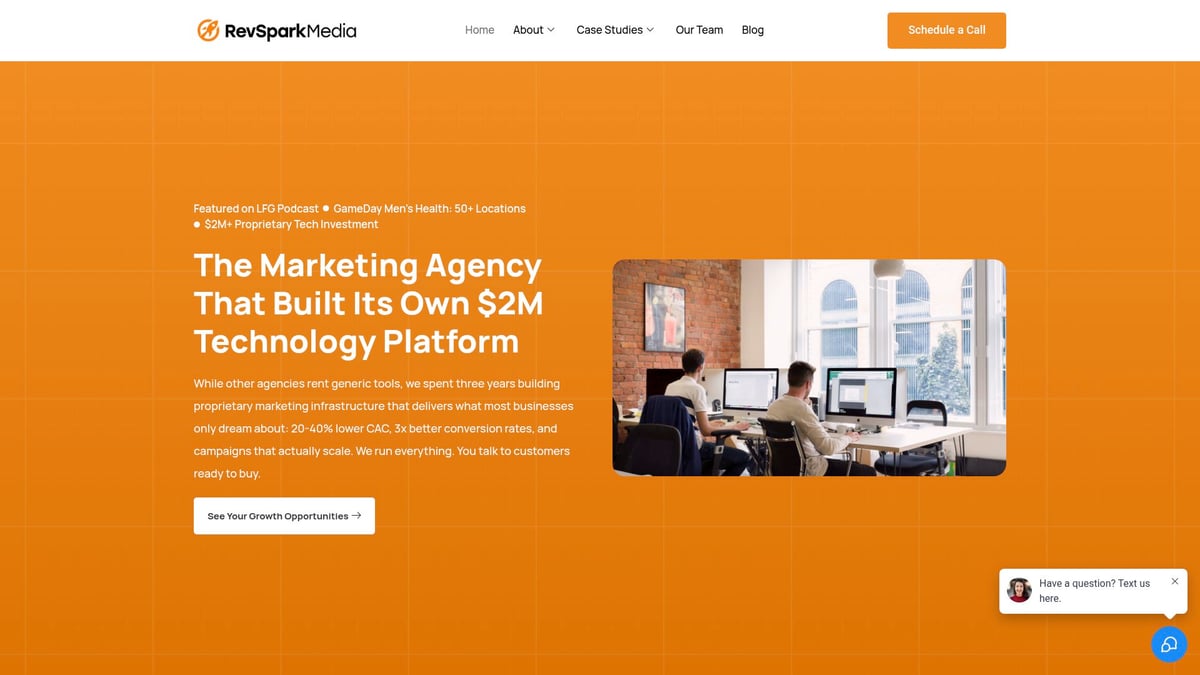
A dedicated pre-sales team ensures every lead is contacted within two minutes, significantly boosting appointment show rates. With full CRM integration and systematic follow-up, RevSpark Media helps clients maximize both patient and client acquisition.
Their track record includes more than $100 million in client growth and a 31-person team focused on delivering guaranteed results. For growth-focused practices and franchises, their data-driven approach is a proven path to success.
Compliance, Privacy, and Data Security in 2026
As building a lead generation website becomes more central to business growth, compliance and data security are more important than ever. The increasing value of digital leads has led to stricter regulations and higher expectations from users. Let us explore the evolving landscape and what you need to prioritize for a secure, trustworthy site.
Evolving Data Privacy Regulations
In 2026, regulations such as GDPR, CCPA, HIPAA, and emerging global standards are reshaping how organizations approach building a lead generation website. These laws dictate how personal data is collected, stored, and used, requiring explicit consent for sensitive information, especially in healthcare and franchise sectors.
For example, a healthcare provider must display clear consent forms before capturing any patient data. As the Lead Generation Statistics 2026 report highlights, with the industry projected to reach $3.7 billion by 2027, regulatory compliance is now a baseline expectation, not an option.
Prioritizing compliance protects your business legally and builds trust with prospects.
Best Practices for Secure Lead Capture
Security is non-negotiable when building a lead generation website. Implement SSL encryption, secure form handling, and schedule regular vulnerability scans to protect user data. A transparent privacy policy, visible on every form, reassures visitors their information is handled safely.
Consider these best practices:
| Practice | Benefit |
|---|---|
| SSL Encryption | Secures data in transit |
| Secure Form Handling | Prevents data breaches |
| Regular Scans | Detects vulnerabilities early |
| Visible Privacy Policy | Builds user confidence |
For instance, a franchise site displaying security badges and privacy links can see higher form completion rates. Following these protocols is essential for anyone building a lead generation website who wants to maximize trust and conversions.
Consent Management and User Rights
Modern users expect control over their personal data when interacting with any business online. Building a lead generation website now means implementing cookie consent banners and preference centers, which allow users to manage their data permissions easily.
Additionally, offer straightforward ways for users to access, modify, or delete their information. For example, a telehealth provider might provide an easy opt-out link in marketing emails, empowering users and demonstrating respect for privacy.
By proactively addressing user rights, you reinforce the trustworthiness of your lead generation website and meet evolving legal standards.
Staying Ahead of Compliance Trends
Compliance is not a one-time effort. Staying current with legal updates and industry guidelines is key to building a lead generation website that remains both effective and lawful. Schedule regular compliance audits and train your staff to recognize and address new requirements.
For example, a medical spa may update its intake forms to align with new regional privacy regulations. Proactive compliance not only avoids penalties but also protects your reputation, ensuring long-term growth and client confidence.