
As we approach 2026, the world of lead media is evolving faster than ever, intensifying the race for high-quality leads across every sector. Businesses that want to secure sustainable growth and market leadership must now prioritize robust strategies to stay ahead.
This guide is your essential resource, designed for marketers, business owners, and decision-makers ready to future-proof their lead media efforts. Inside, you will discover actionable strategies, expert insights, and practical tips tailored for the challenges and opportunities of 2026.
Explore emerging trends, cutting-edge technologies, data-driven tactics, omnichannel methods, compliance requirements, and step-by-step plans to optimize your approach.
The Evolving Landscape of Lead Media in 2026
The world of lead media is undergoing a dramatic transformation as we approach 2026. Businesses are adapting to new buyer expectations, technological shifts, and a rapidly expanding set of channels. Understanding these changes is crucial for anyone aiming to secure a competitive edge in lead media.

Shifting Consumer Behavior and Expectations
Buyer journeys are no longer linear. Today’s consumers demand tailored experiences at every stage. Self-directed research is the norm, empowering buyers to make informed decisions before contacting sales teams.
Trust and transparency are now table stakes for successful lead media. Brands must be credible, responsive, and clear about data usage. In fact, B2B Buyer Journey Statistics 2026 show that 78% of B2B buyers conduct in-depth online research before ever engaging with a representative. This shift requires brands to build authority and nurture trust long before a lead fills out a form.
Personalization is paramount. Audiences expect relevant content and seamless engagement across all touchpoints. For lead media strategies to succeed, every interaction must feel tailored and genuine.
Emerging Lead Media Channels and Platforms
The channels driving lead media are evolving rapidly. Video content, for example, is now a powerhouse, generating 66% more qualified leads annually compared to static formats. Interactive content, such as quizzes and calculators, also boosts engagement and conversion rates.
Voice search and smart assistants are on the rise, changing how prospects discover information and interact with brands. Social media platforms like TikTok, LinkedIn, and Instagram are playing an increasingly central role in lead generation, offering dynamic ways to reach highly targeted audiences.
To maximize lead media outcomes, marketers must stay agile, continuously testing new channels and formats. Adapting quickly to these shifts ensures brands capture attention and drive quality leads in a crowded digital space.
Technology-Driven Disruption
Technology is revolutionizing lead media at every level. AI-powered targeting and predictive analytics allow marketers to identify and prioritize high-value prospects with precision. Automation streamlines lead qualification and nurturing, freeing up resources for creative strategy.
The depreciation of third-party cookies and stricter privacy regulations are reshaping how data is collected and used. Marketers must now leverage first-party data, ensuring compliance while still delivering personalized experiences.
A recent Salesforce study found that 61% of marketers consider AI essential for lead generation in 2026. Investing in technology is no longer optional for lead media success, but a strategic imperative.
Key Market Trends and Forecasts
Digital lead media spending is projected to soar as businesses double down on data-driven acquisition. Sectors like healthcare, SaaS, and franchising are expected to see the highest growth rates, driven by increasing competition for quality leads.
Cost per lead is rising across most industries, putting pressure on marketers to optimize every dollar spent. Benchmarking and sector-specific insights will become even more critical for refining strategies and justifying investments.
In summary, the lead media landscape in 2026 is marked by rapid innovation, changing consumer expectations, and a heightened focus on data integrity. Staying ahead requires a proactive, adaptable approach rooted in trust, technology, and continuous optimization.
Building a Future-Proof Lead Media Strategy
Achieving sustainable growth in 2026 requires a future-proof approach to lead media. Businesses must adapt their strategies to address evolving buyer expectations, technology advancements, and regulatory changes. This section outlines the building blocks of a lead media plan designed for resilience and long-term success.

Setting Clear Objectives and KPIs
Defining measurable goals is the cornerstone of any lead media strategy. Start by identifying what success looks like: Do you want to boost lead volume, improve lead quality, increase conversion rates, or maximize ROI?
Use SMART objectives that align with your overall business priorities. For example, aim for a 20 percent higher conversion rate by documenting and tracking lead goals. Common KPIs include cost per lead, lead-to-customer conversion rate, and marketing-sourced revenue.
A clear roadmap ensures all stakeholders understand the purpose and benchmarks of your lead media efforts. Regularly review and adjust objectives as market dynamics shift.
Audience Segmentation and Persona Development
Knowing your audience is essential for effective lead media. Leverage analytics to pinpoint high-value segments and tailor messages for their unique needs.
Develop detailed buyer personas by analyzing demographics, firmographics, and behavioral data. This process reveals motivations, pain points, and preferred channels.
Incorporate intent data to anticipate when prospects are likely to engage. Accurate segmentation allows for precise targeting, improving both lead quality and campaign efficiency.
Channel Selection and Diversification
A robust lead media plan thrives on channel diversification. Evaluate the effectiveness of paid, owned, and earned media to reach prospects across multiple touchpoints.
Integrate emerging channels like programmatic advertising, influencer collaborations, and conversational marketing. Multichannel campaigns can increase lead acquisition by 24 percent.
For more in-depth insights on multi-channel approaches, explore these media leads generation strategies. Diversification reduces risk and ensures your lead media remains agile in a fast-changing environment.
Content Creation and Personalization
Content is the engine of lead media success. Craft compelling lead magnets and offers that address the specific challenges of your target personas.
Personalize content dynamically based on user behavior, preferences, and stage in the buyer journey. Use personalized calls-to-action, which can convert up to 202 percent better than generic ones.
Consistent, relevant content builds trust and nurtures prospects through the funnel, increasing the likelihood of conversion.
Data-Driven Optimization and Continuous Improvement
Continuous improvement is vital for effective lead media. Implement A B testing and multivariate experiments to refine messaging, creative, and offers.
Leverage analytics platforms to monitor performance in real time. Establish feedback loops with sales and customer service to capture qualitative insights and adjust strategies accordingly.
Regular optimization ensures your lead media adapts to emerging trends, buyer behaviors, and competitive pressures.
Resource Allocation and Budget Planning
Efficient resource allocation maximizes the ROI of your lead media investments. Balance your budget across channels and tactics based on performance data and industry benchmarks.
Forecast future spending needs by analyzing past results and market forecasts. Prioritize high-performing channels, but reserve budget for testing new opportunities.
A flexible budget allows your lead media strategy to scale and pivot as business goals evolve, ensuring sustained growth.
Leveraging Technology and Automation for Scalable Lead Generation
Technology is reshaping the way organizations approach lead media at scale. As the landscape evolves, automation and advanced tools are no longer optional—they are essential for businesses that want to stay ahead. The integration of artificial intelligence, automation platforms, real-time engagement, and robust compliance practices is unlocking new levels of efficiency, precision, and scalability in lead media strategy.

The Role of AI and Machine Learning
Artificial intelligence is transforming lead media through advanced audience targeting and predictive analytics. AI algorithms analyze vast datasets to identify high-potential prospects, personalize outreach, and prioritize leads in real time.
Predictive lead scoring uses machine learning to rank prospects based on their likelihood to convert, enabling sales teams to focus on the most valuable opportunities. According to Salesforce, 61% of marketers now consider AI crucial for lead generation in 2026. For a deeper dive into AI's impact and market growth, consult the AI Lead Generation Guide 2026.
AI-driven lead media strategies help marketers anticipate customer needs and deliver tailored experiences, giving organizations a competitive edge.
Marketing Automation Platforms and CRM Integration
Marketing automation platforms are streamlining every stage of the lead media process. These systems automate lead capture, nurturing, and follow-up workflows, ensuring consistent engagement across channels.
Integrating automation platforms with CRM systems is vital for seamless lead tracking and management. This connection allows teams to monitor every interaction, score leads automatically, and trigger relevant communications based on user behavior.
Automated lead nurturing has proven to increase sales opportunities by 20%, according to Forrester. By embedding automation into lead media, businesses can scale their campaigns efficiently and maintain a personalized approach at every touchpoint.
Advanced Tracking and Attribution Models
Accurate measurement is essential for optimizing lead media investments. Traditional last-click attribution often fails to capture the full customer journey, leading to misallocated resources.
Modern lead media strategies rely on multi-touch and data-driven attribution models. These models assign value to all relevant interactions, offering a clearer picture of what drives conversions.
| Attribution Model | Key Feature | Benefit |
|---|---|---|
| Last-Click | Credit to final interaction | Simple, but incomplete |
| Multi-Touch | Credit to all touchpoints | Holistic view |
| Data-Driven | AI analyzes impact of each touchpoint | Most accurate ROI |
Businesses using multi-touch attribution report a 30% increase in marketing efficiency, according to Google.
Chatbots, Conversational AI, and Real-Time Engagement
Chatbots and conversational AI are revolutionizing real-time engagement in lead media. These tools instantly qualify leads, gather essential information, and answer queries around the clock.
Deploying chatbots on websites and messaging platforms creates frictionless experiences. Prospects receive immediate support, while organizations capture and segment leads more effectively.
Conversational interfaces also nurture prospects with tailored recommendations, boosting conversion rates. Drift reports that chatbots can increase lead conversion rates by up to 40%, making them a powerful addition to any lead media strategy.
Compliance and Data Privacy in Automated Lead Media
As automation grows, so does the importance of compliance in lead media. Marketers must navigate global privacy regulations such as GDPR and CCPA to build trust and avoid costly penalties.
Ethical data collection and transparent consent management are critical. Automated systems should prioritize security, obtain clear opt-ins, and communicate data usage policies openly.
Maintaining compliance not only protects organizations, it also reassures leads that their information is safe. This commitment to privacy is an essential foundation for sustainable, scalable lead media efforts.
Omnichannel Lead Media Tactics for 2026
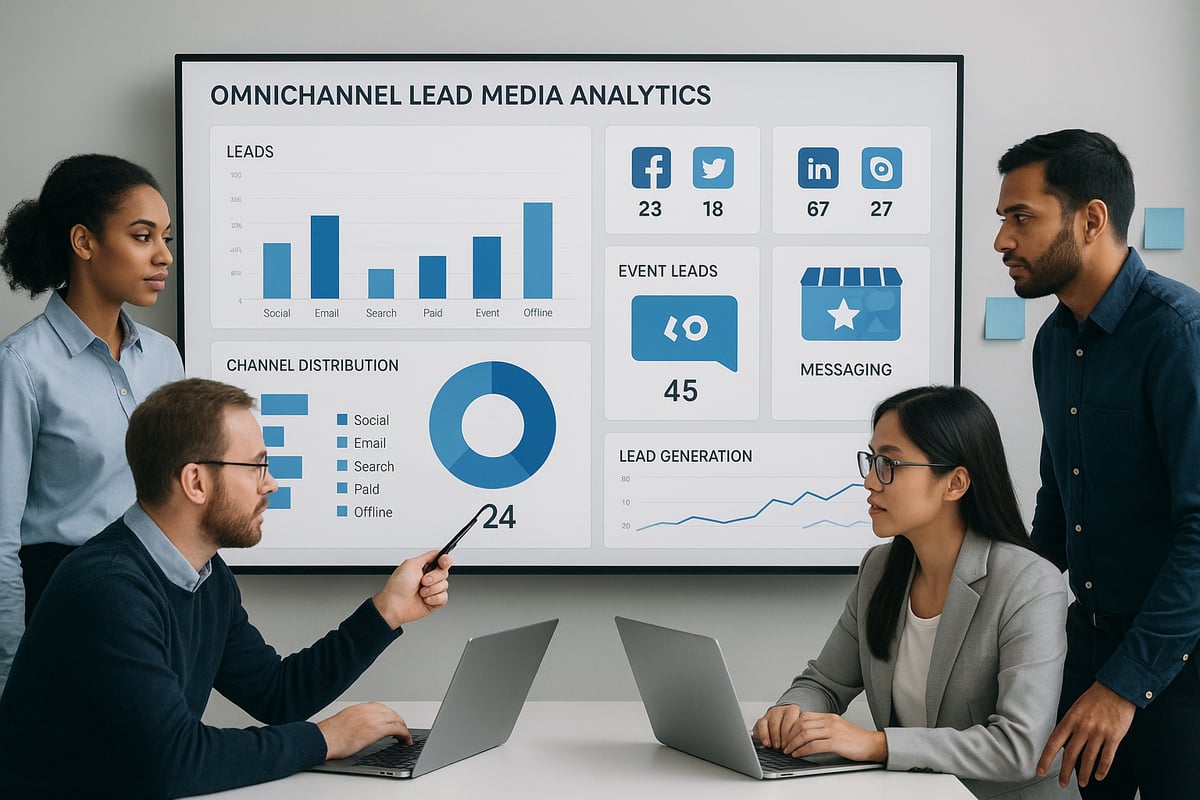
Omnichannel lead media strategies are becoming essential for businesses aiming to attract and convert high-quality leads in 2026. By integrating diverse channels and touchpoints, organizations can engage prospects at every stage of the buyer journey, delivering consistent and personalized experiences. Let us explore the critical tactics shaping successful lead media campaigns in the coming years.
Integrating Online and Offline Touchpoints
A future-ready lead media strategy seamlessly blends digital and physical interactions. Businesses are combining in-person events, webinars, and virtual experiences to create unified journeys for prospects. For example, a prospect might attend a live seminar, receive a personalized follow-up email, and engage with interactive online content.
Key elements include:
- Consistent branding and messaging across all channels
- Real-time data sharing between touchpoints
- Using event participation data to inform digital follow-ups
This approach ensures that every interaction builds trust and keeps leads engaged, increasing overall campaign effectiveness.
Social Media and Influencer Collaboration
Social platforms are now central to lead media, with influencer partnerships driving credibility and reach. Collaborating with micro- and nano-influencers allows brands to tap into niche audiences and foster authentic connections. Social proof, such as user-generated content and testimonials, further enhances lead quality.
Best practices involve:
- Identifying influencers aligned with brand values
- Co-creating engaging content for lead capture
- Encouraging satisfied customers to share experiences
Nearly half of consumers rely on influencer recommendations, making this channel indispensable for modern lead media strategies.
Content Syndication and Strategic Partnerships
Expanding reach through content syndication and partnerships is key in competitive landscapes. By distributing valuable content on third-party platforms, companies gain access to new audiences and increase lead volume. Co-branded campaigns and lead sharing agreements with strategic partners further amplify results.
Tactics to consider:
- Selecting syndication partners with relevant audiences
- Coordinating messaging and calls-to-action
- Tracking lead sources for accurate attribution
Content syndication ensures lead media efforts extend beyond owned channels, maximizing visibility and engagement.
Paid Media Innovations: Programmatic and Native Advertising
Innovative paid media tactics are reshaping lead media in 2026. Programmatic advertising enables real-time bidding and precise audience targeting, optimizing spend for better results. Native advertising blends promotional content seamlessly within user experiences, improving engagement and lead quality.
To stay competitive:
- Leverage programmatic platforms for data-driven targeting
- Invest in native ad formats for higher credibility
- Continuously test creative and messaging
For a deeper dive into digital acquisition tactics that fuel lead media growth, explore Digital acquisition for lead growth.
Email, SMS, and Direct Messaging Strategies
Email, SMS, and messaging apps remain vital channels for omnichannel lead media campaigns. Hyper-personalized outreach, such as dynamic offers and drip campaigns, increases response rates and nurtures prospects effectively. Automation tools enable timely follow-ups based on user actions.
Key tips:
- Segment audiences for tailored messaging
- Use triggered workflows for instant engagement
- Monitor open and conversion rates to refine tactics
Combining these channels ensures leads are engaged throughout their decision-making journey.
Measurement, Attribution, and Optimization Across Channels
Success in omnichannel lead media depends on robust measurement and ongoing optimization. Unified dashboards provide holistic performance insights, enabling marketers to assess impact across all channels. Advanced attribution models, like multi-touch and data-driven attribution, reveal which tactics drive the best results.
Optimization steps include:
- Setting clear KPIs for each channel
- Regularly reviewing attribution data
- Reallocating budgets based on performance trends
Continuous measurement ensures that lead media strategies remain agile, effective, and aligned with business objectives.
Data, Compliance, and Ethical Considerations in Lead Media
The digital era has raised the stakes for data privacy, compliance, and ethical standards in lead media. As organizations increase their reliance on data-driven lead generation, the risks and responsibilities around data management have grown. To thrive in 2026, brands must align their lead media strategies with evolving regulations and ethical best practices.
Data Collection, Management, and Security
Effective lead media relies on secure, transparent, and compliant data collection. Marketers must prioritize first-party data, reducing dependence on third-party cookies as privacy laws tighten. Collecting only essential information helps minimize risk, while robust security protocols protect both prospects and brand reputation.
Implementing best practices in lead generation and qualification ensures that data is accurate, relevant, and responsibly managed. Regular audits and encryption are crucial for safeguarding sensitive information.
Navigating Global Privacy Regulations
Global regulations like GDPR, CCPA, and new data laws for 2026 are reshaping how organizations approach lead media. Compliance is no longer optional—failure to adhere can result in significant penalties and loss of customer trust.
Understanding regional differences and updating internal policies is vital. Businesses should appoint data protection officers and provide ongoing training to ensure regulations are met across all lead media activities.
Consent Management and Transparency
Building trust through clear consent processes is essential for sustainable lead media success. Transparent opt-in forms, explicit privacy statements, and easy-to-access data usage explanations foster confidence among prospects.
Companies must keep records of consent and allow users to update preferences at any time. This transparency not only satisfies regulatory requirements but also enhances user experience.
Ethical Targeting and Avoiding Bias
Ethical considerations go beyond compliance in lead media. AI-driven segmentation and targeting must be monitored to avoid bias and ensure fairness. Regularly reviewing targeting algorithms helps prevent discriminatory practices.
Inclusive marketing strategies, paired with ongoing bias audits, support equitable access to offers and information. Prioritizing ethical standards drives higher-quality engagement and strengthens brand reputation.
Impact of Compliance on Lead Media Performance
Compliance directly impacts lead media performance. As rules evolve, some tactics may become less effective or more costly. However, prioritizing compliance and ethics builds long-term value, trust, and resilience.
Adapting to regulatory changes ensures lead media remains effective while protecting both the organization and its customers. Success in 2026 will depend on a proactive, responsible approach to data and ethics.
Actionable Steps for Implementing a 2026-Ready Lead Media Plan
Launching a future-proof lead media strategy in 2026 requires a clear, step-by-step approach. By following these actionable steps, organizations can position themselves to capture high-quality leads, adapt quickly to change, and remain compliant in a shifting digital landscape.
Step 1: Audit Current Lead Media Efforts
Begin by evaluating your current lead media channels, content assets, and conversion results. Identify which channels deliver the best lead quality and where gaps exist.
- Review existing campaigns for performance and compliance.
- Compare outcomes to industry benchmarks.
- Pinpoint underperforming tactics and opportunities for optimization.
For a deeper dive into improving outcomes, explore Qualified lead generation best practices to benchmark your approach against industry leaders.
Step 2: Set Clear Goals and KPIs
Define what success means for your lead media initiatives. Establish SMART objectives that align with overall business growth and revenue targets.
- Set measurable goals for lead volume, quality, and conversion rates.
- Choose KPIs such as cost per lead, sales pipeline velocity, and ROI.
- Ensure all stakeholders understand and support these targets.
A clear framework empowers teams to focus efforts and measure progress effectively.
Step 3: Map and Segment Target Audiences
Successful lead media strategies rely on precise audience segmentation. Conduct in-depth market research and leverage data analytics to develop detailed buyer personas.
- Use behavioral and intent data for segmentation.
- Identify pain points, preferences, and purchase triggers.
- Tailor messaging to address each segment’s unique needs.
This approach increases relevance and boosts lead engagement across all channels.
Step 4: Select and Integrate Technology Solutions
Choose marketing automation, CRM, and analytics platforms that fit your organization’s needs. Seamless integration ensures accurate data flow and efficient lead management.
- Evaluate tools for scalability and interoperability.
- Prioritize platforms that offer AI and real-time analytics.
- Integrate systems for unified reporting and automation.
A robust technology stack is a cornerstone of any modern lead media plan.
Step 5: Develop and Launch Omnichannel Campaigns
Design campaigns that reach prospects through multiple touchpoints, both online and offline. Coordinate content, offers, and messaging across channels for a cohesive experience.
- Align campaign timing and frequency.
- Personalize content for each channel and audience segment.
- Leverage webinars, events, and digital content to drive engagement.
Omnichannel execution maximizes visibility and lead capture opportunities.
Step 6: Monitor, Measure, and Optimize
Continuous improvement is vital for lead media success. Deploy advanced attribution models and analytics to track performance across every channel.
- Set up dashboards for real-time insights.
- Run regular A/B tests and multivariate experiments.
- Adjust budgets and tactics based on data-driven findings.
This ensures your strategy remains agile and responsive to changing market dynamics.
Step 7: Ensure Compliance and Ethical Practices
Staying compliant with regulations is non-negotiable. Review data collection, consent, and privacy policies to protect both your organization and your leads.
- Train teams on GDPR, CCPA, and emerging data laws.
- Implement transparent opt-in and data usage disclosures.
- Audit systems for ethical targeting and bias prevention.
Ethical and compliant practices build trust and safeguard brand reputation.
Step 8: Foster a Culture of Continuous Improvement
Encourage ongoing innovation and adaptability within your team. Solicit feedback, celebrate successes, and learn from setbacks.
- Hold regular strategy reviews and knowledge-sharing sessions.
- Stay updated on lead media trends and technology shifts.
- Empower teams to experiment and iterate quickly.
A culture of learning ensures your lead media efforts evolve with the market.
Example Implementation Roadmap
Below is a sample 12-month roadmap for rolling out a 2026-ready lead media strategy:
| Month | Key Milestone | Deliverable |
|---|---|---|
| 1-2 | Audit & Goal Setting | Channel audit, KPIs |
| 3-4 | Audience Research & Segmentation | Buyer personas |
| 5-6 | Tech Selection & Integration | Platform onboarding |
| 7-8 | Omnichannel Campaign Development | Campaign assets |
| 9-10 | Launch & Initial Optimization | Campaign rollout |
| 11 | Compliance Review & Training | Policy updates |
| 12 | Performance Review & Next Steps | Optimization plan |
This roadmap provides structure while allowing for flexibility and iteration.
Common Pitfalls and How to Avoid Them
Avoid these frequent mistakes when deploying your lead media strategy:
- Relying solely on one channel or tactic.
- Overlooking compliance or ethical considerations.
- Failing to link lead media goals to broader business objectives.
Mitigate these risks by prioritizing diversification, maintaining up-to-date compliance, and aligning all efforts with organizational strategy.