
Healthcare providers face a unique challenge in today's digital landscape: attracting qualified patients while maintaining compliance, building trust, and demonstrating expertise. The ability to acquire leads effectively determines whether a medical practice thrives or struggles with empty appointment slots. For healthcare organizations ranging from compounding pharmacies to addiction treatment centers, the traditional referral model no longer suffices. Modern patients research extensively online before choosing a provider, making strategic lead generation not just beneficial but essential for sustainable growth in 2026.
Understanding the Healthcare Lead Generation Landscape
The healthcare sector operates under distinctly different rules than standard B2C or B2B industries. Patient privacy regulations, ethical marketing constraints, and the high-stakes nature of medical decisions create complexity that generic marketing approaches cannot address.
Successful healthcare lead generation requires:
- Compliance with HIPAA and healthcare advertising regulations
- Trust-building content that demonstrates medical expertise
- Multi-touch nurturing sequences that respect the patient decision timeline
- Technology that identifies potential patients without violating privacy standards
- Rapid response systems that engage leads while interest remains high
Unlike e-commerce or software sales, healthcare leads often represent people in vulnerable situations seeking solutions to significant health concerns. This reality demands a more thoughtful, empathetic approach to how organizations acquire leads and convert them into patients.
The Anonymous Visitor Challenge
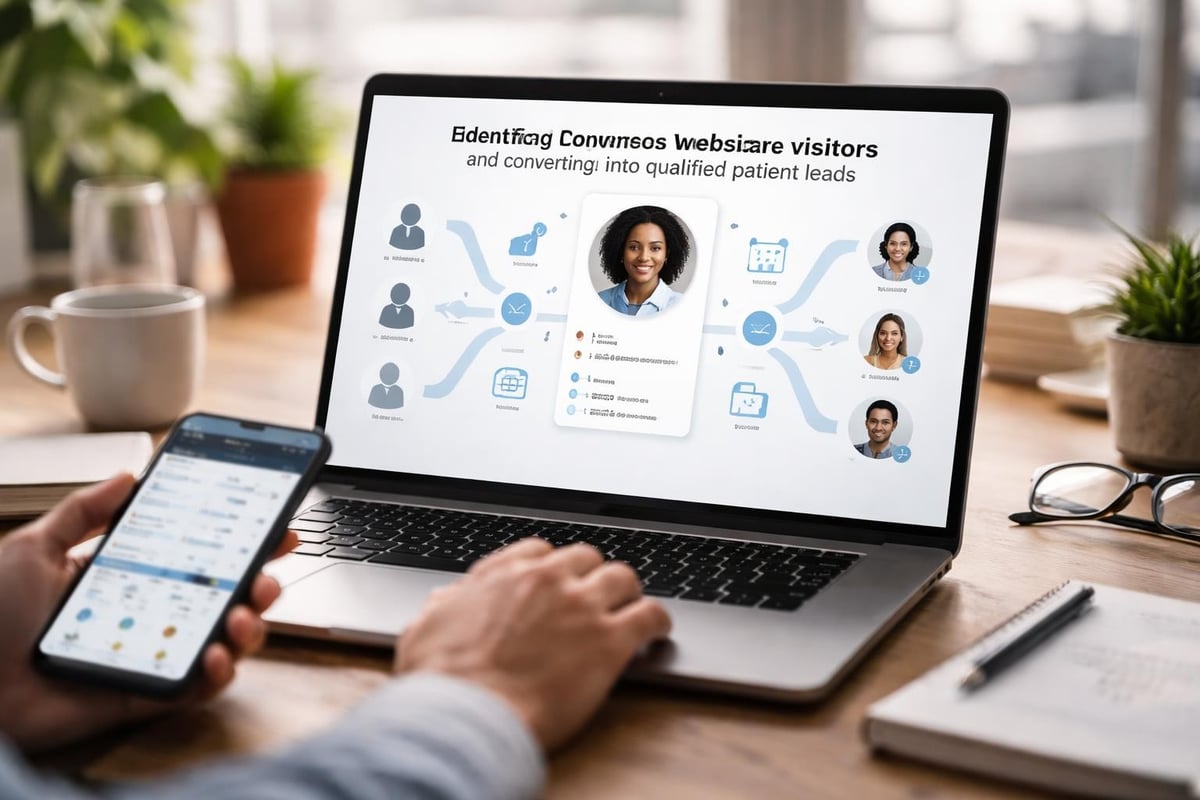
Most healthcare websites lose 85-95% of their visitors without ever knowing who they were. These anonymous browsers represent substantial missed opportunity. A wound care center might attract 1,000 monthly visitors searching for diabetic foot ulcer treatment, yet only 20 complete a contact form. The remaining 980 visitors leave without engagement, often never to return.
Advanced technology now enables healthcare providers to identify a significant portion of these anonymous visitors through data enrichment and behavioral tracking that remains compliant with privacy regulations. This capability transforms lead generation from a passive waiting game into an active identification and outreach process.
Strategic Channels to Acquire Leads in Healthcare
Different healthcare specialties attract patients through varied channels. A men's health clinic targeting testosterone replacement therapy will employ different tactics than a veterinary franchise or telehealth provider. However, certain foundational strategies prove effective across healthcare verticals.
Search Engine Optimization for Medical Practices
SEO strategies for lead generation remain among the most cost-effective long-term approaches to acquire leads. Healthcare-related searches demonstrate extraordinarily high intent. Someone searching "orthopedic surgeon for torn ACL near me" represents a qualified lead actively seeking treatment.
Effective healthcare SEO requires:
- Location-specific content addressing regional patient needs
- Condition-specific landing pages targeting treatment searches
- Educational resources answering common patient questions
- Provider biography optimization building trust and credibility
- Schema markup helping search engines understand medical content
The timeline for SEO results typically extends 6-12 months, making it unsuitable as a sole lead generation method for practices needing immediate patient flow. However, SEO compounds over time, eventually generating consistent organic leads with minimal ongoing investment.
Paid Advertising Across Multiple Platforms
When healthcare organizations need to acquire leads quickly, paid advertising provides immediate visibility. Google Ads, Facebook advertising, and specialized healthcare networks each offer distinct advantages.
| Platform | Best For | Average Cost Per Lead | Timeline to Results |
|---|---|---|---|
| Google Search Ads | High-intent treatment searches | $75-$300 | Immediate |
| Facebook/Instagram | Awareness and consideration stage | $30-$150 | 2-4 weeks |
| YouTube Pre-roll | Educational content promotion | $40-$200 | 3-6 weeks |
| Programmatic Display | Remarketing to website visitors | $25-$100 | 1-2 weeks |
Paid advertising success in healthcare depends heavily on landing page quality, offer positioning, and post-click follow-up systems. A compounding pharmacy spending $10,000 monthly on ads might generate 200 leads, but without proper nurturing, conversion rates will disappoint.
Content Marketing That Builds Authority
Healthcare consumers research extensively before making decisions. According to content lead generation best practices, authoritative content builds trust while attracting potential patients at various decision stages.
High-performing healthcare content formats include:
- Condition-specific guides explaining symptoms, causes, and treatment options
- Comparison articles evaluating different treatment approaches
- Provider thought leadership demonstrating expertise
- Video testimonials from satisfied patients
- Interactive assessments helping visitors self-identify their needs
A medical spa might create comprehensive guides on different aesthetic treatments, comparison articles on Botox versus dermal fillers, and video tours of their facility. Each content piece serves both SEO objectives and lead nurturing functions, educating potential patients while building confidence in the provider's expertise.

Converting Identified Leads Into Scheduled Appointments
The ability to acquire leads means little without systematic conversion processes. Healthcare leads require different handling than traditional sales prospects. The stakes feel higher, trust barriers stand taller, and decision timelines vary dramatically based on urgency and condition severity.
The Critical Importance of Response Speed
Research consistently demonstrates that lead response time dramatically impacts conversion rates. A lead contacted within two minutes converts at rates 10-100 times higher than one contacted after an hour. For healthcare specifically, rapid response signals professionalism, availability, and patient-centered care.
Optimal response protocols include:
- Automated immediate acknowledgment confirming receipt of inquiry
- Human follow-up within 2-5 minutes during business hours
- Multi-channel outreach combining phone, text, and email
- Clear next-step communication about the appointment process
- Persistent follow-up sequences for non-responders
An addiction treatment center receiving a late-night web inquiry faces a narrow window to engage that lead. The individual might contact multiple facilities, and the first to respond with empathy and clear guidance often wins the patient.
Qualification and Segmentation Systems
Not every lead represents an ideal patient. Effective qualification separates high-value opportunities from those unlikely to convert or fit the practice profile. This segmentation enables targeted nurturing appropriate to each lead category.
Healthcare lead qualification criteria typically evaluate:
- Insurance coverage and payment ability
- Geographic accessibility to the practice location
- Condition severity and treatment urgency
- Alignment with provider specialization
- Readiness to schedule versus information gathering
A wound care center might categorize leads into immediate surgical candidates, maintenance therapy patients, and early-stage condition monitoring. Each segment receives communications matched to their situation, improving relevance and conversion probability.
Nurture Sequences for Long-Cycle Decisions
Some healthcare decisions occur rapidly under urgent circumstances. Others unfold over months as patients research options, consult family members, arrange insurance coverage, and build confidence in their choice. According to lead generation tactics, systematic nurturing keeps organizations top-of-mind throughout extended decision processes.
Effective nurture sequences deliver value while advancing the relationship:
- Week 1: Educational content about the condition and treatment options
- Week 2: Provider expertise demonstration and facility information
- Week 3: Patient success stories and testimonial content
- Week 4: Financial information and insurance guidance
- Week 5+: Personalized outreach addressing specific concerns
A telehealth provider offering hormone replacement therapy might nurture leads over 8-12 weeks, gradually building confidence through education, addressing common objections, and demonstrating results other patients achieved.
Technology Infrastructure for Systematic Lead Management
The ability to acquire leads at scale requires technology infrastructure that captures, tracks, nurtures, and analyzes lead data. Manual processes collapse under volume, creating inconsistent follow-up and lost opportunities.
CRM Systems Purpose-Built for Healthcare
Healthcare-specific CRM platforms understand the unique requirements of patient lead management. These systems incorporate compliance features, appointment scheduling integration, and communication tracking across multiple channels.
Essential CRM capabilities include:
- HIPAA-compliant data storage and communications
- Integration with electronic health record systems
- Multi-location management for franchise or multi-site operations
- Automated workflow triggers based on lead behavior
- Comprehensive reporting on lead sources and conversion metrics
A franchise system operating 30 wound care center locations needs centralized visibility into lead generation and conversion across all sites. The CRM becomes the single source of truth for performance measurement and optimization.
Marketing Automation Platforms
Marketing automation enables personalized communication at scale. Once configured, these systems deliver the right message to the right lead at the right time based on behavioral triggers and segmentation rules.
An orthopedic practice might configure automation sequences that:
- Send condition-specific educational content based on the procedure inquiry
- Trigger appointment reminders and preparation instructions
- Request reviews and testimonials from satisfied patients
- Re-engage leads who didn't schedule after initial contact
- Cross-sell additional services to existing patients
The combination of CRM and marketing automation creates a systematic machine that consistently moves leads toward conversion without requiring manual intervention for each touchpoint.

Measuring and Optimizing Lead Generation Performance
Organizations cannot improve what they don't measure. Comprehensive analytics reveal which tactics effectively acquire leads, which sources deliver the highest quality, and where conversion processes succeed or fail.
Key Performance Indicators for Healthcare Lead Generation
Different metrics matter at various funnel stages. Tracking only top-line lead volume misses critical quality and conversion insights that determine actual ROI.
| Metric | What It Measures | Healthcare Benchmark |
|---|---|---|
| Cost Per Lead | Efficiency of acquisition channels | $50-$250 depending on specialty |
| Lead-to-Appointment Rate | Qualification and conversion effectiveness | 25-45% |
| Appointment Show Rate | Scheduling process and patient commitment | 65-85% |
| Patient Lifetime Value | Long-term revenue from acquired patients | $2,000-$50,000+ |
| Marketing Cost Per Acquisition | Total marketing cost per new patient | $200-$1,000 |
A medical spa tracking only cost per lead might celebrate low acquisition costs while missing that those cheap leads convert poorly. Comprehensive analysis reveals that slightly more expensive leads from different sources schedule appointments at double the rate, delivering superior ROI despite higher initial cost.
Attribution Modeling in Multi-Touch Healthcare Journeys
Healthcare patients rarely convert after a single touchpoint. The decision journey typically includes multiple website visits, content downloads, phone calls, and competitor comparisons. Understanding which touchpoints deserve credit for conversions enables smarter budget allocation.
Common attribution approaches include:
- First-touch attribution crediting the initial discovery source
- Last-touch attribution crediting the final touchpoint before conversion
- Multi-touch attribution distributing credit across the journey
- Time-decay attribution giving more credit to recent interactions
A compounding pharmacy might discover that while Google Ads receive first-touch credit, email nurture sequences actually close most conversions. This insight justifies increased investment in email marketing and longer nurture sequences.
Advanced Strategies to Acquire Leads in Competitive Markets
Healthcare markets in major metropolitan areas feature intense competition. Standing out requires differentiation beyond basic marketing tactics. According to lead generation best practices, defining ideal customer profiles and understanding pain points creates messaging that resonates with target audiences.
Specialty-Specific Positioning
Generic healthcare marketing fails to connect with patients seeking specialized solutions. A men's health clinic emphasizing testosterone replacement therapy attracts different patients than one highlighting hair restoration or erectile dysfunction treatment, even though all fall under men's health.
Precise positioning addresses specific patient concerns:
- Addiction treatment centers: "Confidential executive treatment programs preserving your professional reputation"
- Veterinary medicine: "Advanced surgical capabilities previously requiring specialist referral"
- Women's health clinics: "Hormone optimization for perimenopausal women aged 40-55"
This specificity repels poor-fit leads while attracting exactly the patients the practice serves best.
Strategic Partnership and Referral Networks
While digital tactics effectively acquire leads, traditional referral relationships remain powerful in healthcare. Physicians trust peer recommendations, and patients value endorsements from providers they already see.
Building referral networks requires:
- Identifying complementary non-competing providers
- Creating referral-worthy patient experiences
- Providing referring providers with patient outcome updates
- Offering continuing education to referral sources
- Streamlining the referral process for provider convenience
A wound care center might develop relationships with podiatrists, endocrinologists, and primary care physicians who encounter diabetic patients with foot complications. These referral sources become consistent lead channels delivering pre-qualified, high-intent patients.
Leveraging Patient Data for Lookalike Targeting
Healthcare organizations possessing substantial patient databases can analyze characteristics of their best patients, then target similar prospects. This data-driven approach to acquire leads focuses resources on the highest-probability opportunities.
Lookalike analysis examines:
- Demographic patterns in age, income, location, and household composition
- Psychographic factors including interests, values, and lifestyle
- Behavioral indicators such as online research patterns and content consumption
- Treatment pathways showing common progression through services
A pharmaceutical distribution company analyzing their best clients might discover specific business characteristics predicting success. They can then target similar businesses with customized messaging addressing their particular needs, improving both lead quality and conversion rates.
Implementation Framework for Sustainable Lead Generation
Moving from occasional lead generation to systematic patient acquisition requires organizational commitment beyond marketing tactics. The entire patient experience from first website visit through ongoing care must align around conversion and retention.
Building Cross-Functional Alignment
Marketing cannot acquire leads successfully when front desk staff provide poor phone experiences, schedulers lack availability, or providers deliver inconsistent care quality. As noted in lead generation best practices from OnceHub, defining clear goals and targeting the right audience creates foundation for success, but execution requires coordination across departments.
Critical integration points include:
- Marketing and sales alignment on lead definitions and handoff processes
- Front office training on lead handling and conversion protocols
- Provider education on patient expectations set through marketing
- Operations ensuring capacity matches lead generation volume
- Finance tracking ROI and informing budget allocation decisions
A telehealth platform scaling lead generation from 100 to 500 monthly appointments must ensure sufficient provider capacity, scheduler availability, and technology infrastructure to handle increased volume without service degradation.
Testing and Iteration Methodology
Markets evolve, competitor tactics shift, and patient preferences change. Organizations that acquire leads most effectively embrace continuous testing and optimization rather than "set and forget" campaigns.
Systematic testing approaches include:
- A/B testing landing page variations for conversion rate improvement
- Ad creative rotation identifying highest-performing messages
- Offer testing comparing different lead magnets and incentives
- Channel mix experiments reallocating budget to top performers
- Follow-up sequence optimization refining nurture timing and content
A medical spa might test three different special offers: percentage discounts, dollar-amount savings, and bonus treatments. Data reveals which offer generates the most appointments and highest patient lifetime value, informing future promotions.
Scaling What Works While Managing Risk
Once testing identifies winning formulas, the natural impulse involves rapid scaling. However, healthcare organizations must balance growth ambition against capacity constraints and quality maintenance. Exploring various lead sources and optimization strategies helps diversify acquisition channels and reduce dependency on single tactics.
Responsible scaling considers:
- Provider capacity and ability to maintain quality with patient volume increases
- Staff training requirements to preserve conversion rates at scale
- Technology infrastructure capacity and potential bottlenecks
- Cash flow implications of increased marketing spend
- Market saturation risks in geographically limited service areas
A franchise system that successfully acquires leads for one location shouldn't immediately replicate the exact playbook across 50 locations. Market differences, competitive landscapes, and operational maturity levels require adaptation while maintaining core principles.
Successfully generating qualified patient leads requires integration of technology, process, and expertise that most healthcare providers lack in-house. The strategies outlined above work when executed systematically with appropriate tools, rapid response protocols, and conversion-focused nurturing. RevSpark Media specializes in this exact challenge for healthcare providers and franchise systems, combining proprietary technology that identifies anonymous visitors with in-house teams delivering 2-minute response times and systematic follow-up that converts leads into scheduled appointments. If your practice needs a partner that owns the complete revenue generation process and guarantees measurable results, explore how RevSpark Media's proven approach has generated over $100M in client growth.