
The healthcare industry stands at a critical intersection where traditional medical practice meets advanced digital innovation. Medical digitals have emerged as the backbone of modern healthcare marketing, patient acquisition, and practice growth, fundamentally changing how providers connect with patients and convert prospects into loyal clients. For healthcare providers ranging from compounding pharmacies to medical spas, understanding and leveraging medical digitals is no longer optional but essential for sustainable growth in an increasingly competitive marketplace.
Understanding Medical Digitals in Healthcare Marketing
Medical digitals encompass the full spectrum of digital technologies, platforms, and strategies that healthcare providers use to attract, engage, and convert patients. Digital health technologies have transformed the healthcare landscape, but medical digitals specifically focus on the marketing and patient acquisition side of this evolution.
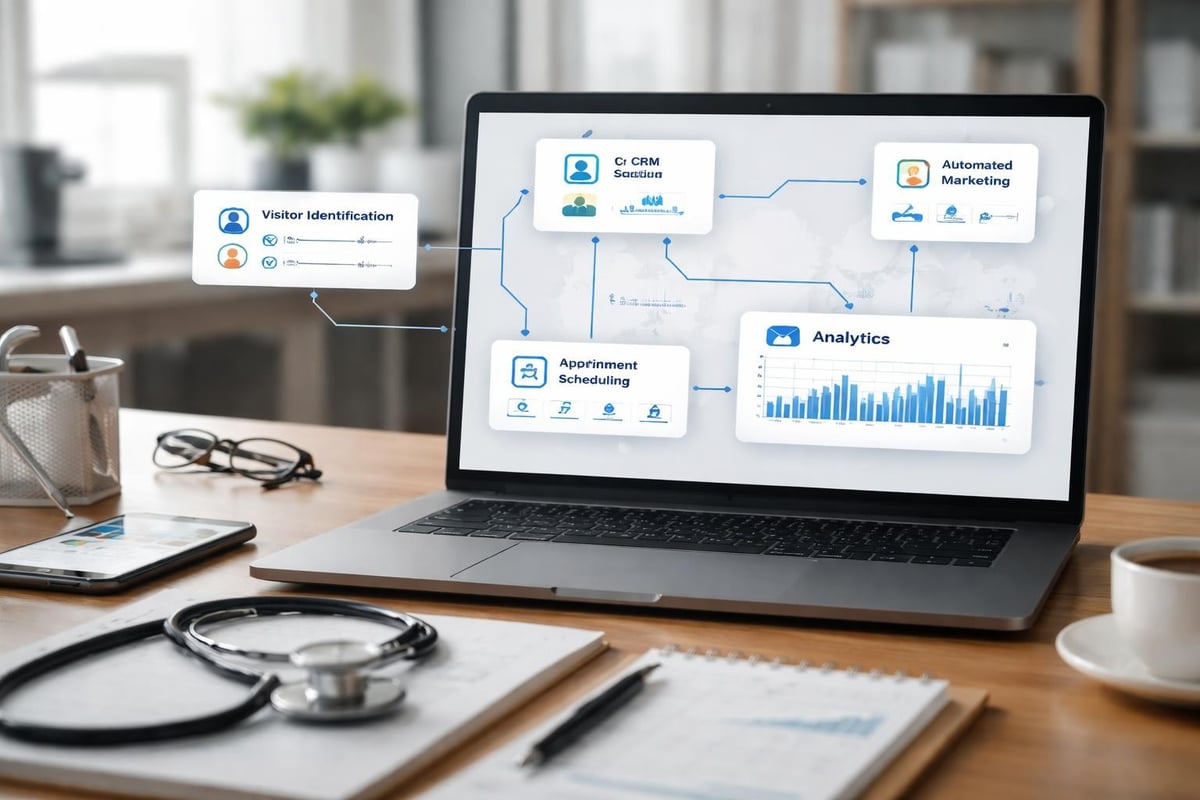
Unlike general digital health which includes electronic health records and clinical applications, medical digitals center on the patient journey from awareness to appointment. This includes website optimization, digital advertising campaigns, CRM systems, appointment scheduling platforms, and automated follow-up sequences that work together to move prospects through the conversion funnel.
The Core Components of Medical Digitals
Website Infrastructure and Visitor Identification
The foundation of any medical digitals strategy begins with an optimized website that serves as both an information hub and a conversion engine. Modern medical digitals platforms can now identify up to 60% of anonymous website visitors, transforming previously lost traffic into actionable leads.
Integrated Marketing Automation
- Email and SMS nurture sequences tailored to patient needs
- Automated appointment reminders and follow-ups
- Personalized content delivery based on visitor behavior
- Multi-channel retargeting campaigns
Patient Relationship Management Systems
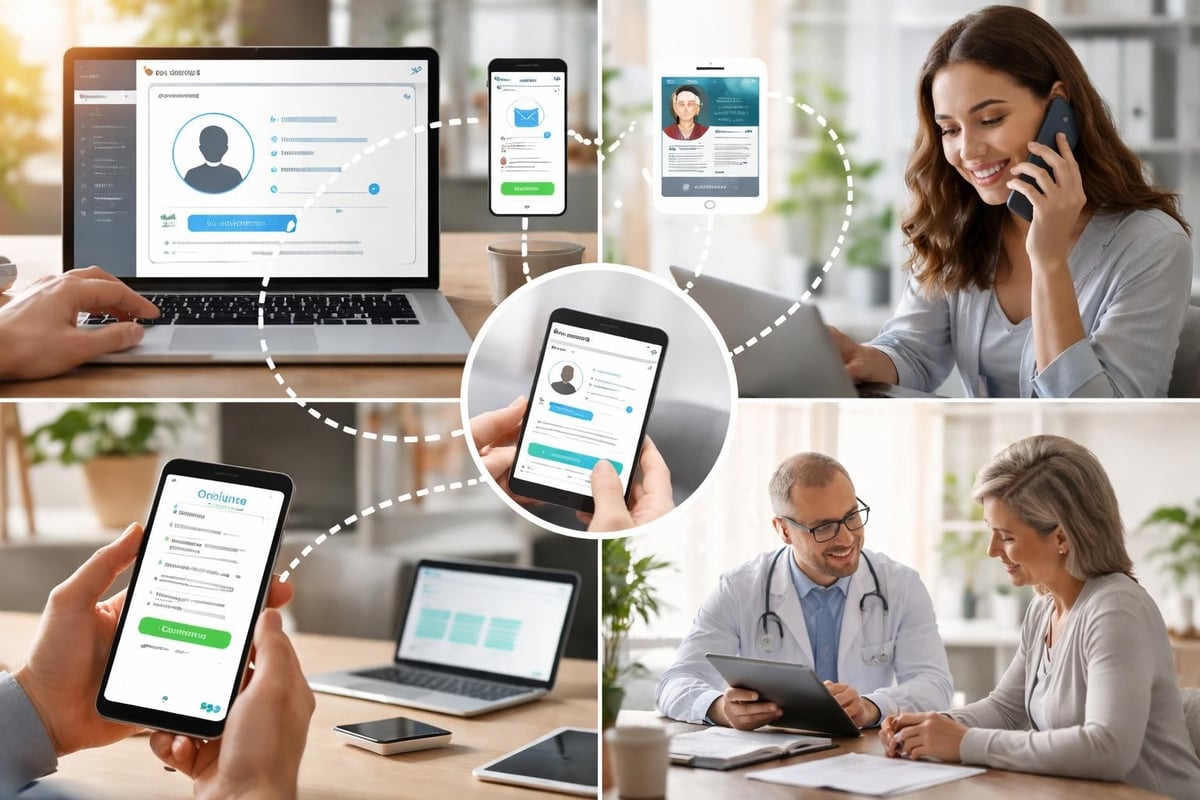
Medical digitals require sophisticated CRM platforms designed specifically for healthcare providers. These systems track every patient touchpoint, from initial website visit through consultation booking and post-appointment follow-up.
Medical Digitals Across Healthcare Specialties
Different healthcare specialties require tailored medical digitals approaches that address their unique patient demographics, treatment timelines, and conversion patterns.
High-Touch Specialties
Orthopedic practices, wound care centers, and addiction treatment facilities typically involve longer decision cycles and higher patient lifetime values. Medical digitals strategies for these specialties emphasize educational content, multiple consultation touchpoints, and extensive nurturing sequences that build trust over time.
| Specialty | Average Decision Cycle | Key Medical Digitals Focus | Primary Conversion Goal |
|---|---|---|---|
| Orthopedics | 14-30 days | Educational content, physician credentials | Consultation booking |
| Wound Care | 7-21 days | Insurance verification, outcome showcases | Initial assessment |
| Addiction Treatment | 1-7 days | Crisis intervention, family resources | Immediate intake |
| Medical Spas | 3-14 days | Before/after galleries, procedure details | Consultation scheduling |
Telehealth and Virtual Care
Telehealth platforms represent a rapidly growing segment where medical digitals play an absolutely critical role. Men's health and women's health clinics operating primarily through telehealth models depend entirely on medical digitals to acquire and onboard patients without any physical location advantage.
The medical digitals infrastructure for telehealth must handle:
- Instant appointment availability displays
- Real-time scheduling integration
- Digital intake form completion
- Secure payment processing
- Automated prescription fulfillment coordination
Franchise Healthcare Systems
Pharmaceutical distribution networks, veterinary medicine franchises, and service-based healthcare franchises face unique medical digitals challenges. They must balance corporate brand consistency with local market customization while managing lead distribution across multiple locations.
The Technology Stack Behind Medical Digitals
Building an effective medical digitals ecosystem requires integrating multiple technology platforms that work seamlessly together to create a frictionless patient experience.
Visitor Identification and Lead Capture
Advanced medical digitals platforms now employ reverse IP lookup, form abandonment tracking, and behavioral analytics to identify prospects even when they don't complete contact forms. This technology transforms anonymous website traffic into identifiable leads with contact information and behavioral data.
Key Technologies:
- Reverse IP lookup systems
- Form tracking and abandonment recovery
- Chatbot and live chat integration
- Phone call tracking and recording
- Heatmap and session recording tools
Campaign Management and Optimization
Medical digitals campaigns require continuous monitoring and adjustment based on performance data. Healthcare providers must track metrics across multiple channels including Google Ads, Facebook, Instagram, and emerging platforms while maintaining HIPAA compliance.
The most effective medical digitals strategies employ A/B testing for ad copy, landing pages, and email sequences. This data-driven approach allows practices to identify what resonates with their specific patient demographics and continuously improve conversion rates.
Lead Response and Conversion Optimization
The greatest weakness in most medical digitals strategies isn't lead generation but lead response. Studies consistently show that response time dramatically impacts conversion rates, with leads contacted within two minutes converting at significantly higher rates than those contacted after ten minutes.
The Two-Minute Response Standard
Medical digitals excellence requires infrastructure that enables immediate lead response. This includes:
- Automated lead routing to available team members
- Real-time notifications via multiple channels
- Pre-written response templates customized by specialty
- Click-to-call technology for instant phone connection
- Calendar integration showing real-time availability
Pre-Sales Development Teams
The most sophisticated medical digitals operations employ dedicated pre-sales development teams that handle appointment scheduling, consultation booking, and lead qualification. These teams focus exclusively on converting marketing-generated leads into scheduled appointments, allowing clinical staff to focus on patient care.
Content Strategy for Medical Digitals
Digital health content must balance educational value with conversion optimization. Healthcare providers need content that addresses patient questions and concerns while guiding them toward scheduling appointments.
Educational Content Pillars
- Treatment explanations and procedure overviews
- Insurance and payment options guidance
- Provider credentials and facility certifications
- Patient testimonials and outcome data
- Frequently asked questions specific to each specialty
SEO and Local Search Optimization
Medical digitals strategies must account for the highly localized nature of healthcare searches. Patients typically search for providers within their geographic area, making local SEO critical for practices with physical locations.
Local SEO Components:
| Element | Purpose | Implementation |
|---|---|---|
| Google Business Profile | Primary local listing | Complete profile with photos, hours, reviews |
| Location pages | Target multiple service areas | Unique content for each location |
| Local citations | Build location authority | Consistent NAP across directories |
| Patient reviews | Social proof and rankings | Systematic review generation campaigns |
| Local content | Target area-specific searches | Neighborhood guides, local health topics |
Data Analytics and Performance Measurement
Medical digitals campaigns generate vast amounts of data that must be analyzed to optimize performance and maximize return on investment. Healthcare providers need clear visibility into which marketing channels, campaigns, and messages drive the highest quality leads and best patient outcomes.
Key Performance Indicators
Effective medical digitals measurement tracks metrics across the entire patient acquisition funnel:
- Website metrics: Traffic volume, bounce rate, time on site, pages per session
- Lead generation: Form completions, phone calls, chat conversations, identified visitors
- Conversion rates: Lead-to-appointment, appointment-to-show, show-to-patient
- Patient lifetime value: Initial treatment revenue, repeat visits, referral generation
- Channel attribution: Which marketing sources produce the best ROI
HIPAA Compliance in Analytics
Medical digitals platforms must maintain strict HIPAA compliance while gathering patient data and behavioral information. This requires careful configuration of analytics tools, secure data storage, and proper business associate agreements with all technology vendors.

Advanced Medical Digitals Strategies
As medical digitals mature, healthcare providers are implementing increasingly sophisticated strategies that go beyond basic lead generation.
Retargeting and Multi-Touch Attribution
Patients rarely convert on their first website visit. Medical digitals strategies employ retargeting pixels to show ads to previous visitors across social media, search networks, and display networks. Multi-touch attribution models help providers understand which combination of touchpoints leads to conversion.
Marketing Automation Sequences
Automated nurture sequences keep prospects engaged over extended decision cycles. These sequences deliver educational content, provider introductions, patient testimonials, and special offers timed to match typical decision patterns for each specialty.
- Initial engagement: Welcome email and educational resources
- Value demonstration: Case studies and outcome data
- Objection handling: Insurance, cost, and logistics information
- Urgency creation: Limited availability or seasonal considerations
- Direct call-to-action: Specific invitation to schedule consultation
Artificial Intelligence and Predictive Analytics
The cutting edge of medical digitals incorporates AI to predict which leads are most likely to convert, optimize ad spend allocation, and personalize patient communications at scale. Machine learning algorithms analyze thousands of data points to identify patterns that human marketers might miss.
Integration with Practice Operations
Medical digitals cannot exist in isolation from overall practice operations. The most successful implementations create seamless connections between marketing systems and clinical workflows.
Appointment Scheduling Integration
Direct integration between medical digitals platforms and practice management systems eliminates manual data entry and reduces scheduling friction. Patients should be able to view real-time availability and book appointments without staff intervention.
CRM and EHR Connectivity
Connecting customer relationship management systems with electronic health records ensures that marketing data informs clinical care and clinical outcomes inform marketing strategies. This closed-loop system allows practices to identify which marketing sources produce the most compliant, highest-value patients.
The Future of Medical Digitals
The medical digitals landscape continues evolving rapidly as new technologies emerge and patient expectations shift. The World Health Organization’s digital health initiatives demonstrate the global recognition of digital transformation in healthcare.
Emerging Trends
Voice search optimization is becoming critical as patients increasingly use voice assistants to find healthcare providers. Medical digitals strategies must account for conversational search queries and featured snippet optimization.
Video content continues growing in importance, with patients expecting to see facility tours, provider introductions, and procedure explanations in video format before scheduling appointments.
Personalization at scale through AI allows healthcare providers to deliver individualized experiences to thousands of prospects simultaneously, matching content and offers to each patient's specific needs and stage in the decision journey.
Implementation Roadmap
Healthcare providers looking to build or upgrade their medical digitals infrastructure should follow a systematic implementation approach:
Phase One: Foundation (Months 1-2)
- Website optimization and mobile responsiveness
- CRM selection and configuration
- Basic analytics implementation
- Call tracking setup
Phase Two: Lead Generation (Months 3-4)
- Paid advertising campaign launch
- Landing page development and testing
- Lead capture form optimization
- Initial retargeting campaigns
Phase Three: Conversion Optimization (Months 5-6)
- Lead response process refinement
- Automated nurture sequence creation
- A/B testing implementation
- Multi-channel attribution modeling
Phase Four: Advanced Integration (Months 7+)
- Practice management system integration
- Advanced visitor identification deployment
- AI-powered optimization
- Comprehensive performance dashboards
Medical digitals have fundamentally transformed how healthcare practices attract and convert patients, making sophisticated technology integration essential for competitive success. Whether you're operating a telehealth platform, managing multiple franchise locations, or growing a single specialty practice, the right medical digitals infrastructure can dramatically improve patient acquisition while reducing marketing costs. RevSpark Media specializes in building complete medical digitals systems for healthcare providers, combining proprietary visitor identification technology with dedicated pre-sales teams that ensure leads convert into scheduled appointments and loyal patients.