
Healthcare providers face unprecedented competition in 2026, with patients conducting extensive online research before choosing a provider. The challenge extends beyond attracting website visitors to converting anonymous traffic into scheduled appointments and actual patients. Lead generation digital marketing has evolved from basic contact forms to sophisticated systems that identify visitors, qualify their intent, and systematically nurture them through the decision-making process. For practices ranging from medical spas to addiction treatment centers, understanding how to deploy digital strategies that deliver measurable patient acquisition results has become essential for sustainable growth.
Understanding Lead Generation Digital Marketing in Healthcare
Lead generation digital marketing encompasses the systematic process of attracting potential patients through online channels and converting them into qualified opportunities for your practice. Unlike traditional marketing that casts a wide net, modern lead generation strategies focus on identifying individuals actively seeking specific healthcare services and guiding them toward consultation bookings.
The healthcare sector presents unique challenges that require specialized approaches. Patient privacy regulations, complex decision-making processes, and the sensitive nature of medical services demand more sophisticated nurturing than typical B2B or consumer marketing. Effective lead generation digital marketing addresses these challenges through targeted messaging, educational content, and rapid response systems.
The Evolution of Healthcare Lead Generation
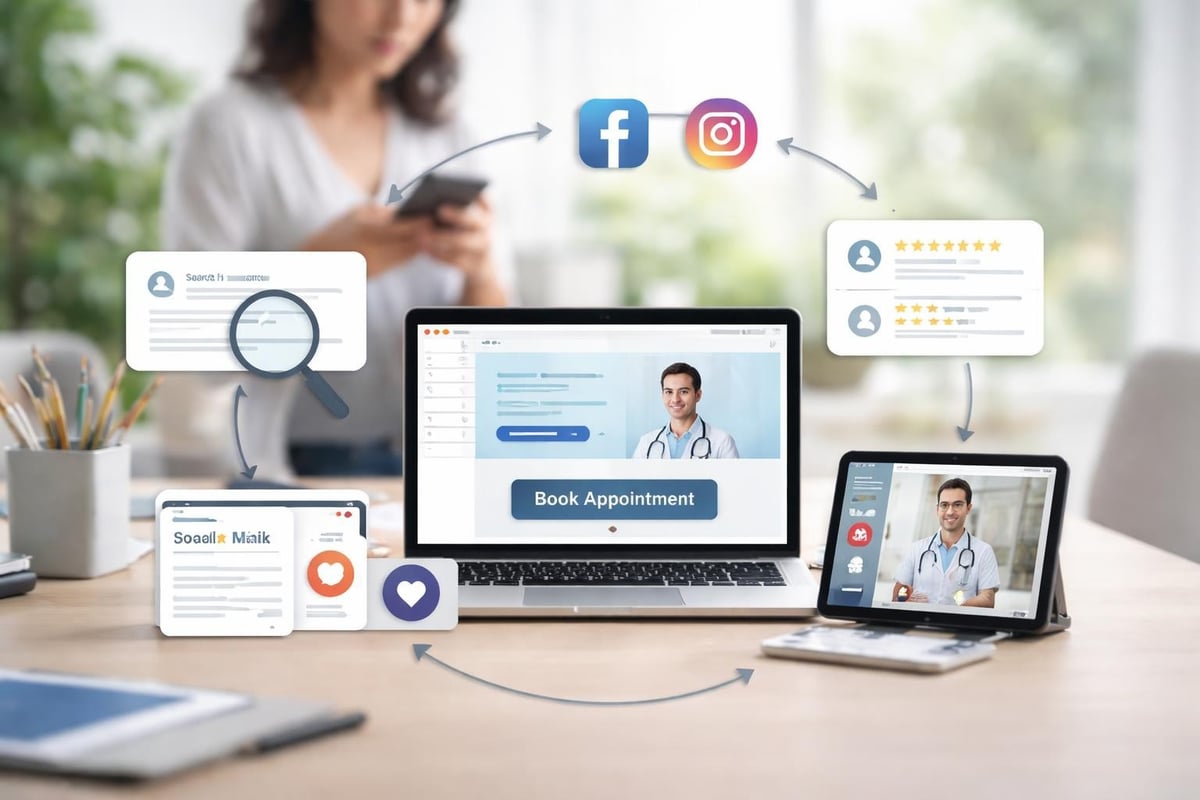
Traditional healthcare marketing relied heavily on referrals and geographic proximity. Today's patients begin their journey through search engines, comparing providers based on reviews, credentials, services offered, and convenience factors like telehealth availability.
This shift requires practices to establish robust digital presences across multiple touchpoints:
- Search engine optimization that positions your practice for high-intent queries
- Paid advertising campaigns targeting specific conditions or treatments
- Content marketing that educates and builds trust with prospective patients
- Social media engagement that demonstrates expertise and patient outcomes
- Website optimization designed specifically for conversion
Building High-Converting Digital Marketing Campaigns
The foundation of successful lead generation digital marketing starts with understanding patient intent and matching it with precise targeting. Campaigns that generate qualified leads share several characteristics that distinguish them from generic advertising efforts.
Campaign Architecture for Healthcare Practices
Effective campaigns require strategic alignment between targeting, messaging, and conversion pathways. The architecture determines how efficiently your marketing budget translates into actual patient appointments.
| Campaign Element | Generic Approach | High-Performance Approach |
|---|---|---|
| Targeting | Broad demographics | Intent-based with condition specificity |
| Landing Pages | General practice overview | Treatment-specific with clear CTAs |
| Response Time | 24-48 hours | Under 2 minutes |
| Lead Qualification | Basic form submission | Phone verification with appointment scheduling |
| Follow-Up | Occasional email | Systematic multi-touch sequences |
Your ad copywriting must address specific patient concerns while differentiating your practice from competitors. For compounding pharmacies, this might emphasize customized medication formulations. For wound care centers, highlighting specialized treatment protocols and outcomes becomes critical.
Landing page creation represents the most crucial conversion element. Pages must load quickly, present information clearly, and remove friction from the scheduling process. Every element should guide visitors toward booking a consultation or requesting information.
Leveraging Proprietary Technology for Lead Identification
Most practices lose 90-95% of website visitors who never submit contact information. Advanced lead generation digital marketing employs technology that identifies anonymous visitors through data matching and reverse IP lookup capabilities.
This technology transforms your website from a passive information repository into an active patient acquisition system. When someone researches your addiction treatment services or medical spa offerings, identification technology can:
- Capture visitor identity without form submission
- Match visitors to contact information databases
- Enable proactive outreach to interested prospects
- Provide demographic and behavioral insights
- Trigger automated follow-up sequences
The ability to identify 60% or more of anonymous visitors dramatically increases lead volume without additional advertising spend. This technology proves particularly valuable for high-consideration healthcare services where patients conduct extensive research before reaching out.
Multi-Channel Strategies for Healthcare Lead Generation
Successful lead generation digital marketing requires presence across multiple channels where potential patients conduct research and make decisions. Each channel serves distinct purposes within the patient acquisition journey.
Search Engine Marketing for Medical Practices
Search remains the primary channel for healthcare research. Patients searching for "wound care specialist near me" or "men's health clinic" demonstrate high intent and immediate need.
Paid Search Advantages:
- Immediate visibility for competitive keywords
- Precise geographic and demographic targeting
- Budget control with performance tracking
- A/B testing capabilities for messaging optimization
Organic Search Benefits:
- Long-term visibility without ongoing ad costs
- Higher trust and credibility with patients
- Comprehensive content addressing patient questions
- Authority building for complex medical topics
According to digital lead generation best practices, combining paid and organic search creates synergistic effects that maximize total lead volume while optimizing cost per acquisition.
Social Media Advertising for Patient Acquisition
Social platforms enable precise targeting based on demographics, interests, and behaviors. For healthcare providers, this means reaching potential patients based on age groups, health interests, and life events.
Women's health clinics can target specific age ranges experiencing relevant life transitions. Veterinary medicine practices can reach pet owners based on their documented animal ownership. Orthopedic practices can target individuals interested in sports and fitness activities.

Platform selection depends on your target demographic:
- Facebook and Instagram excel for visual specialties like medical spas and cosmetic procedures
- LinkedIn works effectively for B2B healthcare like pharmaceutical distribution and franchise development
- YouTube provides educational content opportunities for complex treatments
- TikTok reaches younger demographics for telehealth and preventive care services
Content Marketing That Converts Visitors to Patients
Educational content builds trust while positioning your practice as the authority in specific treatment areas. Effective lead generation strategies emphasize creating content that addresses patient questions throughout their decision journey.
Content Types That Generate Healthcare Leads:
- Treatment comparison guides for patients evaluating options
- Condition-specific educational articles answering common questions
- Video testimonials demonstrating patient outcomes and satisfaction
- Interactive assessment tools that qualify lead intent
- Webinars addressing complex health topics with expert insights
Content must extend beyond general health information to address specific concerns relevant to your specialty. Addiction treatment centers should create content about recovery processes and family involvement. Franchise systems need content explaining investment requirements and support structures.
Conversion Optimization and Lead Nurturing Systems
Generating traffic and capturing leads represents only half the equation. Converting leads into scheduled appointments and actual patients requires systematic processes that many practices overlook.
Rapid Response Protocols
Response speed dramatically impacts conversion rates. Studies consistently show that contacting leads within 5 minutes increases conversion probability by 900% compared to waiting 30 minutes or longer.
Healthcare practices must implement systems ensuring immediate lead engagement:
- Automated acknowledgment within seconds of form submission
- Phone outreach within 2 minutes for high-value leads
- Text message confirmation for appointment requests
- Multi-channel follow-up for non-responsive leads
- Escalation protocols for time-sensitive inquiries
The challenge for most practices involves staffing constraints and competing priorities. Internal teams struggle to maintain consistent rapid response while managing existing patient care responsibilities.
CRM Integration and Lead Management
Effective lead generation digital marketing requires robust CRM systems that track every patient interaction from initial website visit through appointment completion. Understanding what lead generation entails includes recognizing the importance of systematic lead management.
Essential CRM Capabilities:
| Function | Purpose | Impact |
|---|---|---|
| Lead Source Tracking | Identifies which campaigns generate results | Optimizes marketing spend allocation |
| Automated Follow-Up | Ensures consistent multi-touch engagement | Prevents lead abandonment |
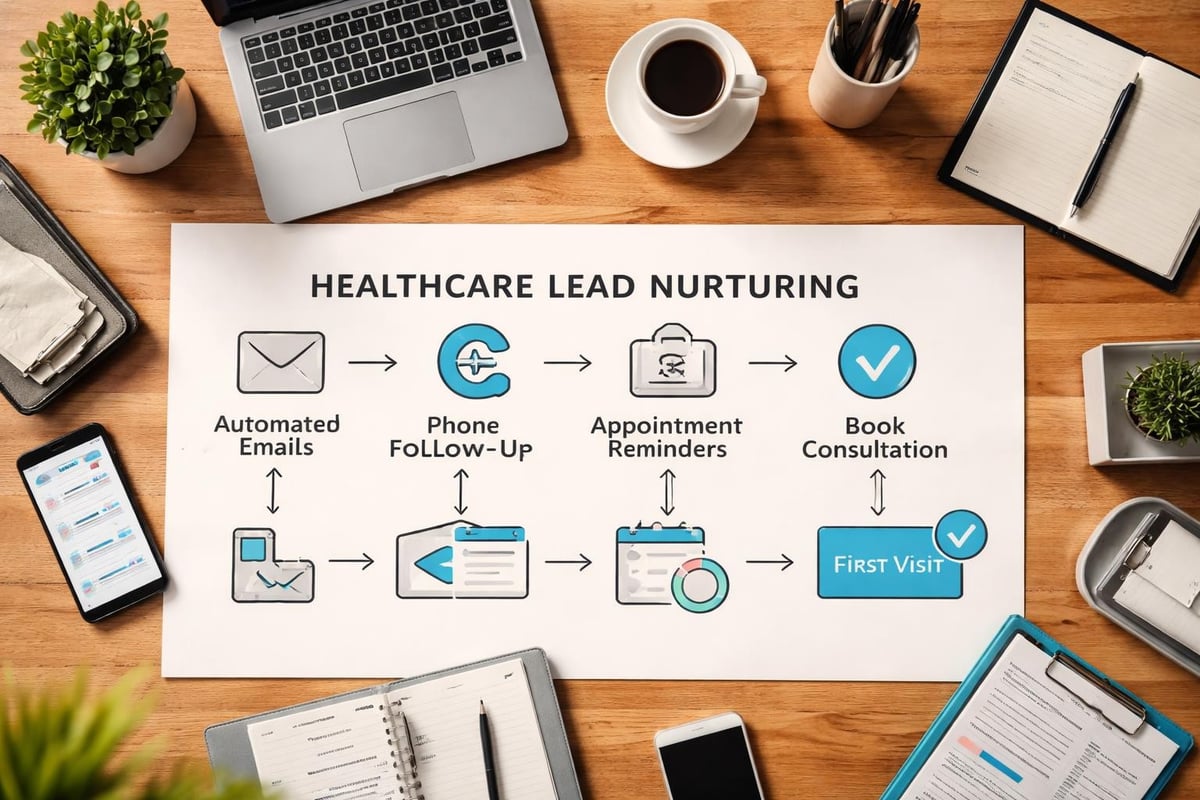
| Appointment Scheduling | Streamlines booking process | Reduces friction and no-shows |
| Communication History | Maintains context across interactions | Improves patient experience |
| Performance Analytics | Measures conversion metrics | Enables data-driven improvements |
Integration extends beyond lead capture to encompass appointment reminders, pre-visit paperwork, and post-consultation follow-up. This systematic approach increases show rates while improving patient satisfaction.
Pre-Sales Development for Healthcare
The gap between lead generation and patient conversion often stems from inadequate qualification and nurturing. Pre-sales development teams bridge this gap through dedicated resources focused exclusively on lead engagement.
These teams handle consultation booking, answer preliminary questions, qualify financial capacity, and prepare leads for productive clinical consultations. For franchise systems, pre-sales teams educate prospects about investment requirements and operational models.
Dedicated pre-sales resources deliver several advantages:
- Clinical staff focuses on patient care rather than lead follow-up
- Consistent qualification ensures only serious prospects receive consultations
- Professional sales training optimizes conversion messaging
- Systematic processes prevent leads from falling through cracks
- Performance metrics enable continuous improvement
Measuring and Optimizing Lead Generation Performance
Sustainable growth requires understanding which lead generation digital marketing activities produce actual patient revenue rather than vanity metrics like website traffic or social media followers.
Key Performance Indicators for Healthcare Marketing
Tracking the right metrics enables data-driven optimization decisions. Focus on indicators that directly correlate with revenue generation:
Top-of-Funnel Metrics:
- Cost per click for paid advertising campaigns
- Organic search rankings for target keywords
- Website traffic from qualified sources
- Lead form submission rates and abandonment points
Mid-Funnel Metrics:
- Lead quality scores based on demographic and intent signals
- Contact rate for outbound lead engagement
- Appointment scheduling conversion percentage
- Average time from lead capture to scheduled consultation
Bottom-Funnel Metrics:
- Appointment show rates and no-show patterns
- Consultation-to-patient conversion rates
- Patient lifetime value by acquisition source
- Overall return on advertising spend
Attribution and Source Analysis
Understanding which marketing channels deserve budget increases versus decreases requires accurate attribution modeling. Healthcare patient journeys rarely follow linear paths from single touchpoints to conversion.
Patients typically interact with multiple channels before scheduling:
- Search engine research about symptoms or conditions
- Social media ads introducing your practice
- Review site validation of credentials and outcomes
- Direct website visits to explore services
- Retargeting ads maintaining awareness
- Final conversion through phone call or form submission
Multi-touch attribution models provide clearer pictures of channel contribution than last-click attribution alone. This understanding prevents underinvestment in awareness-building activities that support bottom-funnel conversions.
Continuous Testing and Improvement
High-performing lead generation digital marketing requires ongoing experimentation with messaging, targeting, offers, and conversion pathways. According to current lead generation strategies, systematic testing separates industry leaders from competitors stuck with mediocre results.
Testing Priorities:
- Ad creative variations highlighting different value propositions
- Landing page layouts optimizing for mobile vs desktop users
- Call-to-action phrasing and placement
- Lead form length and information requested
- Follow-up sequence timing and messaging
- Offer types from free consultations to educational resources
Testing velocity matters. Practices running weekly tests learn and improve faster than those making quarterly changes. This iterative approach compounds advantages over time as small improvements accumulate.
Specialized Considerations for Healthcare Verticals
Different healthcare specialties require tailored lead generation digital marketing approaches reflecting their unique patient decision processes, competitive landscapes, and regulatory environments.
Telehealth and Virtual Care Providers
Telehealth lead generation emphasizes convenience, accessibility, and rapid service delivery. Marketing must address patient skepticism about virtual care quality while highlighting benefits like avoiding travel and immediate availability.
Conversion pathways should enable instant scheduling with same-day or next-day appointments. The friction of traditional scheduling undermines telehealth's core value proposition.
Addiction Treatment and Behavioral Health
These sensitive services require empathetic messaging that addresses stigma while emphasizing confidentiality and evidence-based approaches. Lead generation must accommodate family members researching treatment on behalf of loved ones.
Immediate response becomes critical as individuals seeking addiction treatment often act during narrow windows of motivation. Delayed follow-up frequently results in lost opportunities.
Medical Spas and Elective Procedures
Visual content showcasing results drives lead generation for aesthetic services. Before-and-after galleries, video testimonials, and virtual consultations reduce barriers to initial engagement.
Financing options and package pricing require clear communication within lead generation materials. Patients evaluate costs alongside outcomes when making elective healthcare decisions.
Franchise Development for Healthcare Systems
Lead generation for franchise sales combines B2B and B2C approaches. Prospects evaluate both clinical/operational models and financial investment requirements.
Content must address entrepreneur concerns about training, support, territory protection, and revenue potential. Case studies demonstrating franchisee success provide powerful conversion tools.
Effective lead generation digital marketing transforms healthcare practices from relying on inconsistent referrals to building predictable patient acquisition systems that fuel sustainable growth. The strategies outlined here provide frameworks for attracting qualified prospects, converting them efficiently, and maximizing return on marketing investment across specialties from compounding pharmacies to veterinary medicine. If your practice needs a comprehensive solution that not only generates high-quality leads but also converts them into actual patients through proprietary technology and systematic execution, RevSpark Media delivers guaranteed results with complete transparency and 2-minute response times that turn opportunities into revenue.