
The healthcare industry faces unprecedented challenges in patient acquisition, with practices spending significant resources on marketing only to watch potential patients slip through the cracks. A systematic lead acquisition process transforms how medical practices, clinics, and healthcare franchises identify, capture, and convert prospects into paying patients. This comprehensive approach encompasses everything from initial visitor identification to appointment confirmation, requiring both technological infrastructure and human expertise to execute effectively. Healthcare providers who master this process don't just generate more leads-they build predictable revenue growth systems.
Understanding the Lead Acquisition Process Framework
The lead acquisition process represents the systematic approach businesses use to identify potential customers, capture their information, and guide them toward conversion. In healthcare, this process becomes particularly complex due to HIPAA considerations, longer decision cycles, and the personal nature of medical services.
A complete lead acquisition process includes several interconnected stages:
- Anonymous visitor identification and tracking
- Initial contact information capture through forms or chat
- Lead qualification based on service needs and readiness
- Nurturing sequences tailored to patient concerns
- Appointment scheduling and confirmation systems
- Follow-up protocols to reduce no-shows
Healthcare organizations must recognize that the lead acquisition process differs fundamentally from general B2C or B2B models. Patients research extensively before committing to treatments, often visiting multiple websites and comparing providers. The average patient journey involves 7-12 touchpoints before scheduling a consultation, making systematic tracking and engagement essential.

Technology Infrastructure Requirements
Modern lead acquisition processes depend heavily on integrated technology platforms. CRM systems serve as the central hub, storing patient information, tracking interactions, and triggering automated workflows. Healthcare-specific CRMs must handle sensitive data securely while providing marketing automation capabilities.
Website visitor identification technology has revolutionized the lead acquisition process. Advanced platforms can now identify up to 60% of anonymous website visitors by matching IP addresses and digital footprints to real contact information. This capability transforms previously lost traffic into actionable leads, dramatically expanding the top of the funnel.
Landing page optimization software enables rapid testing and deployment of conversion-focused pages. Healthcare practices should maintain separate landing pages for each service line, condition, or treatment type. Forms must balance information gathering with friction reduction-requesting too much information decreases conversion rates, while too little hampers qualification efforts.
Visitor Identification and Traffic Source Optimization
The lead acquisition process begins before prospects ever fill out a form. Understanding where visitors originate and what content they consume provides crucial context for subsequent engagement. Traffic source analysis reveals which marketing channels generate the highest-quality leads, allowing strategic budget allocation.
Healthcare practices should track distinct metrics for each traffic source:
| Traffic Source | Average Conversion Rate | Cost Per Lead | Lead Quality Score | Patient LTV |
|---|---|---|---|---|
| Google Ads | 3.2% | $145 | 8.1/10 | $4,200 |
| Facebook Ads | 2.1% | $87 | 6.4/10 | $2,800 |
| SEO Organic | 5.7% | $12 | 9.2/10 | $5,600 |
| Referral | 12.3% | $8 | 9.8/10 | $7,100 |
Implementing proper UTM parameters and conversion tracking enables this level of analysis. The lead acquisition process becomes significantly more efficient when marketing teams can identify which campaigns, keywords, and ad creatives generate patients rather than just clicks.
Content Strategy for Lead Capture
Educational content serves dual purposes within the lead acquisition process-it establishes authority while capturing contact information. Healthcare providers should develop content libraries addressing common patient questions, treatment options, and condition information. This approach aligns with effective lead acquisition marketing strategies that prioritize value delivery before the sales conversation.
Gated content offers a particularly effective mechanism for lead capture. Downloadable resources that perform well include:
- Treatment comparison guides
- Pre-consultation checklists
- Insurance coverage explanations
- Recovery timeline expectations
- Cost estimation worksheets
Content marketing platforms like RankPill can accelerate the creation of SEO-optimized blog posts and educational materials, helping healthcare practices maintain consistent publishing schedules while targeting relevant keywords that potential patients search.
Video content has emerged as the highest-performing format for healthcare lead acquisition. Practices using video on landing pages see conversion rates 80% higher than text-only pages. Platforms like AdsRaw enable healthcare providers to create authentic, user-generated style video ads quickly, testing multiple creative approaches without expensive production costs.
Lead Qualification and Scoring Systems
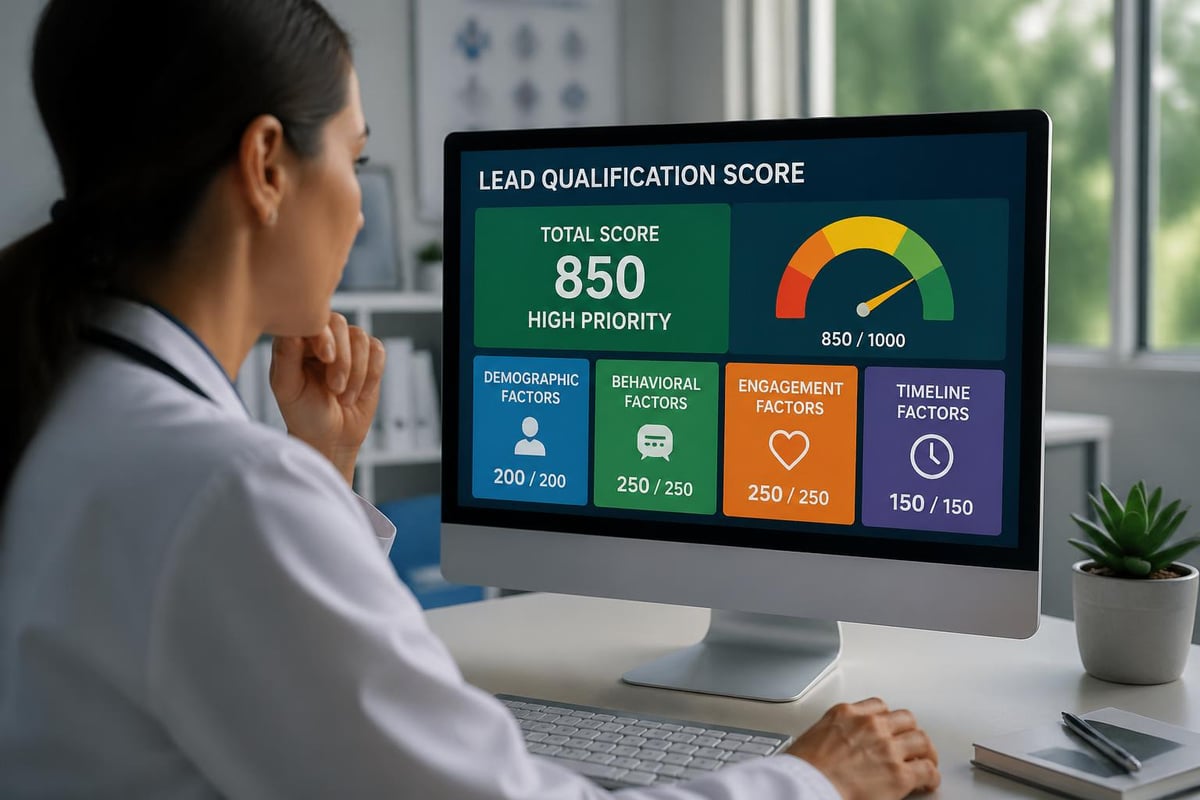
Not all leads possess equal value within the lead acquisition process. Medical spas serving cosmetic patients have different qualification criteria than addiction treatment centers or orthopedic practices. Developing a lead scoring system ensures sales and intake teams prioritize high-probability prospects.
Effective healthcare lead scoring incorporates:
- Demographic factors including age, location, and insurance status
- Behavioral signals such as pages viewed, time on site, and return visits
- Engagement metrics including email opens, phone inquiries, and form submissions
- Service alignment matching patient needs with practice specialties
- Timeline indicators showing immediate need versus research phase
A wound care center might assign high scores to diabetic patients with current ulcers located within a 25-mile radius, while a telehealth provider might prioritize engagement over geography. The lead acquisition process becomes more profitable when unqualified prospects are identified early and routed to automated nurturing sequences rather than consuming expensive sales team resources.
Speed-to-Lead Response Protocols
Response time represents the single most critical factor in lead conversion rates. Studies consistently show that contacting leads within five minutes increases conversion probability by 900% compared to waiting 30 minutes. Within the healthcare lead acquisition process, immediate response becomes even more important as patients often contact multiple providers simultaneously.
Implementing a two-minute response standard requires dedicated intake staff, automated distribution systems, and clear protocols. When a lead submits information, the system should simultaneously send an email confirmation, trigger SMS notification, and route the lead to available team members through a CRM power dialer.
The best practices for lead generation campaigns emphasize systematic approaches rather than ad hoc responses. Healthcare practices must treat lead response with the same urgency as patient emergencies-every minute of delay represents potential revenue lost to competitors.
Multi-Channel Nurturing Strategies
The healthcare lead acquisition process extends far beyond initial contact. Most prospects require multiple touchpoints across various channels before committing to treatment. A systematic nurturing program maintains engagement without overwhelming potential patients.
Effective nurturing sequences combine:
- Email drip campaigns with educational content
- SMS reminders and appointment confirmations
- Retargeting ads across social media platforms
- Phone follow-ups from trained intake specialists
- Direct mail for high-value service lines
Personalization dramatically improves nurturing effectiveness. A compounding pharmacy lead interested in hormone replacement therapy should receive vastly different content than someone inquiring about veterinary compounding. Modern marketing automation platforms enable this segmentation, ensuring relevant communication throughout the lead acquisition process.
Email remains the workhorse of lead nurturing, delivering an average ROI of $42 for every dollar spent. Healthcare practices should maintain separate nurture tracks for each major service line, with content addressing specific concerns, objections, and decision factors. The importance of personalization in lead acquisition cannot be overstated-generic messages generate minimal engagement.
Conversion Point Optimization
The lead acquisition process culminates in conversion actions-appointment bookings, consultation requests, or treatment commitments. Optimizing these conversion points directly impacts revenue generation. Healthcare providers must eliminate friction while gathering necessary information for efficient patient intake.
Online scheduling tools have transformed appointment conversion rates. Patients increasingly expect 24/7 booking availability without phone calls. Integration between scheduling software and CRM systems ensures seamless data flow while preventing double-bookings or scheduling conflicts.
Form Design and Placement Strategy
Form optimization represents both an art and science within the lead acquisition process. Healthcare forms must balance compliance requirements, intake efficiency, and conversion psychology. Testing different form lengths, field types, and security messaging reveals significant performance variations.
| Form Element | Standard Approach | Optimized Approach | Conversion Impact |
|---|---|---|---|
| Number of Fields | 12+ fields | 3-5 core fields | +68% submissions |
| Privacy Statement | Legal text block | Icon with tooltip | +23% trust factor |
| Submit Button | "Submit" | "Schedule My Consultation" | +41% click-through |
| Multi-Step | Single page | Progressive disclosure | +32% completion |
Form placement also affects conversion rates. Exit-intent popups capture abandoning visitors, while embedded forms provide less intrusive options for engaged readers. The lead acquisition process should include multiple capture opportunities without creating annoying user experiences.
CRM Integration and Data Management
Centralized data management forms the backbone of any successful lead acquisition process. Healthcare providers dealing with multiple service lines, locations, or patient types need sophisticated CRM systems that maintain organization while providing actionable insights. Complete lead management strategies emphasize systematic approaches over fragmented tools.
Critical CRM capabilities include:
- Automatic lead distribution based on service type and availability
- Custom fields for healthcare-specific data like insurance and conditions
- Appointment scheduling integration with calendar systems
- Communication tracking across phone, email, and SMS channels
- Reporting dashboards showing pipeline velocity and conversion metrics
Data quality directly impacts the lead acquisition process effectiveness. Duplicate records, outdated contact information, and incomplete profiles waste resources and create poor patient experiences. Implementing validation rules, regular database hygiene protocols, and enrichment services maintains data integrity.

Attribution and Performance Tracking
Understanding which marketing activities generate profitable patients requires sophisticated attribution modeling. The healthcare lead acquisition process typically involves multiple touchpoints-a patient might see a Facebook ad, visit through organic search, read several blog posts, and then convert via a remarketing campaign.
First-touch attribution credits the initial interaction, while last-touch attributes success to the final touchpoint before conversion. Multi-touch attribution distributes credit across the entire patient journey, providing more accurate insight into marketing effectiveness. Healthcare practices should analyze both individual channel performance and cross-channel interaction effects.
Revenue tracking completes the attribution picture. Leads that become patients generate varying lifetime values based on treatments received, frequency of visits, and referrals generated. The lead acquisition process must connect to practice management systems to calculate true ROI rather than just lead volume metrics.
Appointment Confirmation and Show Rate Optimization
Lead acquisition doesn't end when appointments are scheduled. No-show rates in healthcare average 23-34%, representing massive revenue leakage. The final phase of the lead acquisition process focuses on confirmation, reminder delivery, and barrier removal to maximize show rates.
Proven show rate optimization tactics include:
- Immediate confirmation via email and SMS
- Reminder sequence at 7 days, 3 days, and 1 day before appointment
- Easy rescheduling options to prevent silent no-shows
- Pre-appointment paperwork sent electronically
- Clear parking, entrance, and preparation instructions
- Personal phone call from care coordinator 24 hours prior
Some practices implement confirmation deposit requirements for high-value consultations, reducing no-shows by 60-70%. While this adds friction to the lead acquisition process, the trade-off proves worthwhile for expensive services like cosmetic procedures or specialized treatments.
Team Training and Process Documentation
Technology alone cannot optimize the lead acquisition process. Team members handling patient inquiries, scheduling appointments, and conducting follow-ups need comprehensive training and clear protocols. Standard operating procedures ensure consistent experiences regardless of which team member handles each interaction.
Consultation framework training prepares intake specialists to address common objections, answer clinical questions appropriately, and move prospects toward commitment. Role-playing exercises, recorded call reviews, and ongoing coaching improve conversion skills over time. The strategies for tech lead acquisition can be adapted for healthcare contexts, emphasizing systematic skill development.
Documentation also enables continuous improvement. Recording the lead acquisition process steps, decision points, and performance benchmarks creates accountability while identifying optimization opportunities. When conversion rates decline, documented processes make troubleshooting more efficient.
Performance Metrics and KPI Monitoring
What gets measured gets managed. Healthcare practices must establish clear KPIs for each lead acquisition process stage and monitor them consistently. Dashboard reporting transforms raw data into actionable insights that drive strategic decisions.
Essential lead acquisition metrics include:
- Website visitor-to-lead conversion rate
- Lead-to-appointment booking rate
- Appointment show rate
- Patient acquisition cost by channel
- Average patient lifetime value
- Time-to-contact for new leads
- Nurture sequence engagement rates
- Revenue per lead source
Setting realistic benchmarks based on industry standards and historical performance creates accountability. A medical spa might target 4% website conversion, 65% booking rate, and 82% show rate, while an addiction treatment center might expect different numbers based on their patient journey complexity.
Continuous Testing and Optimization
The most effective lead acquisition process evolves continuously through systematic testing. A/B testing different headlines, form placements, call-to-action buttons, and nurture email content reveals incremental improvements that compound over time. Healthcare providers should adopt a testing culture where data drives decisions rather than assumptions.
Landing page testing delivers particularly impactful results. Creating multiple versions with different value propositions, imagery, and social proof elements, then measuring conversion performance, identifies winning combinations. Even small improvements-a headline change increasing conversions from 3.2% to 3.8%-generate substantial revenue impact at scale.
Seasonal patterns also affect the lead acquisition process in healthcare. Cosmetic procedures peak before summer and holidays, while addiction treatment inquiries increase in January. Sports medicine services correlate with athletic seasons. Understanding these patterns enables strategic budget allocation and resource planning.
The lead generation strategies and best practices that succeed in 2026 prioritize testing velocity over perfection, learning from effective strategies to convert prospects and adapting approaches based on performance data.
Mastering the lead acquisition process requires systematic execution across technology, team training, and continuous optimization. Healthcare providers who implement comprehensive systems from visitor identification through appointment confirmation see dramatic improvements in patient acquisition costs and conversion rates. RevSpark Media specializes in building complete lead acquisition systems for healthcare practices and franchises, combining proprietary visitor identification technology with trained intake specialists who deliver 2-minute response times and proven appointment-setting frameworks. If you're ready to transform your patient acquisition from inconsistent lead flow to predictable revenue growth, discover how our comprehensive approach can generate measurable results for your practice.