
Healthcare providers face unique challenges when developing marketing strategies to attract new patients and grow their practices. Understanding the various advertising campaign types available helps medical professionals, clinic owners, and healthcare franchises make informed decisions about where to allocate marketing budgets for maximum patient acquisition. From telehealth platforms to specialized clinics like men's health centers and addiction treatment facilities, selecting the right campaign approach directly impacts lead quality, appointment show rates, and ultimately revenue growth. This comprehensive guide examines the most effective advertising campaign types for healthcare organizations in 2026 and provides actionable insights for implementing campaigns that convert prospects into patients.
Understanding Campaign Type Fundamentals
The foundation of successful healthcare advertising starts with recognizing that different advertising campaign types serve distinct purposes within the patient acquisition funnel. Each campaign type addresses specific objectives, whether building brand awareness for a new medical spa, driving immediate appointment bookings for wound care services, or establishing thought leadership for a compounding pharmacy.
Primary campaign objectives in healthcare marketing include:
- Patient acquisition and appointment generation
- Brand awareness and reputation management
- Service promotion and education
- Patient retention and lifetime value maximization
- Geographic expansion for franchise systems
The healthcare industry requires particular attention to compliance, patient privacy, and ethical messaging standards that influence how campaigns are structured and executed. Unlike retail or e-commerce businesses, healthcare providers must balance persuasive marketing with medical accuracy and regulatory adherence.

Search-Based Advertising Campaigns
Search advertising campaigns represent one of the most effective advertising campaign types for healthcare providers seeking high-intent patients actively researching specific treatments or conditions. These campaigns capture demand at the precise moment potential patients demonstrate interest through search queries related to healthcare services.
Google Search campaigns allow orthopedic clinics, women's health centers, and other specialized practices to appear prominently when patients search for terms like "knee pain specialist near me" or "hormone replacement therapy clinic." The intent-driven nature of search advertising delivers qualified leads with immediate needs, making it particularly valuable for practices prioritizing appointment volume and conversion rates.
Search Campaign Implementation
Successful search campaigns require comprehensive keyword research that identifies both broad treatment categories and specific condition-related queries. Healthcare providers should develop ad groups organized by service line, geographic location, and patient intent level to maximize relevance and quality scores.
Key search campaign elements:
- High-intent keywords targeting patients ready to book appointments
- Informational keywords capturing early-stage research behavior
- Competitor keywords reaching patients considering alternative providers
- Location-specific terms for practices serving defined geographic areas
- Condition-focused queries addressing specific patient symptoms
Ad extensions enhance search campaign performance by providing additional information like phone numbers for immediate calls, location data for directions, and sitelinks directing patients to specific service pages. For healthcare providers managing multiple locations or service lines, properly configured extensions significantly improve click-through rates and lead quality. The different types of advertising campaigns each serve unique strategic purposes, with search campaigns excelling at capturing existing demand rather than creating new awareness.
Display and Retargeting Campaigns
Display advertising campaigns build awareness and maintain visibility among patients who may not yet recognize their need for specific healthcare services. Unlike search campaigns that capture active demand, display campaigns create demand through strategic placement across websites, apps, and digital properties frequented by target patient demographics.
Healthcare providers leverage display campaigns to introduce new service offerings, establish brand recognition in new markets, or maintain top-of-mind awareness among patients considering elective procedures. Medical spas promoting aesthetic treatments, addiction treatment centers reaching families researching intervention options, and veterinary practices expanding into new territories all benefit from strategic display advertising.
| Display Campaign Type | Best Use Case | Typical Timeline | Conversion Expectation |
|---|---|---|---|
| Awareness Display | New practice launch | 60-90 days | Brand recognition metrics |
| Retargeting Display | Website visitor conversion | Ongoing | 2-4% conversion to appointment |
| Contextual Display | Service education | 30-60 days | Lead nurturing |
| Video Display | Treatment explanation | 45-90 days | Engagement and awareness |
Retargeting campaigns specifically target individuals who have previously visited a practice's website, viewed specific service pages, or engaged with previous advertising content. These campaigns maintain presence and encourage patients to complete appointment booking after initial consideration periods. For high-consideration services like franchise opportunities in pharmaceutical distribution or significant treatment commitments at telehealth providers, retargeting campaigns systematically nurture prospects through extended decision-making processes.
Social Media Advertising Campaigns
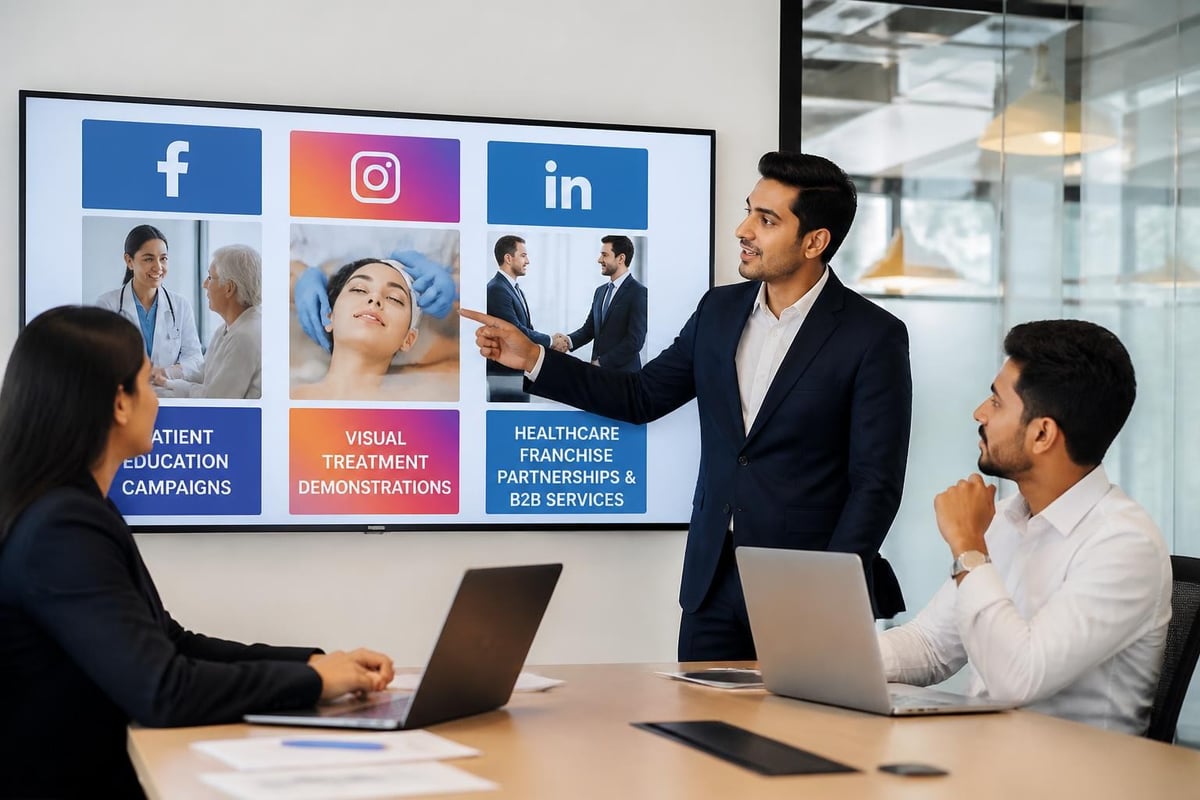
Social media platforms offer advertising campaign types specifically designed for building communities, sharing patient education content, and establishing trust before patients require immediate medical services. Facebook, Instagram, LinkedIn, and emerging platforms provide sophisticated targeting capabilities that allow healthcare providers to reach specific demographics, interests, and behavioral segments.
A comprehensive approach to advertising campaigns recognizes that social platforms excel at storytelling and relationship-building rather than immediate conversions. Women's health clinics share educational content about hormonal health, compounding pharmacies demonstrate medication customization processes, and men's health centers address sensitive topics in supportive community environments.
Platform-Specific Strategies
Different social platforms serve distinct purposes within healthcare marketing strategies. LinkedIn campaigns effectively reach decision-makers for B2B healthcare services like pharmaceutical distribution partnerships or franchise development opportunities. Instagram and Facebook campaigns engage potential patients for consumer-facing services like medical spa treatments, weight management programs, and elective procedures.
Social campaign formats include:
- Carousel ads showcasing before-and-after treatment results
- Video testimonials from satisfied patients
- Educational content addressing common health concerns
- Event promotion for health screenings or community outreach
- Lead generation forms for consultation requests
Privacy considerations and platform policies require careful attention when advertising healthcare services on social media. Healthcare providers must balance persuasive marketing with factual accuracy, avoid making unsupported claims, and respect patient confidentiality when featuring testimonials or case studies.
Email Marketing Campaigns
Email campaigns represent one of the most cost-effective advertising campaign types for healthcare providers focused on patient retention, reactivation, and lifetime value optimization. While often overlooked in favor of paid advertising channels, strategic email campaigns maintain relationships with existing patients, encourage preventive care appointments, and promote new services to established audiences.
Healthcare practices build email lists through website forms, patient intake processes, consultation requests, and content downloads. These owned audiences provide opportunities for ongoing communication without recurring advertising costs, making email campaigns particularly valuable for practices with established patient bases.
Email Campaign Segmentation
Effective healthcare email campaigns leverage segmentation to deliver personalized messaging based on patient characteristics, treatment history, and engagement behavior. Orthopedic practices segment lists by injury type, addiction treatment centers customize messaging based on recovery stage, and franchise systems differentiate communications between prospective franchisees and existing partners.
- Welcome series for new patients introducing practice philosophy and services
- Appointment reminder campaigns reducing no-show rates
- Reactivation campaigns encouraging lapsed patients to schedule visits
- Educational newsletters providing health tips and seasonal wellness advice
- Service promotion campaigns announcing new treatments or providers
The systematic follow-up management that distinguishes successful healthcare marketing requires coordinated email campaigns integrated with CRM systems tracking patient interactions across multiple touchpoints. Professional service providers including Law Offices of Darrin T. Mish, P.A. and specialized healthcare practices recognize that consistent, valuable communication builds trust and maintains relationships between service engagements.
Video Advertising Campaigns
Video advertising has emerged as one of the fastest-growing advertising campaign types, particularly effective for healthcare providers explaining complex treatments, demonstrating facility capabilities, and building emotional connections with prospective patients. YouTube, connected TV platforms, and in-stream placements across social media provide extensive reach for video content.
Healthcare organizations utilize video campaigns to address patient concerns, showcase treatment processes, introduce providers, and differentiate practices from competitors. Wound care centers demonstrate advanced healing technologies, telehealth platforms explain virtual consultation processes, and addiction treatment facilities share recovery stories that inspire hope and action.
Video campaign applications:
- Educational videos explaining conditions and treatment options
- Provider introductions building familiarity and trust
- Virtual facility tours showcasing clean, modern environments
- Patient testimonials demonstrating real results and experiences
- Procedure explanations reducing anxiety about unfamiliar treatments
The visual nature of video advertising proves particularly valuable for services where seeing results influences patient decisions. Medical spas promoting aesthetic treatments, One Big Happy Photo, LLC capturing important family moments, and other visually-oriented services benefit significantly from video's ability to demonstrate outcomes and emotional impact.
Production quality matters less than authenticity and informational value in healthcare video advertising. Patients respond positively to genuine provider communication and peer testimonials rather than highly-produced commercial content that feels disconnected from actual patient experiences.
Performance Marketing Campaigns
Performance-based advertising campaign types focus exclusively on measurable outcomes like appointment bookings, consultation requests, or qualified lead generation. These campaigns prioritize conversion optimization over brand awareness, making them ideal for healthcare providers with clear patient acquisition targets and established conversion tracking systems.
Healthcare franchises expanding into new territories, established practices launching new service lines, and providers entering competitive markets benefit from performance marketing's accountability and optimization focus. Various advertising campaign formats each offer different advantages, but performance campaigns distinguish themselves through direct attribution between advertising spend and patient acquisition.
Conversion-Focused Campaign Structure
Performance campaigns require sophisticated landing page development, conversion tracking implementation, and systematic testing protocols that continuously improve results. Rather than directing traffic to general practice websites, performance campaigns connect specific ad messaging to dedicated landing pages designed exclusively for conversion.
| Campaign Element | Standard Approach | Performance-Optimized Approach |
|---|---|---|
| Landing Pages | General practice homepage | Service-specific conversion pages |
| Call-to-Action | "Learn More" | "Book Free Consultation Now" |
| Form Fields | Comprehensive intake | Minimal friction contact info |
| Tracking | Page views | Appointment bookings |
| Optimization | Creative testing | Systematic funnel analysis |
The proprietary technology that identifies anonymous website visitors enables advanced performance marketing strategies previously unavailable to healthcare providers. Understanding which specific prospects visit service pages, review pricing information, or research provider credentials allows targeted follow-up campaigns that convert interested visitors into scheduled appointments.
Local Service Campaigns
Geographic-focused advertising campaign types specifically target patients within defined service areas, making them essential for healthcare providers operating physical locations serving local communities. Local service campaigns emphasize proximity, convenience, and community connection to attract patients seeking nearby care options.
Google Local Services Ads, location-based social advertising, and geotargeted search campaigns ensure healthcare providers appear prominently when patients search for services in specific cities, neighborhoods, or regions. Veterinary practices competing for pet owners within their immediate area, urgent care clinics capturing walk-in patients, and specialized centers drawing from metropolitan regions all rely heavily on local campaign strategies.
Local campaign tactics include:
- Google My Business optimization with complete practice information
- Location extensions displaying practice addresses and directions
- Radius targeting around practice locations
- City-specific landing pages optimized for local search terms
- Community event sponsorships and local partnership promotions
Multi-location healthcare franchises face unique challenges coordinating local campaigns across numerous markets while maintaining brand consistency and leveraging shared resources. Centralized campaign management combined with location-specific customization allows franchise systems to achieve economies of scale while addressing local market dynamics. Understanding successful advertising campaigns types and strategies helps healthcare organizations balance standardization with localization requirements.

Brand Awareness Campaigns
Long-term brand building requires advertising campaign types focused on recognition, reputation, and positioning rather than immediate conversions. Brand awareness campaigns establish healthcare providers as trusted authorities, differentiate practices from competitors, and create preference that influences patient decisions when care becomes necessary.
New healthcare practices entering established markets, existing providers launching rebrand initiatives, and franchise systems expanding into new regions benefit significantly from strategic awareness campaigns. While these campaigns may not generate immediate appointment volume, they create the familiarity and trust that accelerates conversion when patients actively seek services.
Measuring Awareness Campaign Success
Unlike performance campaigns with direct attribution to appointments or revenue, brand awareness campaigns require alternative measurement frameworks tracking recognition, recall, and sentiment metrics. Healthcare providers monitor brand search volume increases, direct website traffic growth, and aided/unaided awareness through patient surveys.
Advanced analytics track how awareness campaigns influence conversion rates for subsequent search and retargeting campaigns. Patients exposed to brand awareness messaging typically convert at higher rates when later encountering performance-focused advertising, demonstrating awareness campaigns' indirect contribution to patient acquisition.
Seasonal and Event-Based Campaigns
Healthcare providers experience predictable seasonal demand patterns and can leverage event-based advertising campaign types to capitalize on these cyclical opportunities. Flu season drives urgent care visits, New Year motivates weight loss program enrollments, and seasonal allergies increase demand for immunotherapy treatments.
Event-based campaigns align advertising with specific occasions, health observances, or community activities when patient interest naturally peaks. Men's health clinics promote screening campaigns during Men's Health Month, addiction treatment centers increase outreach during National Recovery Month, and medical spas emphasize holiday gift packages during fourth-quarter shopping seasons.
Seasonal campaign opportunities:
- January wellness campaigns targeting resolution-driven health improvements
- Spring allergy campaigns promoting preventive treatments
- Summer aesthetic campaigns for appearance-focused procedures
- Fall prevention campaigns encouraging annual checkups and screenings
- Holiday stress management campaigns addressing mental health needs
The concentrated time windows for seasonal campaigns require advance planning, expedited creative development, and aggressive budget allocation during peak periods. Healthcare providers develop campaign calendars identifying key opportunities throughout the year and prepare messaging, landing pages, and tracking infrastructure well before campaign launch dates.
Omnichannel Campaign Integration
The most effective healthcare marketing strategies combine multiple advertising campaign types into coordinated omnichannel approaches that reach patients across numerous touchpoints throughout their decision-making journey. Rather than selecting single campaign types in isolation, sophisticated healthcare providers orchestrate complementary campaigns that reinforce messaging and guide patients systematically toward appointment booking.
An integrated campaign strategy might combine search campaigns capturing active demand, display campaigns building awareness among target demographics, social campaigns sharing educational content, email campaigns nurturing engaged prospects, and retargeting campaigns converting website visitors. Each campaign type serves specific purposes while contributing to overall patient acquisition objectives.
Comprehensive insights into advertising campaigns and their strategic applications demonstrate that channel integration amplifies individual campaign effectiveness through reinforced messaging and multiple exposure opportunities. Patients encountering consistent messaging across search results, social feeds, and email communications develop stronger brand recognition and trust than those reached through single channels.
Attribution and Campaign Coordination
Multi-touch attribution models help healthcare providers understand how different advertising campaign types contribute to patient acquisition. Rather than crediting only the final touchpoint before appointment booking, sophisticated attribution recognizes awareness campaigns, educational content, and nurturing sequences that prepare patients for eventual conversion.
Campaign coordination requires centralized management systems tracking patient interactions across all advertising channels, website visits, form submissions, phone calls, and ultimately appointment bookings. This comprehensive visibility enables optimization decisions based on complete patient journeys rather than isolated campaign metrics.
Compliance and Regulatory Considerations
Healthcare advertising campaign types must navigate complex regulatory requirements governing medical claims, patient privacy, and promotional standards. The Health Insurance Portability and Accountability Act (HIPAA), Federal Trade Commission (FTC) advertising guidelines, and platform-specific policies for healthcare advertising all influence campaign development and execution.
Advertising campaigns for prescription medications, controlled substances, addiction treatment services, and specific medical procedures face particularly stringent requirements regarding claim substantiation, risk disclosure, and target audience restrictions. Healthcare providers must balance persuasive marketing with factual accuracy, avoiding exaggerated promises or misleading comparisons.
Compliance requirements include:
- Accurate representation of services and outcomes
- Substantiation for clinical claims and treatment effectiveness
- Privacy protection when featuring patient testimonials
- Appropriate disclaimers for prescription services
- Age restrictions for certain health topics
Working with marketing partners experienced in healthcare advertising ensures campaigns meet regulatory standards while achieving patient acquisition objectives. The specialized knowledge required for compliant healthcare marketing distinguishes generalist agencies from healthcare-focused partners who understand industry-specific constraints and opportunities.
Campaign Testing and Optimization
Continuous improvement distinguishes high-performing advertising campaign types from stagnant efforts that fail to maximize return on investment. Healthcare providers implement systematic testing protocols evaluating ad creative variations, audience segments, landing page designs, and conversion pathways to identify optimization opportunities.
A/B testing compares alternative approaches within controlled experiments, isolating variables like headline messaging, call-to-action phrasing, or visual elements to determine which combinations drive superior results. Multivariate testing simultaneously evaluates multiple variables, accelerating optimization for practices willing to invest in larger sample sizes and more complex analysis.
Testing priorities should align with campaign objectives and potential impact magnitude. Small improvements in conversion rates for high-volume campaigns generate substantially more appointments than dramatic improvements to low-traffic initiatives. Healthcare providers focus testing efforts on high-leverage opportunities where optimization delivers meaningful patient acquisition increases.
Data-Driven Decision Making
Modern healthcare marketing relies on sophisticated analytics platforms tracking campaign performance metrics, patient behavior patterns, and conversion funnel dynamics. Real-time dashboards provide visibility into campaign spending, lead generation, appointment bookings, and revenue attribution, enabling rapid optimization based on actual results rather than assumptions.
The proprietary technology identifying anonymous website visitors transforms optimization capabilities by revealing which specific companies, healthcare professionals, or patient demographics engage with practice websites without submitting contact information. This intelligence informs audience targeting refinement, content development priorities, and follow-up campaign strategies that convert interested prospects into scheduled patients.
Selecting and implementing the right advertising campaign types requires strategic planning, regulatory knowledge, and systematic execution that healthcare providers often lack the internal resources to manage effectively. RevSpark Media specializes in comprehensive campaign development and patient acquisition for healthcare practices and franchise systems, combining proprietary visitor identification technology with in-house pre-sales teams that convert advertising leads into confirmed appointments with 2-minute response times. With a proven track record generating over $100 million in client growth across compounding pharmacies, wound care centers, medical spas, telehealth providers, and specialized healthcare franchises, RevSpark Media delivers guaranteed results through systematic campaign execution and complete ownership of your revenue generation process.