
A brilliant campaign advert can do more than capture attention—it can spark conversations, redefine brands, and shift entire markets. This article explores seven standout campaign advert examples, each chosen for their originality, measurable impact, and potential to inspire your 2026 marketing strategy. From iconic TV spots to digital breakthroughs, you will discover how these campaigns blend creativity with results. Get ready to uncover actionable insights and learn how to adapt proven tactics to elevate your next campaign advert and drive real engagement.
The Evolving Landscape of Campaign Advertising
The world of campaign advert creation has entered a dynamic new era, shaped by rapidly changing consumer expectations and breakthroughs in technology. Marketers now face a landscape where only the most innovative and authentic campaigns can break through the noise. To succeed, brands must understand what drives audiences, adapt lessons from legendary campaigns, and harness the power of emerging media channels.

Shifting Consumer Behaviors and Expectations
Today’s consumers expect more from every campaign advert they encounter. Audiences demand authenticity, seeking brands that present honest messaging rather than polished sales pitches. Personalization is now essential, with individuals drawn to adverts that reflect their unique interests and cultural backgrounds.
The explosion of digital and social media has fundamentally changed how campaign advert strategies are executed. Brands no longer rely solely on TV or print; instead, they leverage platforms like Instagram, TikTok, and YouTube to reach audiences where they spend the most time. In fact, social media is now the primary way half of US consumers discover brands, making a campaign advert’s digital presence more crucial than ever.
Emotional storytelling has become a hallmark of effective campaign advert creation. Research shows that adverts evoking strong emotions can deliver up to a 23% increase in ROI compared to purely informational messages. Brands now blend entertainment, utility, and purpose, crafting experiences that not only inform but also inspire or amuse.
Interactive and experiential campaign advert formats are also on the rise, inviting consumers to participate in the story. However, regulatory changes and data privacy concerns have made campaign planning more complex. Marketers must now balance creativity with compliance, ensuring that every campaign advert builds trust as well as engagement.
Lessons from Iconic Campaigns Across Media
Classic campaigns like Apple’s “1984” and Nike’s “Just Do It” continue to set the gold standard for campaign advert impact. These campaigns broke conventions by weaving powerful narratives, investing in cinematic production, and inviting audiences to become part of the brand story.
What makes these campaign advert examples so enduring? They excelled at cross-media integration, appearing across TV, print, digital, and even experiential channels. This approach maximizes reach and reinforces a consistent brand message. Studies reveal that multi-channel campaigns enjoy 24% higher brand recall compared to single-channel efforts, underlining the value of a cohesive strategy.
The longevity of these iconic campaign advert efforts also stems from their adaptability. While core creative principles remain timeless, successful brands update their execution for new technologies and platforms. For example, Nike’s tagline continues to inspire across emerging digital formats, while Apple’s storytelling evolves with each new device launch.
For marketers, the lesson is clear: draw inspiration from proven campaign advert strategies, but tailor them for today’s rapidly evolving media landscape. Adaptation, consistency, and a willingness to innovate are essential for campaign advert success in 2026 and beyond.
7 Creative Campaign Advert Examples to Inspire Your 2026 Strategy
Unlocking the secrets behind a standout campaign advert can mean the difference between fleeting attention and enduring brand success. The following seven examples highlight how creativity, strategy, and a deep understanding of audience needs come together to set new industry standards. Each campaign advert here spans different media, styles, and objectives, offering you actionable insights to fuel your 2026 campaigns.
Volkswagen – “Think Small”
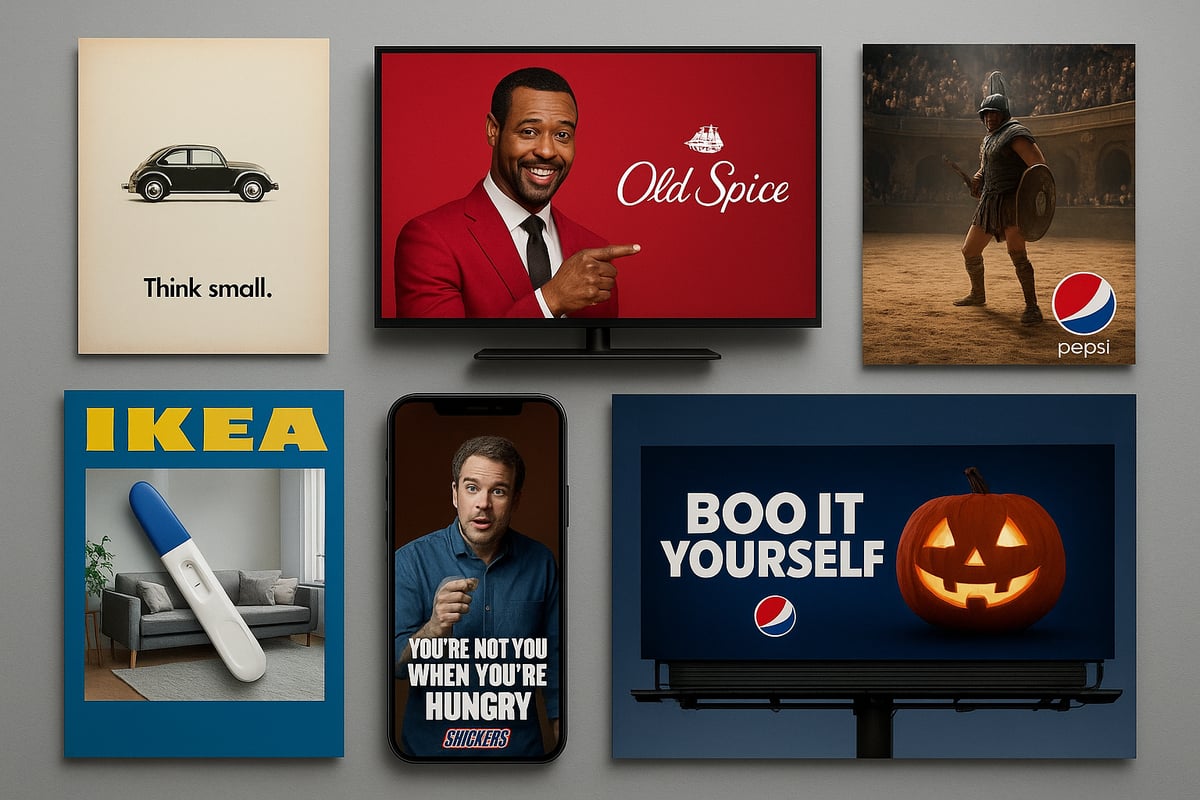
In 1960, Volkswagen launched its legendary “Think Small” campaign advert, forever changing the landscape of automotive marketing. At a time when American car ads focused on size and luxury, Volkswagen’s print campaign advert did the opposite. The visual featured a tiny Beetle surrounded by white space, paired with witty, self-aware copy that poked fun at the car’s modest proportions.
The minimalist design and honest messaging resonated with a new generation of value-driven consumers. By turning a perceived weakness into a compelling strength, this campaign advert built authenticity and trust. The quirky humor and straightforward language made the Beetle approachable, establishing Volkswagen as a brand that valued honesty over flashiness.
Key Features:
- Clean, uncluttered layout
- Self-deprecating humor
- Focus on product authenticity
Unique Selling Points:
- Embraced minimalism in an era of excess
- Highlighted practicality over status
Benefits: The campaign advert helped Volkswagen connect with buyers seeking reliability and simplicity. Its message cut through the noise, resulting in strong brand recall and long-term equity.
Target Audience: Practical consumers, families, and those rejecting mainstream luxury trends.
Pros: Memorable simplicity, relatability, and enduring influence on future campaigns.
Cons: The understated approach risked downplaying other product features.
Impact: “Think Small” is still cited as one of the most influential campaign advert examples in history, inspiring generations of marketers to value authenticity and creative restraint.
Old Spice – “The Man Your Man Could Smell Like”
Old Spice’s 2010 campaign advert, “The Man Your Man Could Smell Like,” redefined how legacy brands could break into new markets. This TV and digital campaign advert starred Isaiah Mustafa in rapid-fire scenes, blending humor, charm, and a direct address to viewers. The result was a viral sensation that rejuvenated Old Spice’s image.
The campaign advert’s core features included quick scene transitions, a witty script, and a charismatic spokesperson. What set this campaign apart was its interactive follow-up: Old Spice responded to fans’ social media comments with custom video replies, making the brand feel accessible and modern.
Key Features:
- Fast-paced, humorous script
- Engaging spokesperson
- Multi-platform rollout
Unique Selling Points:
- Direct engagement with consumers
- Humor that appealed to both men and women
Benefits: The campaign advert reached a younger demographic, repositioning Old Spice as fun and relevant. Sales skyrocketed, and the brand became a staple in pop culture conversations.
Target Audience: Young men, gift-givers, and digital-savvy shoppers.
Pros: High memorability, strong engagement, and viral reach.
Cons: The bold personality risked overshadowing the product itself.
Impact: Old Spice’s campaign advert strategy set the gold standard for digital engagement, making it a case study in revitalizing established brands.
Pepsi – “Gladiator Commercial”
Pepsi’s “Gladiator Commercial,” aired during the 2003 Super Bowl, exemplifies a campaign advert that blends entertainment, star power, and cultural resonance. This TV spot featured pop icons Britney Spears, Beyoncé, and Pink in a Roman arena, performing “We Will Rock You” as gladiators.
The campaign advert’s high production value and cinematic storytelling immediately captured attention. By subverting traditional gender roles and placing female stars in empowering roles, Pepsi connected with a diverse audience seeking both excitement and inspiration.
Key Features:
- Star-studded cast
- Iconic music and visuals
- Cinematic narrative
Unique Selling Points:
- Entertainment-first approach
- Empowerment message
Benefits: The campaign advert broadened Pepsi’s appeal, associating the brand with fun, empowerment, and pop culture relevance.
Target Audience: Teens, young adults, and music lovers.
Pros: Memorable visuals, strong entertainment value, and broad reach.
Cons: High production costs and potential for the message to be diluted by spectacle.
Impact: The campaign advert generated massive engagement and social media buzz, reinforcing Pepsi’s reputation for bold, high-impact advertising.
IKEA – “Pee Here”
IKEA’s 2017 “Pee Here” campaign advert pushed the boundaries of interactive print advertising. This magazine ad invited women to urinate on a special strip, revealing a discount for expectant mothers if they tested positive. The campaign advert was innovative, bold, and highly personalized.
By integrating technology into print, IKEA created a memorable, shareable experience. The campaign advert’s direct appeal to expectant parents demonstrated the brand’s commitment to understanding and supporting its audience’s life moments.
Key Features:
- Built-in pregnancy test
- Personalized call to action
- Innovative print technology
Unique Selling Points:
- Unprecedented interactivity in print
- Targeted connection with a specific demographic
Benefits: The campaign advert drove store traffic and sparked global conversation, earning media coverage and industry awards.
Target Audience: Expectant mothers and families planning for a new child.
Pros: High shareability, PR buzz, and emotional relevance.
Cons: Limited to a specific audience and potential controversy.
Impact: The campaign advert demonstrated how brands can use technology creatively, inspiring marketers to rethink traditional media’s possibilities.
Snickers – “You’re Not You When You’re Hungry”
Snickers’ 2010 campaign advert, “You’re Not You When You’re Hungry,” used humor and relatable scenarios to highlight the product’s core benefit. The campaign advert featured celebrities acting out of character due to hunger, only to return to normal after eating a Snickers bar.
This flexible concept allowed for countless variations, keeping the campaign advert fresh across TV, print, and digital channels. The universal theme of hunger-induced mood swings resonated with a wide audience.
Key Features:
- Relatable humor
- Consistent, memorable tagline
- Celebrity cameos
Unique Selling Points:
- Universal appeal
- Adaptability for different markets
Benefits: The campaign advert expanded Snickers’ demographic reach and maintained relevance over multiple years.
Target Audience: All ages, backgrounds, and cultures.
Pros: Adaptable format, strong brand association, and long campaign lifespan.
Cons: Risk of creative fatigue if overused.
Impact: The campaign advert drove significant sales growth and inspired international adaptations, proving the power of a simple, relatable message.
Pepsi – “Scary Halloween”
In 2019, Pepsi launched its “Scary Halloween” campaign advert, a print ad that cleverly referenced rival Coca-Cola. The visual depicted a Pepsi can dressed in a Coca-Cola cape, with the caption “We wish you a scary Halloween.” This tongue-in-cheek campaign advert used visual wit to spark conversation and reinforce Pepsi’s playful brand personality.
The campaign advert’s simplicity belied its strategic impact. By playfully poking fun at its competitor, Pepsi generated buzz and encouraged social sharing, especially among younger audiences.
Key Features:
- Visual humor
- Competitive positioning
- Low production cost
Unique Selling Points:
- Bold brand personality
- Viral shareability
Benefits: The campaign advert achieved high engagement and reinforced Pepsi’s identity as a bold challenger.
Target Audience: Millennials, Gen Z, social media users.
Pros: Viral potential, cost-effective, and timely.
Cons: Risk of escalating brand wars and alienating rival fans.
Impact: The campaign advert attracted widespread attention, demonstrating how clever visuals and humor can drive brand engagement.
Apple – “1984”
Apple’s “1984” campaign advert, aired during the Super Bowl, is a masterclass in cinematic storytelling and brand positioning. Directed by Ridley Scott, the ad introduced the Macintosh computer through a dystopian narrative inspired by George Orwell’s novel.
The campaign advert depicted a lone heroine smashing conformity, symbolizing Apple’s role as an industry disruptor. Its high production value and powerful metaphor set a new benchmark for Super Bowl advertising.
Key Features:
- Cinematic production
- Strong narrative metaphor
- Single, high-impact broadcast
Unique Selling Points:
- Positioned Apple as an innovator
- Created a cultural moment
Benefits: The campaign advert established Apple’s identity and differentiated it from competitors.
Target Audience: Creative professionals, early tech adopters, visionaries.
Pros: Emotional impact, iconic status, and industry acclaim.
Cons: High cost and risk of misinterpretation.
Impact: The campaign advert achieved immediate brand differentiation and remains one of the most discussed ads in history. For additional inspiration, explore other good digital marketing campaigns that have shaped brand narratives in recent years.
Creative Strategies Behind Successful Campaigns
Success in any campaign advert hinges on a blend of creative vision, strategic planning, and precise execution. Marketers who understand the art and science behind these adverts can elevate their brand’s presence and drive measurable results. Let’s examine the core strategies that set outstanding campaigns apart.

Storytelling and Emotional Connection
A compelling campaign advert often begins with a story that resonates deeply with its audience. Brands like Apple and Volkswagen have mastered narrative-driven campaigns that leave a lasting impression. These stories tap into universal emotions, whether it is nostalgia, humor, or empowerment, to foster brand loyalty.
Research shows that adverts with strong emotional triggers achieve higher brand recall and engagement rates. For more on this, explore Emotional Triggers in Advertising, which highlights how emotions drive consumer decisions.
Marketers should ensure every campaign advert includes a relatable narrative and emotional hook, making the message memorable and impactful.
Audience Engagement and Interactivity
Modern audiences expect more than passive viewing—they seek active participation. Successful campaign adverts like Old Spice’s interactive responses or IKEA’s personalized experiences have set new standards for engagement.
Brands now leverage digital platforms, social media, and real-time feedback to encourage audience involvement. Interactive elements, such as polls, contests, or user-generated content, increase both reach and conversion.
A campaign advert that invites participation creates a two-way relationship, fostering loyalty and amplifying word-of-mouth impact.
Brand Authenticity and Purpose
Today’s consumers value authenticity. Campaign adverts that reflect genuine brand values and address relevant social themes stand out. Snickers and Volkswagen, for example, use honest messaging and humor to connect with wide audiences.
By aligning campaign advert content with core beliefs and societal trends, brands build trust and credibility. However, taking creative risks or addressing current events can be a double-edged sword, requiring careful consideration.
The most effective campaigns are those that balance bold messaging with sincerity, ensuring long-term brand equity.
Multi-Channel Integration and Consistency
A successful campaign advert is rarely confined to a single platform. Leading brands distribute their creative assets across TV, print, digital, and experiential channels, ensuring cohesive messaging everywhere.
Consistency in visual and verbal identity is critical. Integrated campaigns achieve higher ROI, as confirmed by industry data. For a deeper dive into cross-platform strategies, see Media advertising strategies.
Marketers should coordinate creative elements and timing across all touchpoints, maximizing exposure and reinforcing the core message of each campaign advert.
Measuring Campaign Effectiveness
Measuring the impact of a campaign advert is essential for optimizing future efforts. Key metrics include brand lift, sales growth, social engagement, and earned media value.
Successful brands track these results using modern analytics tools and methodologies. For example, real-time dashboards and post-campaign surveys help identify what worked and where to improve.
By setting clear objectives, marketers can ensure each campaign advert delivers tangible results and supports long-term business goals.
How to Apply These Lessons to Your 2026 Campaign Strategy
Translating inspiration from standout campaign advert examples into your own 2026 strategy requires a structured, forward-thinking approach. By applying lessons from the industry’s most creative campaigns, you can build a foundation for lasting brand impact and audience engagement.

Adapting Creative Concepts to Your Brand
Start by clarifying your brand’s core values and unique position. Review recent campaign advert successes and identify what resonated with your audience.
- List your brand’s top three values.
- Map these values to potential campaign themes.
- Analyze which creative approaches align with your identity.
Balance originality with relevance. While bold ideas capture attention, relevance ensures your campaign advert truly connects with your target market. Regularly audit your existing campaigns for creative gaps and opportunities to evolve your messaging.
Leveraging Technology and Data
Harness data-driven insights to craft a personalized campaign advert that speaks directly to your audience. Use analytics to pinpoint what content drives engagement and conversion. Explore emerging technologies like AI and AR to create interactive, memorable experiences.
According to recent studies, AI is becoming one of the top influences on consumer decisions, highlighting the need to integrate AI-driven strategies into your 2026 campaign advert planning. Always prioritize privacy compliance and use data ethically to build trust.
Building a Culture of Innovation
Encourage collaboration across creative, data, and media teams. Foster an environment where experimentation is valued and learning from both campaign advert successes and setbacks is the norm.
- Set regular brainstorming sessions.
- Reward creative risk-taking.
- Share key takeaways from past campaigns.
Brands that institutionalize innovation consistently produce campaign advert concepts that stand out and adapt to shifting market trends.
Planning for Multi-Channel Success
For a campaign advert to reach its full potential, ensure cohesive messaging across all platforms—TV, print, digital, and experiential. Use a checklist to align creative assets and maintain consistency in your brand’s voice and visuals.
- Develop assets tailored to each channel.
- Confirm messaging is unified and clear.
- Allocate budget based on past channel performance.
For more advice on orchestrating successful campaigns, consult these advertising campaign management tips to streamline your multi-channel strategy.
Staying Agile and Responsive
Monitor your campaign advert performance in real time. Leverage tools for rapid content creation and deployment, allowing you to respond quickly to cultural moments or competitor moves.
Remain flexible—adjust creative elements, timing, or platform focus as needed. An agile approach ensures your campaign advert remains relevant and impactful throughout its lifecycle.