
Healthcare providers and franchise systems face a unique challenge in 2026: attracting website visitors is only half the battle. The real measure of marketing success lies in conversions digital marketing-transforming those anonymous browsers into scheduled consultations, qualified leads, and ultimately, paying patients or franchise partners. For medical spas, compounding pharmacies, wound care centers, and telehealth providers, understanding the mechanics of conversion optimization can mean the difference between a marketing budget that drains resources and one that generates measurable revenue growth. This comprehensive guide explores how healthcare organizations can master the art and science of turning digital traffic into tangible business outcomes.
Understanding Conversions Digital Marketing in Healthcare
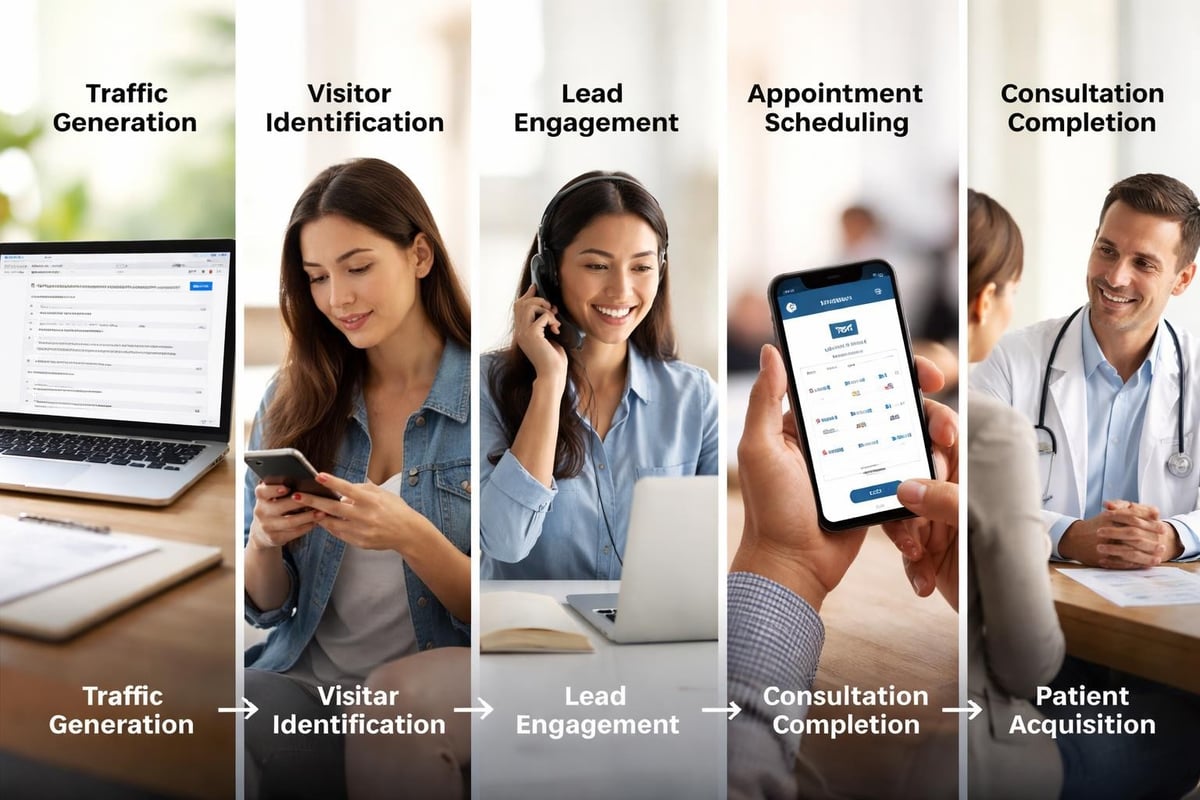
Conversions digital marketing represents the strategic process of guiding potential patients or clients through specific actions that move them closer to becoming customers. In healthcare, a conversion might be scheduling a consultation, completing a health assessment form, requesting information about franchise opportunities, or booking a telemedicine appointment.
The healthcare industry faces distinct conversion challenges compared to e-commerce or B2B sectors. Patient privacy concerns, complex decision-making processes, and the high-stakes nature of medical choices all influence how prospects interact with digital touchpoints. Conversion rates in digital marketing vary significantly by industry, with healthcare often requiring longer nurture cycles and more trust-building before prospects take action.
Key Healthcare Conversion Metrics
Primary conversion actions include:
- Appointment scheduling for initial consultations
- Phone call requests or direct dial-throughs
- Form submissions for patient intake or health assessments
- Franchise inquiry submissions for expansion opportunities
- Live chat engagement with pre-sales teams
- Download requests for treatment guides or informational resources
Understanding which conversions matter most to your specific healthcare practice determines where to focus optimization efforts. A men's health clinic might prioritize consultation bookings, while a pharmaceutical distribution franchise system focuses on qualified partner inquiries.
Benchmarking Your Healthcare Conversion Performance
Before implementing optimization strategies, establishing baseline metrics provides context for improvement. According to digital marketing conversion rate benchmarks, average conversion rates across industries range from 2-5%, though healthcare conversions often fall within specific parameters based on specialty and service type.
| Healthcare Specialty | Typical Conversion Rate | High-Performing Rate |
|---|---|---|
| Medical Spas | 3-6% | 8-12% |
| Orthopedic Clinics | 2-4% | 6-9% |
| Telehealth Providers | 4-7% | 10-15% |
| Addiction Treatment | 1-3% | 5-8% |
| Compounding Pharmacies | 2-5% | 7-11% |
These benchmarks reveal significant opportunity gaps. The difference between average and high-performing conversion rates represents thousands of potential patients and substantial revenue increases. For a wound care center receiving 1,000 monthly website visitors, improving conversions from 3% to 8% means an additional 50 patient consultations each month.
Device and Channel Performance Variables
Conversion performance varies dramatically across devices and traffic sources. Mobile users in healthcare often research during private moments but may convert via desktop when ready to schedule. Paid search traffic typically converts at higher rates than organic social media, though social platforms excel for awareness-building and retargeting.
Channel-specific considerations include:
- Paid Search: High intent, immediate need, stronger conversion potential
- Organic Search: Research-focused, comparison shopping, moderate conversion rates
- Social Media: Awareness stage, requires nurturing, lower immediate conversions
- Email Marketing: Existing relationships, highest conversion potential for re-engagement
- Direct Traffic: Brand familiarity, strong conversion indicators
Understanding these nuances allows healthcare marketers to set realistic expectations and allocate budget appropriately across channels within their conversions digital marketing strategy.
Optimizing Landing Pages for Healthcare Conversions
Landing page performance directly impacts conversion success. Healthcare providers must balance regulatory compliance, trust-building, and conversion optimization-a challenging trifecta that separates high-performers from average practices.
Effective healthcare landing pages share common characteristics. Clear value propositions that address specific patient pain points appear above the fold. Social proof elements including patient testimonials, provider credentials, and industry certifications build immediate credibility. Simple, friction-free forms collect only essential information during initial conversion events.
Form Optimization Strategies
Form length significantly impacts conversion rates. While comprehensive patient intake serves administrative purposes, initial conversion forms should minimize barriers. A two-step approach works well: collect essential contact information first, then gather detailed health history after scheduling confirmation.
- Initial Form Fields: Name, phone number, preferred appointment time
- Progressive Profiling: Additional details collected during follow-up communications
- Mobile Optimization: Large tap targets, auto-fill enabled, minimal typing required
- Privacy Assurance: Clear HIPAA compliance statements, security badges visible
Testing form variations consistently reveals opportunities. A veterinary medicine practice might discover that removing the "reason for visit" field increases form submissions by 40%, as pet owners prefer discussing concerns directly rather than typing lengthy explanations.
Implementing Visitor Identification Technology
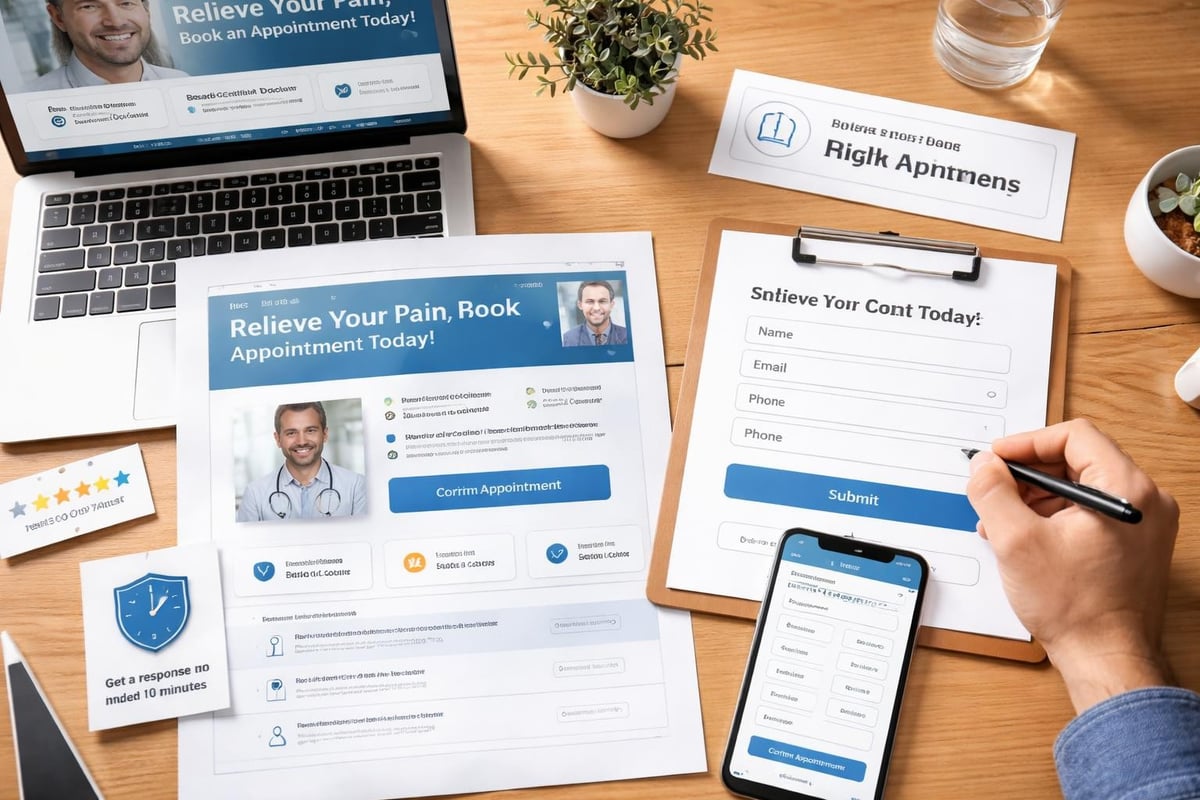
One of the most significant advances in conversions digital marketing involves identifying anonymous website visitors. Traditional analytics show that 95-98% of healthcare website traffic leaves without converting. However, proprietary identification technology can reveal contact information for 60% of these anonymous visitors, transforming conversion potential.
This technology operates within privacy regulations by matching IP addresses and digital signals to publicly available business and residential databases. For healthcare providers, this means sales teams can proactively reach out to prospects who researched services but didn't complete contact forms.
The Impact of Proactive Outreach
When combined with rapid response protocols, visitor identification dramatically improves conversion rates. A compounding pharmacy that identifies a prospect researching testosterone replacement therapy can initiate contact within minutes, answering questions and scheduling consultations before competitors even know the prospect exists.
Implementation framework includes:
- Deploy identification tracking across all website pages
- Segment identified visitors by service interest and engagement level
- Establish response protocols with 2-minute contact targets
- Train pre-sales teams on consultative engagement approaches
- Monitor conversion rates from identified visitor outreach
Conversion rate optimization best practices emphasize the importance of understanding visitor behavior and eliminating friction points. Visitor identification takes this principle further by enabling personalized outreach based on demonstrated interest patterns.
Speed-to-Lead: The Critical Conversion Factor
Response time represents one of the most impactful variables in healthcare conversions digital marketing. Research consistently demonstrates that organizations responding to inquiries within 5 minutes convert leads at rates 10-20 times higher than those responding after an hour.
For healthcare providers, this presents both challenge and opportunity. Medical practices often lack dedicated staff to manage immediate response protocols. Phone systems route to busy front desk personnel, email inquiries sit in general inboxes, and contact forms generate automated confirmations without human follow-up.
| Response Time | Conversion Likelihood | Healthcare Application |
|---|---|---|
| Under 2 minutes | 8x baseline rate | Immediate phone callback, live chat engagement |
| 5 minutes | 5x baseline rate | Dedicated response team monitoring |
| 30 minutes | 2x baseline rate | Standard business hour protocols |
| 1+ hours | 1x baseline rate | Automated response only |
| 24+ hours | 0.3x baseline rate | Weekend/holiday inquiries |
Implementing 2-minute response protocols requires dedicated resources. Successful healthcare organizations utilize specialized pre-sales development teams focused exclusively on rapid lead engagement, qualification, and appointment scheduling. These teams operate with CRM systems that alert them instantly when prospects submit forms or request callbacks.
Systematic Follow-Up Management
Initial contact represents only the first step. Systematic follow-up management ensures prospects who aren't ready to schedule immediately remain engaged through the decision-making process. A women's health clinic prospect researching hormone replacement therapy might need three to five touchpoints before committing to a consultation.
Effective follow-up sequences include:
- Immediate response acknowledging inquiry and offering scheduling options
- Educational content addressing common questions and concerns within 24 hours
- Personal video message from provider or practice manager on day 3
- Special offer or limited-time scheduling incentive on day 7
- Final contact repositioning value proposition on day 14
This systematic approach, when properly executed within a conversions digital marketing framework, keeps healthcare practices top-of-mind without becoming intrusive or pushy.
A/B Testing for Continuous Improvement
Conversion marketing best practices emphasize data-driven decision making through continuous testing and optimization. Healthcare providers can test numerous variables to identify which combinations produce optimal conversion performance.
Common testing priorities include headline variations that emphasize different value propositions, call-to-action button text and colors, form field combinations and ordering, page layouts and visual hierarchies, trust element positioning and prominence, and appointment scheduling interface options.
Testing Framework for Healthcare
Effective testing requires sufficient traffic volume to reach statistical significance. A medical spa receiving 500 monthly visitors might need 4-6 weeks to validate test results, while a telehealth platform with 10,000 monthly visitors can run multiple concurrent tests with faster insights.
Start with high-impact elements. Testing headline variations typically produces more significant conversion improvements than button color adjustments. For an orthopedic practice, headlines emphasizing "pain relief" versus "mobility restoration" might reveal substantial preference differences among prospects with different motivational drivers.
Documentation and knowledge transfer ensure testing insights compound over time. When an addiction treatment center discovers that testimonial videos from former patients outperform written testimonials by 65%, this insight should inform all future landing page development and content strategy.
Call-to-Action Optimization Strategies
The specific language, placement, and design of conversion calls-to-action significantly influence results. Generic phrases like "Submit" or "Contact Us" underperform compared to specific, value-focused alternatives that address prospect concerns directly.
For healthcare conversions digital marketing, effective CTAs often incorporate urgency, specificity, and outcome orientation. "Schedule Your Free Consultation Today" outperforms "Learn More" because it clearly communicates the action, removes cost barriers, and creates subtle urgency.
High-performing healthcare CTA approaches:
- Immediate value: "Get Your Personalized Treatment Plan"
- Risk removal: "Start with a No-Obligation Assessment"
- Time sensitivity: "Book Your April Appointment Now"
- Outcome focus: "Begin Your Pain-Free Journey"
- Exclusivity: "Claim Your New Patient Discount"
Placement matters equally. Above-the-fold CTAs capture high-intent visitors who arrive ready to convert. Mid-page CTAs engage prospects who need additional information before committing. Exit-intent popups capture abandoning visitors with last-chance offers or alternative conversion pathways.

Mobile Optimization for Healthcare Conversions
Mobile devices account for 60-70% of healthcare website traffic in 2026, yet mobile conversion rates often lag desktop performance by 30-50%. This gap represents enormous opportunity for practices that prioritize mobile experience optimization.
Mobile-specific challenges include smaller screens requiring simplified navigation, touch-based interaction demanding larger clickable elements, slower connection speeds necessitating faster page loads, and distraction-prone environments requiring immediate value clarity.
Mobile Conversion Best Practices
Implement click-to-call functionality prominently on mobile landing pages. Phone calls convert at significantly higher rates than form submissions for many healthcare services, particularly those involving urgent needs or complex decision-making. A wound care center prospect with a non-healing diabetic ulcer prefers immediate conversation over form completion.
Streamline mobile forms to essential fields only. Auto-fill functionality, dropdown menus instead of text entry, and single-column layouts all reduce friction. Mobile keyboard optimization ensures appropriate input types-phone number fields trigger numeric keyboards, email fields include "@" symbol quick access.
According to comprehensive CRO statistics, mobile-optimized landing pages can achieve conversion parity with desktop experiences when properly designed, representing substantial revenue opportunity for healthcare providers who historically overlooked mobile performance.
Trust Signals and Social Proof in Healthcare
Healthcare purchase decisions involve higher stakes than most consumer choices. Prospects evaluate not just service quality but also safety, expertise, and outcome likelihood. Strong trust signals throughout the conversion pathway address these concerns and reduce decision-making friction.
Essential trust elements include:
- Provider credentials: Board certifications, specialized training, years of experience
- Facility accreditations: Joint Commission, state licensing, industry-specific certifications
- Patient testimonials: Video testimonials particularly effective, specific outcome focus
- Before/after results: Where appropriate and compliant, visual proof of outcomes
- Media mentions: News coverage, expert commentary, industry recognition
- Security indicators: HIPAA compliance, data protection, privacy policies
The strategic placement of trust signals correlates with conversion performance. Reviews and testimonials near call-to-action buttons provide immediate reassurance at the decision point. Provider credentials positioned early establish authority before prospects invest time reading detailed content.
CRM Integration and Lead Management
Even perfectly optimized landing pages fail if qualified leads enter broken management systems. Complete CRM integration with transparent tracking ensures every prospect receives appropriate follow-up and allows continuous performance monitoring.
Effective CRM implementation for healthcare conversions digital marketing captures lead source attribution, tracks all touchpoint interactions, automates appropriate follow-up sequences, assigns leads to specific team members, monitors conversion funnel progression, and provides real-time performance dashboards.
Full transparency enables rapid problem identification. When conversion rates suddenly decline, integrated systems reveal whether traffic quality deteriorated, response times increased, or specific landing pages underperformed. Without this visibility, healthcare providers operate blind to critical performance variables.
Lead Qualification and Scoring
Not all conversions carry equal value. A franchise inquiry from a qualified investor with multi-unit experience differs significantly from a casual information request. Lead scoring systems prioritize resources toward highest-value opportunities.
Healthcare-specific scoring criteria might include insurance coverage verification, geographic service area fit, treatment urgency or timeline, budget capacity indicators, previous relationship or referral source, and engagement level across multiple touchpoints.
Automated scoring triggers appropriate routing. High-scoring leads receive immediate senior team attention, while lower-scoring prospects enter automated nurture sequences designed to increase qualification over time.
Retargeting and Multi-Touch Conversion Strategies
Initial website visits rarely produce immediate conversions, particularly for high-consideration healthcare services. Strategic retargeting campaigns maintain brand presence and provide multiple conversion opportunities as prospects progress through decision-making processes.
Effective retargeting segments audiences based on specific behaviors and interests. Visitors who viewed hormone therapy pages but didn't convert receive different messaging than those researching franchise opportunities. This personalization increases relevance and conversion likelihood.
Multi-touch conversion sequence example:
- Day 0: Prospect visits medical spa website, views laser treatment information
- Day 1: Retargeting ad showcases patient testimonial video on social media
- Day 3: Email sequence delivers educational content about treatment process
- Day 5: Retargeting ad offers limited-time new patient discount
- Day 7: Phone outreach from pre-sales team (if visitor identified)
- Day 10: Final retargeting campaign emphasizes quick scheduling options
This systematic approach recognizes that healthcare conversions digital marketing requires patience and persistent value delivery. Each touchpoint builds familiarity, addresses objections, and provides conversion opportunities aligned with prospect readiness.
Performance Measurement and Continuous Optimization
Sustainable conversion improvement requires ongoing measurement, analysis, and refinement. Establishing clear KPIs and monitoring systems ensures optimization efforts focus on metrics that actually impact business growth.
| Metric | Calculation | Healthcare Benchmark | Improvement Priority |
|---|---|---|---|
| Conversion Rate | (Conversions ÷ Visitors) × 100 | 3-7% | High |
| Cost Per Acquisition | Total Marketing Spend ÷ New Patients | $150-$500 | High |
| Appointment Show Rate | (Attended ÷ Scheduled) × 100 | 65-75% | Medium |
| Lead Response Time | Average Minutes to First Contact | Under 5 min | High |
| Lead-to-Patient Rate | (New Patients ÷ Total Leads) × 100 | 20-35% | High |
Regular performance reviews identify trends before they become problems. Monthly analysis might reveal seasonal conversion patterns affecting orthopedic practices differently than medical spas, informing budget allocation and campaign timing decisions.
Successful healthcare organizations view conversions digital marketing as an ongoing optimization process rather than a one-time project. Small, incremental improvements compound over time, creating substantial competitive advantages and revenue growth that transforms practice economics.
Mastering conversions digital marketing requires strategic planning, systematic execution, and continuous optimization-particularly in healthcare where decision cycles are complex and trust is paramount. RevSpark Media specializes in this exact challenge, combining proprietary visitor identification technology, 2-minute response protocols, and comprehensive lead management to transform anonymous website traffic into scheduled appointments and actual patients for healthcare providers and franchise systems. With proven expertise generating over $100M in client growth, RevSpark Media delivers the complete infrastructure needed to maximize conversion performance and drive measurable practice growth.