
Healthcare providers face a unique challenge in 2026: attracting qualified patients in an increasingly competitive digital landscape while maintaining compliance and building trust. Digital marketing leads represent the lifeblood of practice growth, but not all leads are created equal. For medical practices, telehealth providers, and healthcare franchises, the difference between a converted patient and a wasted marketing dollar often comes down to how efficiently you generate, qualify, and nurture leads through your patient acquisition funnel. Understanding the fundamentals of lead generation in healthcare digital marketing has become essential for practices seeking sustainable growth.
Understanding Digital Marketing Leads in Healthcare
Digital marketing leads are potential patients who have expressed interest in your healthcare services through online channels. These prospects might fill out a form, download a resource, book a consultation, or engage with your content in meaningful ways.
The healthcare lead landscape differs significantly from traditional B2C marketing because of the sensitive nature of medical decisions, longer consideration periods, and regulatory requirements that govern patient communications. A qualified lead in the healthcare space represents someone who not only fits your ideal patient profile but also demonstrates genuine intent to seek treatment.
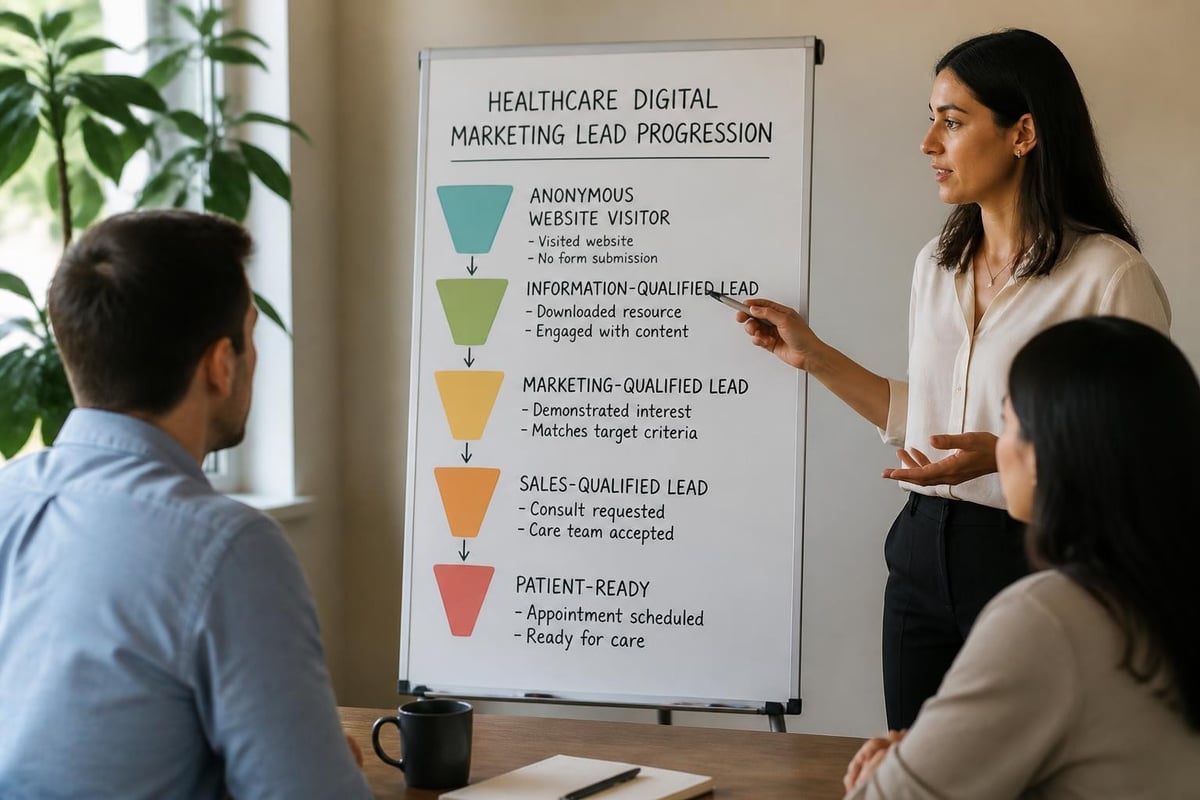
Types of Healthcare Leads
Understanding lead quality helps practices allocate resources effectively:
- Information-qualified leads (IQL): Visitors who downloaded educational content or subscribed to newsletters
- Marketing-qualified leads (MQL): Prospects who engaged with multiple touchpoints and demonstrate buying signals
- Sales-qualified leads (SQL): High-intent prospects ready for consultation or treatment discussions
- Patient-ready leads: Individuals prepared to schedule appointments immediately
Healthcare practices must recognize that patient acquisition requires nurturing prospects through various stages of awareness and consideration before conversion.
Capturing Anonymous Website Visitors
The majority of healthcare website visitors never fill out forms or make contact. Advanced lead generation in digital marketing now includes proprietary technology that identifies up to 60% of anonymous visitors through data enrichment and behavioral tracking.
This capability transforms how healthcare practices approach digital marketing leads. Instead of waiting for prospects to raise their hands, modern systems proactively identify visitors researching specific treatments or services.
Technology-driven identification works through several mechanisms:
- IP address reverse lookup for business and residential data
- Cross-device tracking to follow patient journeys across platforms
- First-party data integration with existing patient databases
- Behavioral scoring based on page visits and time on site
- Third-party data enrichment to append contact information
| Identification Method | Average Coverage | Data Quality | Healthcare Compliance |
|---|---|---|---|
| Form Submissions | 2-5% | High | Excellent |
| Chat Interactions | 3-7% | Medium-High | Good |
| Anonymous Visitor ID | 40-60% | Medium | Requires Vetting |
| Phone Call Tracking | 1-3% | High | Excellent |
The key is converting identified visitors into engaged prospects through targeted follow-up campaigns while maintaining HIPAA compliance and respecting patient privacy.
Speed-to-Lead: The 2-Minute Advantage
Response time directly impacts conversion rates for digital marketing leads. Research consistently shows that contacting leads within the first five minutes increases qualification rates by 800% compared to waiting 30 minutes.
For healthcare practices, the window is even tighter. Patients researching treatments often contact multiple providers simultaneously. The practice that responds first typically wins the appointment.
Implementing a 2-minute response protocol requires systematic execution:
- Automated lead routing to available staff members
- Pre-written response templates customized for specific services
- Multi-channel outreach including phone, text, and email
- Real-time notifications when high-value leads are captured
- Backup coverage systems to ensure no lead goes uncontacted
A dedicated pre-sales development team handles initial contact, qualification, and appointment scheduling without burdening clinical staff. This separation allows medical professionals to focus on patient care while ensuring every digital marketing lead receives immediate attention.
Multi-Channel Lead Generation Strategy
Relying on a single channel for patient acquisition creates vulnerability. A comprehensive approach to generating quality leads in digital marketing requires diversification across multiple platforms.
Paid Search and Display Advertising
Google Ads remains the highest-intent channel for healthcare digital marketing leads. Patients searching for specific treatments or symptoms demonstrate immediate need.
Key performance indicators for paid search campaigns include:
- Cost per lead by service line
- Appointment booking rate from leads
- Patient lifetime value from digital channels
- Return on ad spend across campaign types
Display advertising supports awareness-building for specialized services like men's health clinics, medical spas, or addiction treatment centers where prospects may not know solutions exist.
Social Media Lead Generation
Facebook and Instagram advertising excel at reaching patients earlier in their healthcare journey. These platforms enable sophisticated targeting based on demographics, interests, and behaviors.
LinkedIn proves particularly effective for franchise development leads, connecting with entrepreneurs and healthcare professionals interested in ownership opportunities.
Content Marketing and SEO
Organic search provides the most cost-effective digital marketing leads over time. Healthcare practices benefit from creating comprehensive content that answers patient questions and establishes expertise.

Essential content types for healthcare lead generation:
- Treatment guides addressing specific conditions
- Cost and insurance coverage explanations
- Provider credentials and expertise showcases
- Patient success stories and testimonials
- Local healthcare market insights
Strategic implementation of inbound marketing lead generation best practices ensures practices attract qualified prospects actively seeking solutions.
Landing Page Optimization for Conversion
Every digital marketing campaign should direct traffic to dedicated landing pages designed for a single conversion goal. Generic homepage traffic converts at 2-3%, while optimized landing pages achieve 15-25% conversion rates.
Critical Landing Page Elements
Healthcare landing pages require specific components to build trust and encourage action:
| Element | Purpose | Best Practice |
|---|---|---|
| Clear Headline | Communicate value proposition | Address specific patient pain point |
| Trust Indicators | Build credibility | Display certifications, reviews, years in practice |
| Form Design | Capture lead information | Request minimum fields, progressive profiling |
| Call-to-Action | Drive conversion | Use action-oriented language specific to treatment |
| Privacy Assurance | Address concerns | Explicit HIPAA compliance statement |
Mobile optimization is non-negotiable in 2026. Over 70% of healthcare searches occur on mobile devices, making responsive design and fast loading times essential for capturing digital marketing leads.
CRM Integration and Lead Management
Generating leads means nothing without systematic follow-up. Complete CRM integration provides transparency into the entire patient journey from first click to appointment completion.
Modern healthcare CRM systems track:
- Lead source attribution across all marketing channels
- Engagement history including emails opened, pages visited, and content downloaded
- Communication logs from pre-sales team interactions
- Appointment scheduling, confirmations, and show rates
- Patient conversion value and lifetime revenue
Full transparency in reporting separates performance-driven partners from traditional marketing agencies. Healthcare practices deserve real-time access to lead data, conversion metrics, and ROI calculations without requesting reports or logging into multiple platforms.
Automated Follow-Up Sequences
Marketing automation ensures no lead falls through the cracks. According to digital marketing statistics for 2026, companies using marketing automation see a 451% increase in qualified leads.
Effective sequences for healthcare digital marketing leads include:
- Immediate confirmation of inquiry receipt
- Educational content relevant to searched service
- Testimonial or case study from similar patients
- Appointment scheduling reminder and easy booking link
- Pre-appointment preparation information
- Post-consultation follow-up and next steps
Each touchpoint should provide value while gently moving prospects toward scheduling and attendance.
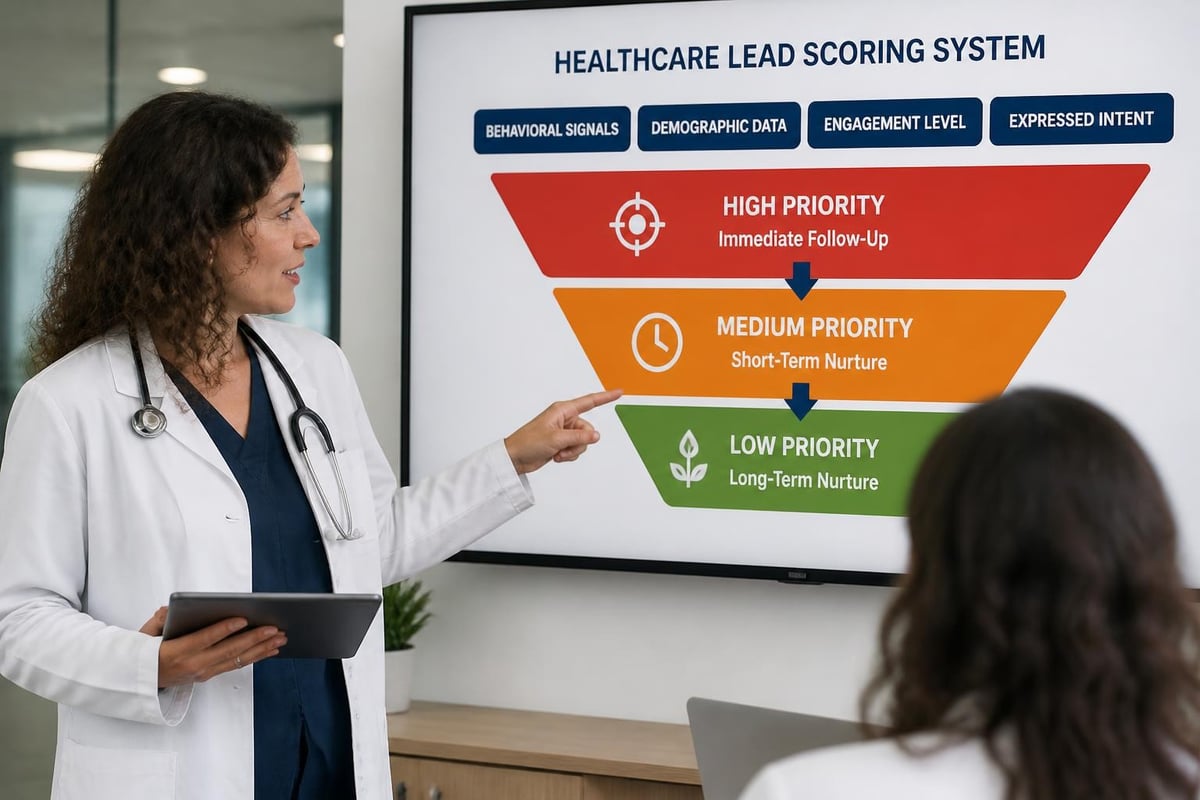
Lead Qualification Framework
Not every digital marketing lead deserves the same level of pursuit. Implementing a structured qualification framework helps practices prioritize high-value opportunities.
BANT criteria adapted for healthcare:
- Budget: Does the prospect have insurance coverage or ability to pay?
- Authority: Is this the decision-maker for their healthcare?
- Need: Do they have a genuine medical need for your services?
- Timeline: How urgently are they seeking treatment?
Additional healthcare-specific qualifiers include:
- Geographic location within serviceable area
- Age and demographic fit for specialized services
- Previous treatment history and current medications
- Specific symptoms or conditions mentioned
Pre-sales teams use structured consultation frameworks during initial contact to quickly assess qualification and route high-priority leads to clinical staff.
Appointment Show Rate Optimization
Generating digital marketing leads and booking appointments represents only partial success. The true measure of campaign effectiveness is appointment show rates and patient conversion.
Industry benchmarks show healthcare no-show rates between 15-30%, representing significant revenue loss. Systematic optimization reduces no-shows to under 10%.
Proven Show Rate Improvement Tactics
- Send appointment confirmations via multiple channels (email, text, phone)
- Provide clear directions, parking information, and what to bring
- Reduce friction in appointment scheduling with online booking
- Offer flexible scheduling options including evenings and weekends
- Implement reminder sequences at 7 days, 3 days, and 1 day before appointment
- Create easy rescheduling options to save at-risk appointments
The consultation framework matters tremendously. Training staff to set proper expectations, explain the appointment process, and build rapport during initial contact increases show rates by 20-40%.
Service Line Specific Strategies
Different healthcare specialties require tailored approaches to digital marketing leads based on patient psychology and decision-making processes.
Elective Procedures and Medical Spas
Cosmetic and elective treatments involve discretionary spending and longer consideration periods. Lead nurturing must emphasize:
- Before-and-after galleries showcasing results
- Financing options and package pricing
- Limited-time promotions creating urgency
- Social proof through reviews and testimonials
Addiction Treatment and Behavioral Health
Sensitive conditions require empathetic messaging and privacy assurances. Effective strategies include:
- Crisis intervention messaging for immediate needs
- Family education resources for decision influencers
- Insurance verification and admission process clarity
- Alumni success stories demonstrating long-term outcomes
Franchise Development Leads
Attracting qualified franchise partners differs from patient acquisition. These high-value digital marketing leads require:
- Financial qualification early in the process
- Educational content about franchise ownership
- Earnings claims and territory availability
- Multi-touchpoint nurturing over 6-12 month cycles
Understanding lead generation strategies for digital marketing agencies helps refine approaches across diverse healthcare verticals.
Measuring Return on Investment
Healthcare practices must justify marketing spend with concrete revenue attribution. Comprehensive tracking connects digital marketing leads to actual patient revenue.
Essential metrics for healthcare lead generation:
| Metric | Definition | Industry Benchmark |
|---|---|---|
| Cost Per Lead | Total spend divided by leads generated | $50-200 (varies by specialty) |
| Lead-to-Appointment Rate | Percentage of leads that schedule | 25-40% |
| Appointment Show Rate | Percentage of scheduled who attend | 70-85% |
| Patient Conversion Rate | Percentage who begin treatment | 60-80% |
| Patient Lifetime Value | Total revenue per acquired patient | $2,000-50,000+ |
| Return on Ad Spend | Revenue generated per dollar spent | 3:1 to 10:1+ |
Advanced attribution modeling accounts for multi-touch journeys where patients interact with several channels before converting.
Compliance and Privacy Considerations
Healthcare marketing operates under strict regulations that impact lead generation tactics. HIPAA compliance governs how practices handle patient information, even for prospects who have not yet received treatment.
Key compliance requirements for digital marketing leads:
- Secure transmission and storage of personal health information
- Explicit consent before adding contacts to marketing lists
- Clear opt-out mechanisms in all communications
- Limited use of patient testimonials and case studies
- Careful handling of retargeting campaigns
Business associate agreements with marketing technology providers ensure vendors meet HIPAA standards for data protection and privacy.
The intersection of effective lead generation strategies and regulatory compliance requires experienced partners who understand healthcare marketing nuances.
Technology Stack for Lead Generation
Effective digital marketing leads programs require integrated technology platforms working in concert.
Essential Components
- Website with conversion optimization: Fast loading, mobile responsive, clear calls-to-action
- Landing page builder: Create dedicated pages for each campaign without IT resources
- CRM system: Centralize lead data and track patient journey
- Marketing automation: Execute multi-touch nurture campaigns
- Call tracking: Attribute phone leads to specific campaigns
- Analytics platform: Measure performance and optimize campaigns
- Appointment scheduling: Enable online booking and reduce friction
Integration between platforms eliminates data silos and provides complete visibility. When website form submissions automatically create CRM contacts, trigger email sequences, and notify the pre-sales team simultaneously, no leads slip through gaps.
Systematic Execution and Accountability
The difference between mediocre and exceptional results in healthcare lead generation comes down to systematic execution. One-time campaign launches without ongoing optimization leave significant performance on the table.
Continuous improvement requires:
- Weekly performance reviews identifying trends and opportunities
- A/B testing of ad copy, landing pages, and email content
- Seasonal adjustments for service line demand fluctuations
- Competitive analysis and market positioning refinement
- Regular consultation framework training for patient-facing staff
Healthcare practices benefit from partners who take complete ownership of the revenue generation process rather than simply managing advertising campaigns.
Scaling Lead Generation Systems
As practices grow, lead generation systems must scale without proportional increases in overhead. Automation and process documentation enable expansion.
Successful scaling strategies include:
- Templated campaign structures for new service lines or locations
- Centralized pre-sales teams handling multiple practice locations
- Standardized reporting dashboards across all properties
- Proven playbooks for franchise system replication
- Technology infrastructure supporting multi-location management
The goal is creating repeatable systems that produce predictable results regardless of market conditions or competitive dynamics.
Generating and converting digital marketing leads in healthcare requires a comprehensive approach combining technology, speed, and systematic execution. Success depends not just on attracting prospects but ensuring they become actual patients through rapid response, personalized nurturing, and removal of scheduling friction. RevSpark Media specializes in the complete patient acquisition journey for healthcare providers and franchise systems, from identifying anonymous website visitors to delivering qualified appointments with industry-leading show rates. Our proprietary technology and dedicated pre-sales team handle the entire process, allowing you to focus on what you do best while we drive consistent, measurable growth.