
The healthcare landscape has transformed dramatically over the past decade, with patients increasingly turning to digital channels to research providers, book appointments, and make treatment decisions. For medical practices, wound care centers, orthopedic clinics, telehealth providers, and specialty healthcare facilities, mastering digital marketing medical strategies is no longer optional-it's essential for survival and growth. The challenge isn't just attracting potential patients online; it's converting those digital interactions into actual appointments and building sustainable revenue streams. As healthcare becomes more competitive and patients more discerning, practices must implement comprehensive digital marketing medical approaches that combine visibility, credibility, and systematic conversion processes.
Understanding Digital Marketing Medical Fundamentals
Digital marketing medical encompasses all online strategies and tactics healthcare providers use to attract, engage, and convert patients. Unlike traditional marketing approaches that relied on referrals and print advertising, modern healthcare marketing leverages search engines, social media platforms, content creation, and data-driven advertising to reach patients precisely when they're searching for solutions.
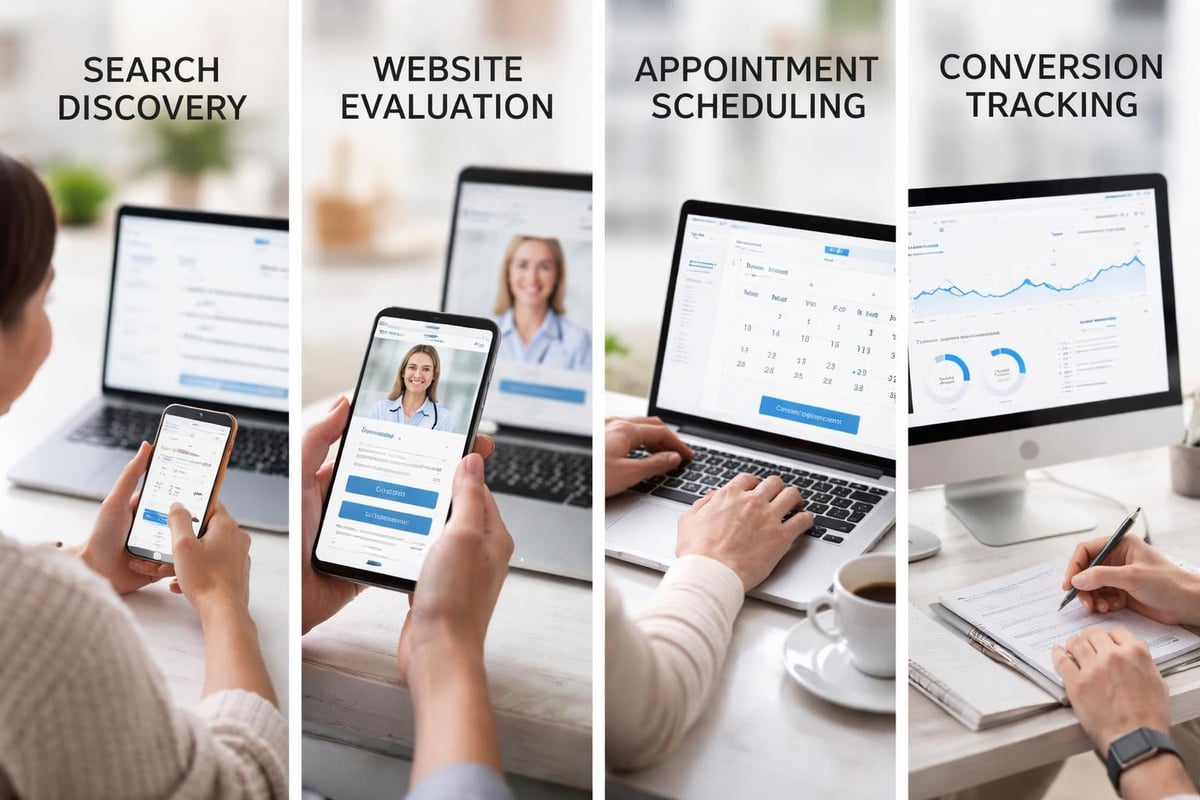
The foundation of effective digital marketing medical strategies rests on understanding patient behavior in 2026. Today's patients conduct extensive online research before choosing a healthcare provider, often visiting multiple websites, reading reviews, comparing treatment options, and evaluating provider credentials before making contact. This research phase represents a critical opportunity for practices to establish authority and build trust.
Core Components of Medical Digital Marketing
Successful digital marketing medical programs integrate several essential elements that work together to create a comprehensive patient acquisition system:
- Search engine optimization (SEO) to ensure your practice appears when patients search for specific treatments or conditions
- Paid advertising campaigns that target high-intent patients actively seeking healthcare solutions
- Website optimization designed to convert visitors into scheduled appointments
- Content marketing that educates patients and establishes clinical expertise
- Online reputation management to build credibility through reviews and testimonials
- Lead nurturing systems that follow up with potential patients systematically
The most effective digital marketing strategies for medical practices recognize that patient acquisition is a multi-touch process requiring coordination across all these channels.
Search Engine Optimization for Healthcare Providers
Search engine optimization forms the cornerstone of sustainable digital marketing medical success. When patients in your area search for "orthopedic surgeon near me," "addiction treatment center," or "men's health clinic," your practice must appear prominently in search results. Unlike paid advertising that stops generating leads when you stop spending, SEO builds long-term visibility and authority.
Local SEO is particularly critical for healthcare providers because most patients search for nearby practices. This requires optimizing your Google Business Profile, ensuring consistent NAP (name, address, phone number) information across online directories, and building location-specific content that targets geographic search terms.
Technical SEO elements that impact medical practice rankings include:
- Mobile responsiveness – ensuring your website functions flawlessly on smartphones and tablets
- Page load speed – optimizing images and code to deliver fast-loading pages
- Secure HTTPS protocol – protecting patient information and building trust
- Structured data markup – helping search engines understand your services and specialties
- Internal linking architecture – connecting related pages to improve navigation and authority
Content creation drives organic search visibility. Medical practices should publish comprehensive content addressing patient questions, treatment options, condition information, and procedure details. For a wound care center, this might include articles about diabetic ulcer treatment, pressure wound prevention, and advanced wound care technologies. Each piece of content should target specific search terms while providing genuine value to patients researching their healthcare options.
Paid Advertising Strategies That Generate Patients
While SEO builds long-term visibility, paid advertising through platforms like Google Ads and social media delivers immediate patient acquisition results. Digital marketing medical campaigns using pay-per-click advertising allow practices to target specific demographics, geographic areas, and patient intentions with precision.
Google Ads for Medical Practices
Google Ads campaigns for healthcare providers should focus on high-intent search terms that indicate immediate need. Terms like "emergency dental care," "urgent orthopedic consultation," or "telehealth doctor available now" represent patients ready to schedule appointments.
| Campaign Type | Best For | Average Conversion Rate | Typical Cost Per Click |
|---|---|---|---|
| Search Ads | High-intent patients actively searching | 3-8% | $5-$25 |
| Display Ads | Brand awareness and remarketing | 0.5-2% | $1-$5 |
| Local Service Ads | Location-based patient acquisition | 10-15% | $15-$50 per lead |
Effective paid advertising in digital marketing medical requires continuous optimization. Ad copy should speak directly to patient pain points, landing pages must align perfectly with ad messaging, and conversion tracking must measure actual appointments scheduled-not just form submissions.
Remarketing campaigns play a crucial role in converting website visitors who didn't schedule appointments during their initial visit. By serving targeted ads to these potential patients as they browse other websites or social media, practices stay top-of-mind and encourage return visits.

Converting Website Visitors Into Scheduled Appointments
The most sophisticated digital marketing medical campaigns fail if your website doesn't convert visitors into patients. Healthcare websites in 2026 must serve as powerful conversion engines, not just digital brochures. This requires strategic design, compelling messaging, and frictionless appointment scheduling systems.
Website conversion optimization for medical practices involves several critical elements. Clear calls-to-action must appear throughout the site, making it effortless for potential patients to schedule consultations. Phone numbers should be click-to-call on mobile devices. Online scheduling tools should integrate directly with practice management systems.
Landing pages designed for specific treatments or conditions convert significantly better than sending all traffic to your homepage. A medical spa running ads for Botox treatments should direct clicks to a dedicated Botox landing page featuring:
- Detailed treatment information
- Before-and-after patient results
- Provider credentials and expertise
- Transparent pricing information
- Multiple scheduling options (phone, online booking, text)
- Social proof through patient testimonials
According to proven marketing strategies for doctors, practices that implement dedicated landing pages for each service line see conversion rates improve by 200-400% compared to generic homepage traffic.
Identifying and Recovering Anonymous Website Visitors
Advanced digital marketing medical technology now enables practices to identify a significant percentage of anonymous website visitors. While traditional analytics only track aggregated visitor data, proprietary identification systems can reveal the actual companies and, in some cases, individual visitors browsing your site.
For healthcare practices, this capability transforms lead generation. Instead of hoping visitors complete contact forms, practices can proactively reach out to identified prospects who demonstrated interest by visiting service pages, reading treatment information, or browsing provider bios. This proactive approach particularly benefits high-value services like franchising opportunities, specialty procedures, and ongoing treatment programs.
Social Media Marketing for Healthcare Providers
Social media platforms have evolved from optional marketing channels to essential patient acquisition and engagement tools. Digital marketing medical strategies in 2026 recognize that patients spend significant time on Facebook, Instagram, LinkedIn, and TikTok-making these platforms valuable touchpoints throughout the patient journey.
Different platforms serve different purposes in healthcare marketing:
- Facebook excels at community building, patient education, and local awareness campaigns
- Instagram showcases visual results for cosmetic procedures, medical spas, and aesthetic medicine
- LinkedIn builds professional credibility for specialized medical practices and B2B healthcare services
- TikTok reaches younger demographics with educational health content and practice personality
- YouTube hosts longer-form educational videos, procedure explanations, and patient testimonials
Content strategy for medical social media should balance educational value with engagement. Share patient success stories (with proper consent), explain common conditions and treatments, highlight team members and practice culture, and address frequently asked questions. Healthcare marketing strategies that incorporate consistent social media engagement build stronger patient relationships and generate more referrals.
Compliance remains paramount in healthcare social media marketing. All content must adhere to HIPAA regulations, avoid making prohibited health claims, and maintain patient privacy. Never share patient information, images, or testimonials without explicit written consent.
Email Marketing and Patient Nurturing Systems
Email marketing remains one of the highest-ROI channels in digital marketing medical arsenals. For every dollar spent on email marketing, healthcare practices see average returns of $36-$42. Email allows practices to nurture potential patients who aren't ready to schedule immediately, maintain relationships with current patients, and encourage repeat visits or additional services.
Segmented Email Campaigns for Better Results
Effective healthcare email marketing segments audiences based on their position in the patient journey:
- New lead nurturing – educating potential patients about conditions, treatment options, and provider expertise
- Appointment reminders – reducing no-shows and improving attendance rates
- Post-visit follow-up – requesting reviews, offering additional services, and maintaining engagement
- Reactivation campaigns – re-engaging patients who haven't visited recently
- Referral requests – encouraging satisfied patients to refer friends and family
Automation systems enable practices to deliver the right message at the right time without manual effort. When a patient downloads a guide about testosterone replacement therapy, automated emails can deliver additional educational content, provider credentials, success stories, and eventually, scheduling prompts-all timed to match typical decision-making timelines.
| Email Campaign Type | Average Open Rate | Average Click Rate | Conversion to Appointment |
|---|---|---|---|
| Welcome Series | 45-55% | 12-18% | 8-12% |
| Appointment Reminders | 65-75% | 25-35% | N/A |
| Educational Content | 30-40% | 6-10% | 3-6% |
| Reactivation Campaigns | 20-30% | 4-8% | 2-4% |
Content Marketing That Establishes Authority
Content marketing serves multiple purposes in digital marketing medical strategies. High-quality content improves search engine rankings, educates potential patients, establishes provider expertise, and builds trust before the first consultation. In healthcare, where patients make critical decisions about their health and wellbeing, demonstrating knowledge and competence through content significantly impacts patient acquisition.
Effective healthcare content addresses the questions patients actually ask. Use tools like Google Search Console, Answer the Public, and your practice's intake forms to identify common patient questions. Then create comprehensive content that answers these questions thoroughly.
Content formats that work particularly well for medical practices include:
- Detailed treatment guides explaining procedures, benefits, risks, and recovery
- Condition-specific resources helping patients understand diagnoses and options
- Provider interviews and expertise showcases building credibility
- Patient success stories (with consent) demonstrating real results
- FAQ pages addressing common concerns and objections
- Video content explaining complex medical concepts in accessible language

Content distribution amplifies impact. Don't just publish content on your website-share it across social media, include it in email campaigns, reference it in paid advertising, and optimize it for search engines. Each piece of content should serve multiple purposes across your entire digital marketing medical ecosystem.
Online Reputation Management for Medical Practices
Patient reviews have become the digital equivalent of word-of-mouth referrals. In 2026, best marketing strategies for medical practices recognize that online reputation directly impacts patient acquisition, with 84% of patients trusting online reviews as much as personal recommendations.
Active reputation management involves several ongoing activities. Request reviews systematically from satisfied patients through automated post-visit emails or text messages. Respond professionally to all reviews, both positive and negative, demonstrating attentiveness and commitment to patient satisfaction. Monitor review platforms including Google, Healthgrades, Vitals, RateMDs, and specialty-specific sites relevant to your practice type.
Negative reviews require thoughtful responses that acknowledge concerns without violating HIPAA or becoming defensive. Thank the reviewer for feedback, apologize for their experience, invite offline resolution, and demonstrate commitment to improvement. Prospective patients reading reviews understand that occasional negative experiences occur-they're evaluating how practices respond and resolve issues.
Lead Response and Conversion Systems
The gap between lead generation and revenue generation destroys value for many medical practices. Sophisticated digital marketing medical campaigns generate dozens or hundreds of leads monthly, but without systematic follow-up, most inquiries never convert into scheduled appointments.
Response speed dramatically impacts conversion rates. Practices that respond to inquiries within two minutes see conversion rates 10-15 times higher than those responding after an hour. This creates a significant challenge for busy medical practices where clinical staff can't immediately answer every phone call or web form submission.
Systematic lead management requires:
- Immediate automated acknowledgment of all inquiries
- Rapid human follow-up (ideally within 2-5 minutes)
- Multiple contact attempts using various channels (phone, email, text)
- Persistent follow-up over several days or weeks
- CRM tracking of all interactions and outcomes
- Performance monitoring and continuous optimization
Many successful practices outsource initial lead qualification and appointment scheduling to specialized teams that can provide consistent two-minute response times, handle high call volumes, and systematically follow up until scheduling or disqualification occurs.
Analytics and Performance Measurement
Digital marketing medical success requires data-driven decision-making based on actual performance metrics, not vanity metrics. Practices must track the entire patient acquisition funnel from initial marketing exposure through scheduled appointments, completed visits, and patient lifetime value.
Key Performance Indicators for Healthcare Marketing
Essential metrics that healthcare practices should monitor include:
| Metric | What It Measures | Target Range |
|---|---|---|
| Cost Per Lead | Marketing spend divided by leads generated | $50-$300 depending on specialty |
| Lead-to-Appointment Rate | Percentage of leads converting to scheduled appointments | 20-40% |
| Appointment Show Rate | Percentage of scheduled appointments that attend | 75-85% |
| Cost Per Acquired Patient | Total marketing cost divided by new patients | $200-$1,000 depending on specialty |
| Patient Lifetime Value | Total revenue from average patient relationship | Varies significantly by specialty |
Attribution modeling helps practices understand which marketing channels drive the most valuable patients. Multi-touch attribution recognizes that patients typically interact with multiple marketing touchpoints before scheduling-they might see a Facebook ad, visit your website, read reviews, receive remarketing ads, and then finally book an appointment. Understanding this journey enables better budget allocation.
Integrating Technology and Automation
Advanced digital marketing medical strategies leverage technology to scale personal touches that previously required manual effort. Marketing automation platforms enable practices to deliver personalized communications to thousands of potential patients while maintaining relevance and timeliness.
Customer relationship management (CRM) systems designed for healthcare track every patient interaction across all channels. When a potential patient calls your practice, fills out a web form, downloads a resource, or clicks an email link, that information centralizes in one system. This comprehensive view enables better follow-up, prevents duplicate outreach, and identifies which marketing efforts generate the best results.
Artificial intelligence and machine learning increasingly optimize digital marketing medical campaigns. AI-powered chatbots answer common patient questions 24/7, qualification algorithms identify the most promising leads for immediate follow-up, and predictive analytics forecast which potential patients are most likely to convert based on their engagement patterns.
Specialized Strategies for Different Healthcare Sectors
While foundational digital marketing medical principles apply across healthcare, different specialties require customized approaches. Orthopedic practices focus on injury-specific content and urgent care messaging. Medical spas emphasize visual results, aesthetic outcomes, and cosmetic procedures. Telehealth providers highlight convenience, accessibility, and virtual care capabilities.
Addiction treatment centers face unique marketing challenges including strict advertising restrictions, stigma management, and the need to reach both patients and their concerned family members. Content must balance empathy with clinical expertise while navigating complex compliance requirements around substance abuse marketing.
Franchise-focused healthcare systems need dual-track marketing that both acquires patients for existing locations and attracts qualified franchise partners. This requires B2C campaigns targeting local patient populations and B2B campaigns reaching potential franchisees interested in healthcare business opportunities.
Veterinary medicine digital marketing targets pet owners with emotional messaging, educational content about animal health, and convenience-focused services like online appointment scheduling and prescription refills. Success requires understanding pet owner psychology and the unique decision-making process for animal healthcare.
Future Trends in Healthcare Digital Marketing
The digital marketing medical landscape continues evolving rapidly. Video content consumption accelerates, with short-form videos on TikTok and Instagram Reels reaching younger patient demographics. Virtual reality experiences allow potential patients to "tour" facilities or visualize procedure outcomes before committing.
Privacy regulations continue tightening, requiring more sophisticated first-party data collection strategies. Practices that build direct relationships with patients through email lists, loyalty programs, and patient portals will outperform those dependent on third-party advertising platforms as tracking capabilities diminish.
Personalization reaches new levels through AI-driven content delivery that adapts website experiences, email messaging, and ad creative based on individual patient behaviors and preferences. Future healthcare marketing trends indicate that generic, one-size-fits-all approaches will become increasingly ineffective as patients expect tailored experiences matching their specific needs and concerns.
Successful digital marketing medical strategies in 2026 require comprehensive approaches that integrate visibility, credibility, and systematic conversion processes across multiple channels. The practices that thrive are those that not only generate leads but convert those opportunities into actual patients through rapid response, persistent follow-up, and optimized patient experiences. If your healthcare practice struggles to generate consistent patient flow or convert marketing leads into revenue, RevSpark Media specializes in complete patient acquisition systems that combine proprietary visitor identification technology with dedicated appointment-setting teams, delivering measurable growth for healthcare providers across multiple specialties.