
Market agencies have evolved far beyond traditional advertising firms into sophisticated revenue generation partners that specialize in driving measurable business outcomes. For healthcare providers, franchise systems, and specialty medical practices, selecting the right market agency can mean the difference between stagnant patient volumes and exponential growth. Today's most effective market agencies combine data-driven targeting, proprietary technology platforms, and systematic conversion processes to deliver predictable results in an increasingly competitive healthcare landscape.
Understanding the Modern Market Agency Landscape
The global marketing agencies industry has reached a valuation of approximately USD 431 billion, driven by digital transformation and the adoption of artificial intelligence technologies across client acquisition strategies. This massive market size reflects growing demand for specialized expertise as businesses recognize that internal marketing teams often lack the tools, technology, and systematic processes required to generate consistent patient flow.
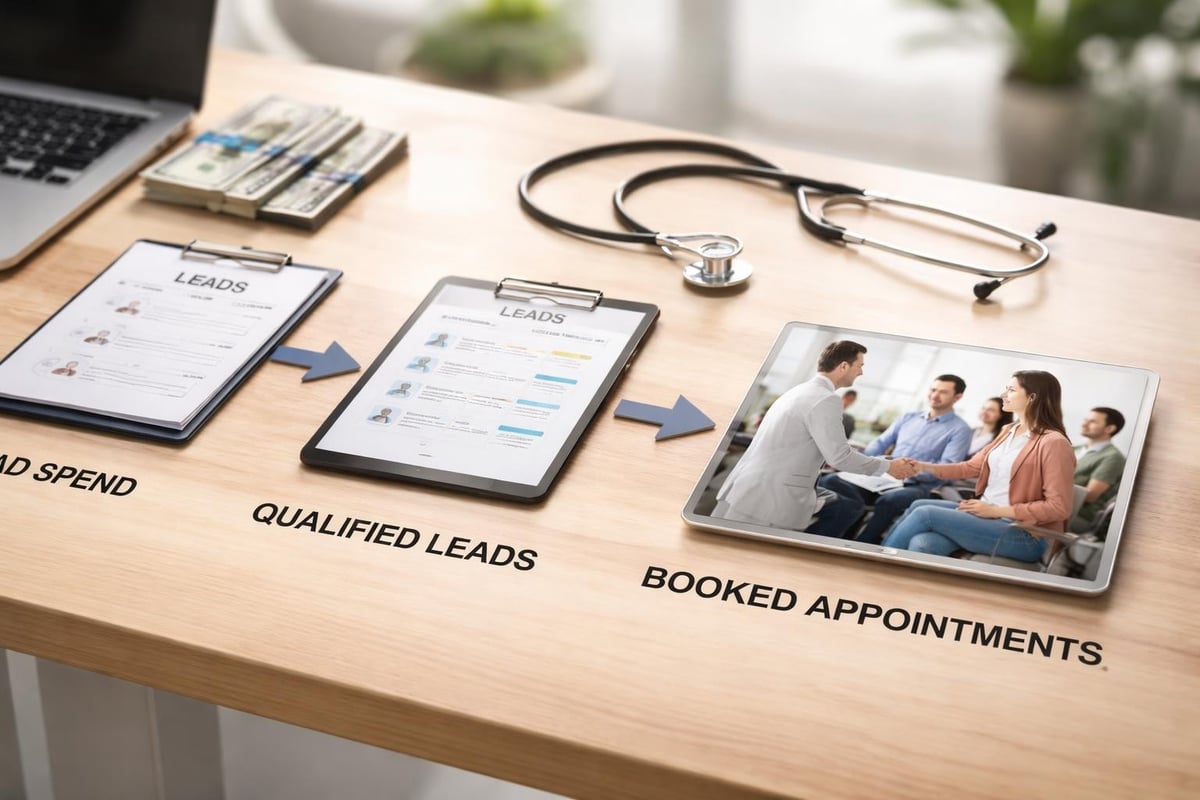
Market agencies serving the healthcare sector face unique challenges that distinguish them from general marketing firms. HIPAA compliance requirements, complex patient journey mapping, multi-touch attribution across online and offline channels, and the need for specialized medical knowledge all demand a higher level of operational sophistication. The most successful agencies build dedicated teams with healthcare industry expertise who understand the nuanced differences between promoting a medical spa versus a wound care center or addiction treatment facility.
Specialization Drives Performance
Healthcare market agencies that focus on specific verticals consistently outperform generalist firms across key metrics. A specialized agency understands the regulatory landscape, knows which advertising platforms permit healthcare promotion, and has developed proven frameworks for converting prospects into scheduled consultations.
Key specialization advantages include:
- Pre-built compliance frameworks for HIPAA and healthcare advertising regulations
- Industry-specific conversion rate benchmarks and performance data
- Established relationships with healthcare-focused advertising platforms
- Deep understanding of patient psychology and decision-making triggers
- Access to specialized tools for medical practice growth tracking
According to recent agency industry statistics, specialized agencies report client retention rates averaging 92% compared to 76% for generalist firms, demonstrating the value clients place on domain expertise.
Core Services That Define Effective Market Agencies
The scope of services provided by market agencies has expanded dramatically beyond simple lead generation. Modern healthcare marketing partners take ownership of the entire patient acquisition pipeline, from initial awareness through final conversion into paying patients or franchise partners.
Campaign Architecture and Execution
Effective market agencies build comprehensive multi-channel campaigns that reach potential patients across search engines, social media platforms, display networks, and retargeting systems. This requires sophisticated audience segmentation based on demographics, search intent, geographic location, and behavioral signals.
| Service Component | Traditional Agency | Performance-Driven Agency |
|---|---|---|
| Campaign Setup | Basic ad account creation | Complete funnel architecture with tracking |
| Audience Targeting | Demographics only | Intent-based + behavioral + lookalike |
| Creative Development | Generic templates | Custom messaging per patient segment |
| Landing Page Strategy | Single generic page | Dedicated pages per service line |
| Conversion Tracking | Form submissions only | Full patient journey attribution |
The distinction becomes critical when evaluating agency proposals. Market agencies focused on performance guarantee specific outcomes rather than simply reporting on vanity metrics like impressions or clicks. They integrate deeply with practice management systems to track actual appointments, show rates, and patient lifetime value.
Lead Intelligence and Identification Technology
One of the most significant innovations in modern market agencies involves proprietary technology that identifies anonymous website visitors. Advanced platforms can now reveal 60% or more of website traffic that would otherwise remain unknown, creating massive opportunities for re-engagement and conversion.
This technology works by matching IP addresses, device fingerprints, and behavioral patterns against comprehensive databases to identify specific individuals or businesses visiting healthcare websites. For practices spending thousands monthly on advertising, recovering even a fraction of previously lost traffic creates substantial ROI improvements.

Pre-Sales Development and Conversion Management
The gap between lead generation and actual patient acquisition represents where most marketing investments fail. Market agencies that provide in-house pre-sales development teams bridge this critical divide by handling appointment scheduling, consultation booking, and lead qualification with systematic precision.
Response time dramatically impacts conversion rates:
- Under 2 minutes: 45-60% contact rate with qualified prospects
- 5-10 minutes: 25-35% contact rate
- 30-60 minutes: 12-18% contact rate
- Over 2 hours: 5-8% contact rate
These statistics explain why top-performing agencies prioritize client acquisition systems that include immediate lead response protocols. For healthcare providers, a 2-minute response time can mean the difference between booking a high-value patient and losing them to a competitor.
Evaluating Market Agency Performance Metrics
Healthcare providers should demand transparency and specific performance guarantees when engaging market agencies. The most sophisticated partners provide complete CRM integration with real-time dashboards showing every stage of the patient acquisition funnel.
Essential Performance Indicators
Meaningful metrics go far beyond surface-level engagement data. Market agencies serving healthcare clients should track and report on conversion events that directly impact practice revenue.
- Cost per qualified lead: Total advertising spend divided by leads meeting specific criteria
- Lead-to-appointment conversion rate: Percentage of leads that schedule consultations
- Appointment show rate: Percentage of scheduled appointments that actually occur
- Appointment-to-patient conversion: Percentage that become paying patients
- Patient lifetime value: Total revenue generated per acquired patient
- Return on ad spend (ROAS): Revenue generated per dollar invested in advertising
Market agencies that guarantee results typically commit to specific cost-per-acquisition targets or minimum patient volume thresholds. This performance-based approach aligns agency incentives with client outcomes, creating partnerships rather than vendor relationships.
Financial and Operational Benchmarks
Understanding industry benchmarks helps healthcare providers evaluate agency proposals and set realistic expectations. Best practices data provides financial and operational standards that agencies should meet or exceed across different practice types and market conditions.
| Practice Type | Average Cost Per Lead | Lead-to-Appointment Rate | Typical ROAS |
|---|---|---|---|
| Medical Spa | $45-85 | 35-45% | 4:1 to 8:1 |
| Orthopedics | $120-180 | 25-35% | 6:1 to 12:1 |
| Men's Health | $65-110 | 30-40% | 5:1 to 10:1 |
| Addiction Treatment | $200-350 | 15-25% | 8:1 to 15:1 |
| Telehealth Services | $35-65 | 40-50% | 3:1 to 6:1 |
These benchmarks vary significantly based on geographic market, competitive intensity, service pricing, and patient demographics. Market agencies with deep healthcare experience can provide customized projections based on specific practice circumstances.
Technology Integration and Data Management
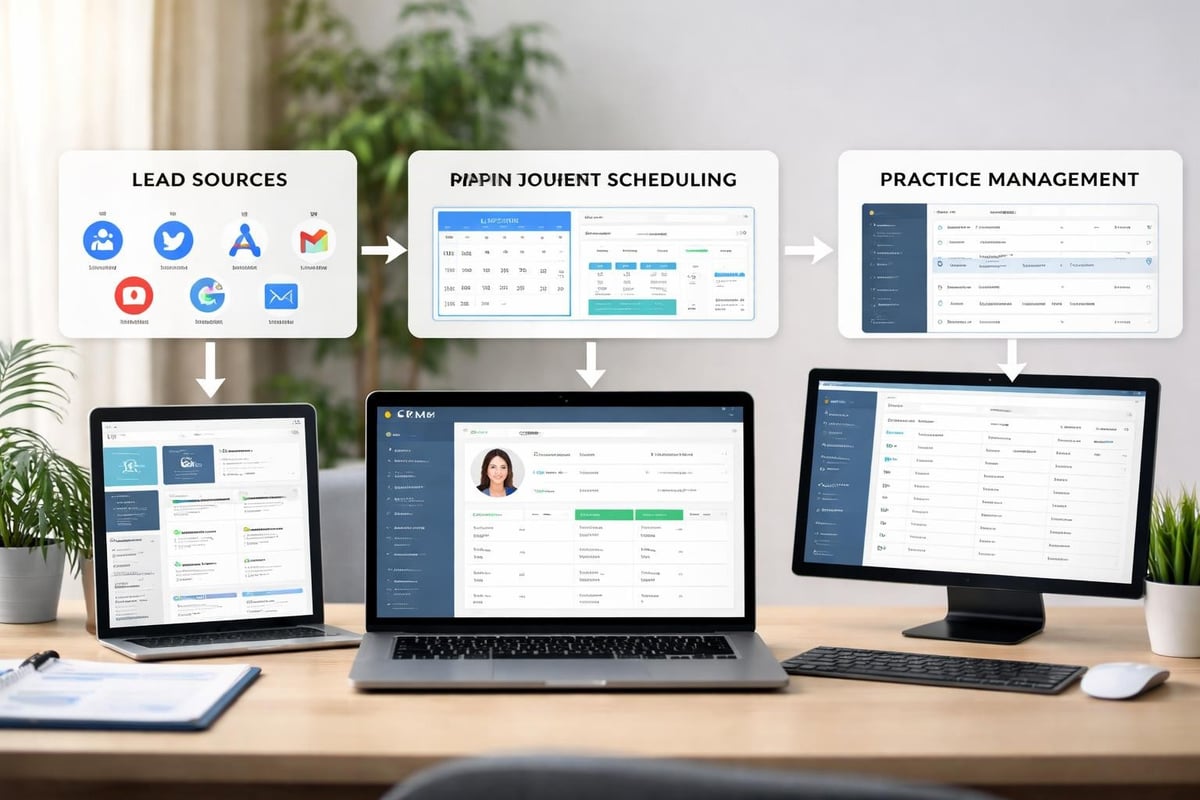
The most effective market agencies function as technology partners that enhance a practice's entire patient acquisition infrastructure. This requires seamless integration with existing systems including electronic health records, practice management platforms, CRM software, and communication tools.
CRM Integration and Lead Nurturing
Complete transparency demands that every lead, conversation, appointment, and outcome be tracked within a unified system. Market agencies should provide or integrate with robust CRM platforms that enable:
- Automated lead distribution to appropriate team members
- Multi-channel communication tracking across phone, email, SMS, and chat
- Systematic follow-up sequences triggered by specific patient behaviors
- Pipeline visibility showing every prospect's current status
- Performance analytics broken down by campaign, channel, and time period
This level of integration transforms marketing from a cost center into a predictable revenue generation system. Healthcare providers gain visibility into exactly which marketing investments produce the highest-quality patients and can optimize budget allocation accordingly.
Systematic Follow-Up Management
Research consistently shows that most prospects require multiple touchpoints before converting into paying patients. Market agencies that implement systematic follow-up management increase conversion rates by 30-50% compared to single-touch approaches.
Effective follow-up sequences include:
- Immediate response within 2 minutes of initial inquiry
- Educational content delivered via email addressing common concerns
- SMS reminders for scheduled consultations with easy rescheduling options
- Phone outreach for high-value prospects who haven't scheduled
- Retargeting advertising to website visitors who didn't convert
- Re-engagement campaigns for prospects who went inactive
The advertising agencies market analysis highlights systematic follow-up as a key differentiator among high-performing firms through 2030.
Strategic Planning and Consultation Frameworks
Market agencies that deliver exceptional results don't simply execute tactics but function as strategic advisors who shape a practice's entire growth approach. This involves developing consultation frameworks that align marketing messaging with actual service delivery and patient experience.
Training and Enablement
The best lead generation system produces minimal results if consultation teams lack the skills to convert prospects into patients. Leading market agencies provide consultation framework training that covers:
- Opening questions that identify patient needs and concerns
- Objection handling techniques for price, timing, and alternative options
- Closing strategies that create urgency without pressure
- Follow-up protocols for prospects who need additional time
- Documentation standards that feed data back into marketing optimization
This training creates alignment across the entire patient acquisition process, ensuring that marketing messages accurately reflect the consultation experience and that sales teams can capitalize on the interest generated by advertising campaigns.
Strategic Audience Development
Rather than chasing every possible patient, effective agencies focus on strategy and consumer data to identify the most valuable audience segments. For healthcare providers, this means analyzing patient lifetime value by service line, demographic characteristics, and acquisition source to focus marketing investments on the highest-return opportunities.
A compounding pharmacy might discover that hormone replacement patients generate 5x the lifetime value of pain management patients, suggesting that marketing budget should shift accordingly. A wound care center might find that diabetic patients referred by podiatrists have 3x higher show rates than self-referred patients, indicating partnership development opportunities.
Franchise System Considerations
Market agencies serving franchise systems face additional complexity beyond single-location healthcare providers. They must balance corporate-level brand messaging with location-specific patient acquisition while maintaining compliance across multiple markets and regulatory environments.
Multi-Location Campaign Management
Franchise-focused market agencies deploy sophisticated campaign structures that allow:
- Corporate-funded brand awareness campaigns reaching broad audiences
- Location-specific lead generation with customized targeting and creative
- Shared creative assets and templates that maintain brand consistency
- Individual budget allocation based on market opportunity and franchisee investment
- Performance tracking at both corporate and location levels
This approach ensures that franchise partners receive qualified leads in their specific markets while benefiting from the brand recognition built through corporate campaigns. The most effective agencies provide franchisees with transparent dashboards showing their specific results separate from system-wide performance.
Franchisee Support and Enablement
Beyond lead generation, franchise-oriented market agencies help franchisees maximize conversion through comprehensive support systems including consultation training, CRM setup and management, follow-up automation, and performance coaching. This ensures that leads generated through marketing investments convert at consistently high rates across all franchise locations regardless of individual franchisee sales skills.
Measuring Long-Term Agency Value
While immediate metrics like cost per lead and appointment conversion rates provide important feedback, the true value of market agencies becomes apparent through long-term performance trends and compounding growth effects.
Client Growth Trajectories
The most successful healthcare-focused market agencies track total client growth over multi-year partnerships, demonstrating their ability to scale patient acquisition systems as practices expand. Agencies with track records showing $100M+ in cumulative client growth across their portfolio demonstrate the systematic, repeatable processes that separate performance-driven partners from tactical vendors.
Long-term value indicators include:
- Year-over-year patient acquisition growth rates
- Declining cost per acquisition as systems optimize
- Increasing patient lifetime value as targeting improves
- Expansion into additional service lines or locations
- Reduced client churn as practices recognize sustained results
These indicators reflect an agency's commitment to continuous improvement and long-term partnership rather than short-term campaign execution. Healthcare providers should evaluate potential partners based on their track record of sustained client growth and retention.
Team Capability and Capacity
The size and composition of an agency's team directly impacts their ability to deliver comprehensive services and maintain high-touch client relationships. Market agencies with 30+ person teams can provide dedicated account management, specialized roles for different campaign components, and redundancy that prevents service disruption.
Smaller agencies may offer lower pricing but often lack the capacity to provide pre-sales development, comprehensive CRM management, or multi-channel campaign optimization. Healthcare providers should evaluate team structure, role specialization, and client-to-account-manager ratios when comparing agency options.
Technology-Driven Competitive Advantages
The healthcare marketing landscape continues to evolve rapidly as new platforms, targeting capabilities, and analytics tools emerge. Market agencies that invest in proprietary technology platforms create sustainable competitive advantages that benefit their clients through superior results.
Proprietary Data Platforms
Agencies that develop custom data platforms can identify patterns, opportunities, and optimization strategies that competitors using standard tools cannot access. These platforms might combine first-party client data with third-party intent signals, demographic databases, and behavioral tracking to create comprehensive patient acquisition intelligence.
For healthcare providers, this translates into more precise targeting, higher-quality leads, and lower acquisition costs as campaigns benefit from insights unavailable to competitors. The investment required to build these platforms means that only well-established, performance-focused agencies can provide this capability.
Artificial Intelligence and Automation
AI adoption has become a key growth driver across the marketing agencies industry, enabling more sophisticated audience targeting, creative optimization, and conversion prediction. Market agencies deploying AI-powered tools can test thousands of messaging variations, predict which leads are most likely to convert, and automatically optimize budget allocation across campaigns.
These capabilities compound over time as machine learning models improve with additional data, creating increasing performance advantages for clients who partner with technologically advanced agencies. Healthcare providers should specifically inquire about AI implementation, data volumes powering predictive models, and demonstrated performance improvements from automation.
Selecting the right market agency requires healthcare providers to look beyond surface-level promises and evaluate systematic processes, proprietary technology, and comprehensive service offerings that bridge the gap between lead generation and actual patient acquisition. RevSpark Media specializes in delivering these capabilities for healthcare providers and franchise systems through a performance-driven approach that combines proprietary visitor identification technology, in-house pre-sales development with 2-minute response times, and complete CRM integration that provides full transparency into every stage of the patient acquisition funnel. With a track record of generating over $100M in client growth and a 31-person dedicated team, RevSpark Media offers healthcare practices a proven system for transforming marketing investments into predictable revenue growth.