
The healthcare industry stands at a critical intersection where patient acquisition meets technological advancement. Marketing ai has emerged as the definitive solution for healthcare providers struggling to convert anonymous website visitors into booked appointments and qualified patients. With 60% of website traffic typically remaining unidentified and conversion rates languishing in single digits, traditional marketing approaches no longer deliver the volume and quality of leads necessary for sustainable growth. Healthcare practices, telehealth providers, medical spas, and specialty clinics now leverage sophisticated marketing ai systems to automate lead qualification, accelerate response times, and personalize patient journeys at scale.
Understanding Marketing AI in Healthcare Lead Generation
Marketing ai represents a fundamental shift from manual, reactive marketing to automated, predictive patient acquisition systems. These platforms utilize machine learning algorithms to analyze visitor behavior, predict conversion likelihood, and trigger personalized engagement sequences without human intervention.
For healthcare organizations, marketing ai solves three critical challenges that have historically plagued patient acquisition efforts:
- Anonymous visitor identification that reveals contact information for prospects who never fill out forms
- Instant lead qualification that separates tire-kickers from patients ready to book consultations
- Automated follow-up sequences that nurture leads across multiple touchpoints with personalized messaging
The technology behind these systems combines natural language processing, predictive analytics, and behavioral tracking to create comprehensive patient profiles. When someone visits a wound care center's website, marketing ai doesn't just track page views. It analyzes session duration, content consumption patterns, return visits, and cross-references this data against thousands of similar behavioral signatures to predict conversion probability.

The Data Foundation of Effective Marketing AI
Marketing ai systems require substantial data infrastructure to function effectively. Healthcare providers must integrate multiple data sources including website analytics, CRM records, appointment scheduling systems, and patient communication platforms.
| Data Source | Marketing AI Application | Patient Acquisition Impact |
|---|---|---|
| Website Behavior | Visitor identification and intent scoring | Identify 60% of anonymous traffic |
| CRM History | Lead qualification and segmentation | Prioritize high-value prospects |
| Appointment Data | Show rate prediction and optimization | Reduce no-shows by 40% |
| Communication Logs | Response time analysis and automation | Achieve 2-minute response times |
| Campaign Performance | Attribution modeling and budget allocation | Increase ROI by 3-5x |
The comprehensive guide to AI marketing published by Sprout Social emphasizes that data quality directly impacts AI performance. Incomplete patient records, disconnected systems, and inconsistent tracking implementation create blind spots that undermine predictive accuracy.
Strategic Applications of Marketing AI for Healthcare Practices
Healthcare providers deploy marketing ai across four distinct stages of the patient acquisition funnel. Each application addresses specific conversion barriers that traditionally required extensive manual effort and specialized expertise.
Intelligent Traffic Analysis and Visitor Identification
The first touchpoint where marketing ai delivers measurable impact occurs when prospects land on healthcare websites. Traditional analytics reveal page views and session duration but fail to identify who these visitors are or how to contact them.
Modern marketing ai platforms reverse-engineer IP addresses, device identifiers, and behavioral patterns to match anonymous visitors with contact databases. For a men's health clinic, this means identifying 60 out of every 100 website visitors by name, email, phone number, and often demographic details like age and location.
This identification happens in real-time, enabling immediate outreach while the prospect actively researches treatment options. A visitor comparing testosterone replacement therapy approaches on a clinic website receives a personalized email within minutes, addressing their specific concerns and offering a consultation time slot.
Automated Lead Scoring and Qualification
Not all leads deserve equal attention. Marketing ai evaluates dozens of signals to assign qualification scores that predict conversion likelihood and patient lifetime value.
For addiction treatment centers, lead scoring models consider factors like:
- Number of website visits and pages viewed
- Engagement with specific content (treatment approaches, insurance information, success stories)
- Form completion behavior (partial fills vs. complete submissions)
- Geographic proximity to facility locations
- Device type and browsing patterns
- Time of day and week of engagement
These scores trigger automated workflows that route high-priority leads to immediate phone contact while nurturing lower-scored prospects through email sequences. The result is optimized resource allocation that focuses human sales effort where it generates maximum return.

Personalized Campaign Optimization
Marketing ai continuously analyzes campaign performance across channels, creative variations, and audience segments to optimize patient acquisition costs. Rather than waiting for monthly reports to inform strategy adjustments, these systems make real-time decisions about budget allocation and message deployment.
A compounding pharmacy running campaigns across Google Ads, Facebook, and direct mail sees marketing ai automatically shift budget toward channels and messages generating the highest-quality leads. If 30-second video ads outperform static images for hormone replacement therapy services among women aged 45-60, the system increases video ad spend and pauses underperforming creative.
According to Meta’s comprehensive AI advertising platform, advertisers using AI-powered campaign optimization see return on ad spend improvements of 15-30% compared to manual management approaches.
Conversational AI and Response Automation
Speed-to-lead remains the single most predictive factor in healthcare conversion rates. Prospects who receive responses within five minutes convert at 10-20x higher rates than those contacted after one hour.
Marketing ai powers chatbots and automated response systems that engage prospects instantly, qualify their needs, and book consultation appointments without human involvement. For orthopedic practices, this means answering questions about knee replacement procedures, insurance coverage, and recovery timelines 24/7.
These systems don't just respond faster. They ask better qualification questions, recognize buying signals, and adapt conversation flows based on prospect responses. When someone inquires about weight loss services at a medical spa, marketing ai determines whether they're researching options generally or ready to book, then tailors the conversation accordingly.
Implementing Marketing AI: The Healthcare Provider's Playbook
Successful marketing ai implementation requires methodical planning and staged deployment. Healthcare organizations that attempt comprehensive AI transformation simultaneously across all channels typically struggle with integration complexity and team adoption resistance.
The following implementation framework reflects proven approaches from practices that have successfully deployed marketing ai systems:
- Establish baseline metrics for current lead generation performance, conversion rates, and cost per patient acquisition
- Audit existing data infrastructure to identify integration requirements and data quality issues
- Select AI platforms that align with specific practice needs and integrate with current CRM systems
- Implement visitor identification technology as the foundation for all subsequent AI applications
- Deploy automated lead scoring to prioritize follow-up efforts and resource allocation
- Launch response automation for initial contact and qualification conversations
- Activate campaign optimization AI to improve channel performance and budget efficiency
- Train teams on AI-generated insights and recommended actions
- Establish feedback loops to continuously improve AI model accuracy
Integration with Existing Healthcare Marketing Systems
Marketing ai platforms must connect seamlessly with appointment scheduling, electronic health records, billing systems, and communication platforms. Fragmented systems create data silos that limit AI effectiveness and generate duplicate patient records.
For telehealth providers, integration complexity multiplies across state-specific licensing requirements, insurance verification processes, and virtual consultation platforms. Marketing ai systems must track leads from initial website visit through consultation booking, provider assignment, appointment completion, and follow-up care scheduling.
The most effective implementations create unified patient data platforms where marketing ai feeds directly into clinical workflow systems. When a prospect books a consultation for functional medicine services at a practice like Rooted Functional Medicine & Longevity Lab, marketing ai ensures their research interests, health concerns, and communication preferences transfer automatically to the clinical team.
Measuring Marketing AI Performance and ROI
Healthcare providers investing in marketing ai demand quantifiable returns that justify platform costs, implementation effort, and ongoing optimization. Traditional marketing metrics like click-through rates and cost per click matter less than patient acquisition costs, lifetime value, and revenue attribution.
Effective measurement frameworks track three metric categories:
Efficiency Metrics
- Lead identification rate (percentage of anonymous visitors identified)
- Response time to new inquiries
- Lead qualification accuracy
- Appointment booking rate
- Show rate for scheduled consultations
Financial Metrics
- Cost per qualified lead
- Cost per booked appointment
- Cost per new patient acquisition
- Patient lifetime value
- Return on ad spend
Operational Metrics
- CRM data quality and completeness
- Team time saved through automation
- Campaign optimization frequency
- Model prediction accuracy
- Cross-channel attribution clarity
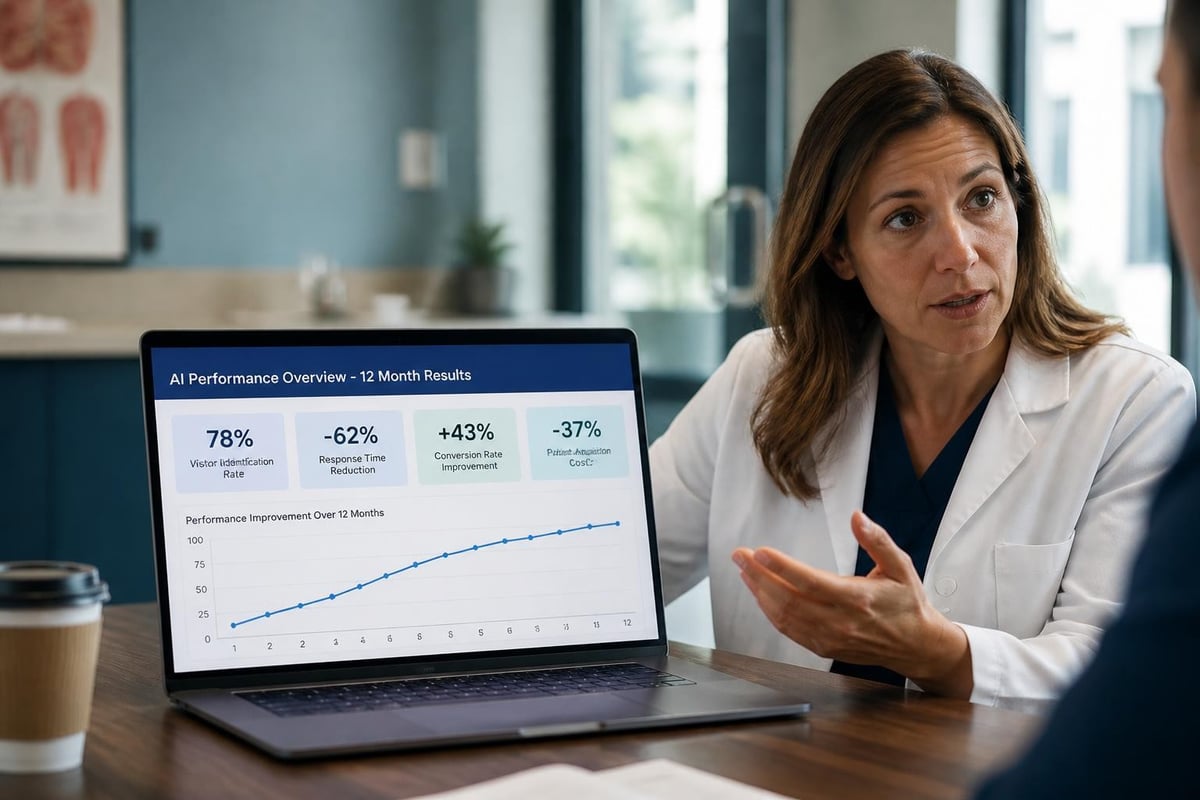
| Marketing AI Impact Area | Before AI Implementation | After AI Implementation | Improvement |
|---|---|---|---|
| Anonymous Visitor Identification | 5-10% | 60-65% | 6-12x |
| Average Response Time | 4-6 hours | 2 minutes | 120-180x |
| Lead-to-Appointment Rate | 8-12% | 25-35% | 2-3x |
| Appointment Show Rate | 55-65% | 75-85% | 20-30% |
| Cost per Patient Acquisition | $450-$650 | $150-$250 | 2-3x |
These improvements compound across the patient acquisition funnel. A wound care center identifying 60% of website visitors instead of 10%, responding in two minutes instead of four hours, and converting 30% of leads instead of 10% experiences a 10-15x increase in new patient volume from the same traffic levels.
Overcoming Marketing AI Adoption Challenges
Healthcare organizations face unique obstacles when implementing marketing ai systems. Regulatory compliance, patient privacy requirements, team skepticism, and technical complexity create adoption barriers that require strategic management.
Regulatory Compliance and Patient Privacy
HIPAA regulations govern how healthcare providers collect, store, and utilize patient information. Marketing ai systems must maintain strict data security protocols and limit information sharing to approved uses.
Key compliance considerations include:
- Obtaining proper consent for marketing communications
- Implementing encryption for all patient data transmission
- Restricting AI access to protected health information
- Maintaining audit trails for all automated patient contacts
- Ensuring third-party AI vendors sign business associate agreements
Practices must configure marketing ai to distinguish between anonymous prospect data and identified patient records that fall under HIPAA protection. Website visitor identification and behavioral tracking of non-patients typically operate outside HIPAA scope, while automated communication with existing patients requires compliant implementation.
Team Training and Change Management
Sales development teams accustomed to manual lead qualification and outreach often resist marketing ai systems they perceive as threatening their roles. Successful implementations reframe AI as augmentation rather than replacement.
Training programs should emphasize how marketing ai handles repetitive tasks like initial contact, basic qualification, and appointment scheduling while freeing team members to focus on complex conversations, objection handling, and relationship building. For veterinary medicine practices, this means AI handles routine inquiry responses while team members consult with pet owners about treatment options and care plans.
Research from IBM on generative AI in marketing demonstrates that organizations viewing AI as a collaborative tool rather than a replacement technology achieve 40% higher adoption rates and 60% faster time-to-value.
Technical Integration Complexity
Healthcare practices typically operate multiple disconnected systems for website management, advertising, CRM, appointment scheduling, billing, and patient communication. Marketing ai platforms must integrate across these systems to function effectively.
Integration challenges include:
- Legacy CRM systems without modern API access
- Custom-built appointment scheduling platforms
- Multiple location management across franchise systems
- Varying data formats and field naming conventions
- Real-time synchronization requirements
Successful implementations prioritize integrations based on impact. Starting with visitor identification and CRM connection delivers immediate value while more complex integrations with scheduling and billing systems proceed in subsequent phases.
The Future of Marketing AI in Healthcare Marketing
Marketing ai continues evolving rapidly as machine learning models become more sophisticated and healthcare-specific training data accumulates. Several emerging trends will reshape patient acquisition over the next 3-5 years.
Predictive Patient Lifetime Value Modeling
Advanced marketing ai systems now predict not just conversion likelihood but estimated patient lifetime value based on treatment needs, insurance coverage, and historical patterns. This enables healthcare providers to invest more aggressively in acquiring high-value patients while maintaining efficient acquisition costs for routine services.
A women's health clinic using predictive LTV modeling might identify that patients inquiring about hormone replacement therapy have 3-5x higher lifetime value than those seeking annual wellness visits. Marketing ai automatically allocates more budget and aggressive follow-up to HRT prospects while maintaining appropriate but less intensive outreach for wellness patients.
Multimodal AI Understanding
Current marketing ai excels at analyzing text and structured data but struggles with images, video, and voice. Emerging multimodal AI systems process multiple input types simultaneously, enabling richer patient understanding.
For addiction treatment centers, this means analyzing both the content of inquiry messages and the emotional tone, urgency, and stress level conveyed through word choice and message structure. Marketing ai detects crisis situations requiring immediate human intervention versus research inquiries suitable for automated nurture sequences.
Hyper-Personalization at Scale
Marketing ai enables one-to-one personalization across thousands of simultaneous patient conversations. Rather than segmenting prospects into broad categories, systems create unique engagement strategies for each individual based on their specific research patterns, concerns, and preferences.
A medical spa prospect researching laser hair removal sees content, offers, and consultation booking options tailored to their exact browsing behavior, geographic location, and demographic profile. The messaging, timing, channel selection, and offer structure adapt continuously as marketing ai learns which approaches drive this specific individual toward conversion.
However, findings from Tom’s Guide on consumer AI perceptions reveal that 60% of Americans find AI in marketing off-putting. Healthcare providers must balance AI-powered efficiency with authentic human connection that builds trust. Marketing ai should enhance rather than replace human relationships in patient acquisition.
Selecting the Right Marketing AI Partner
Healthcare organizations evaluating marketing ai platforms face dozens of vendor options with varying capabilities, pricing models, and implementation requirements. The selection process should prioritize platforms aligned with specific practice needs rather than chasing comprehensive feature sets that exceed actual requirements.
Critical evaluation criteria include:
- Healthcare-specific experience with compliance requirements and industry workflows
- Integration capabilities with existing CRM, scheduling, and communication systems
- Transparent pricing models without hidden setup fees or usage charges
- Proven results with documented case studies from similar practice types
- Implementation support including training, optimization, and ongoing management
- Data ownership ensuring practices retain full access to patient information
- Scalability to grow with practice expansion and increasing lead volume
The Marketing AI Institute’s research emphasizes that successful AI implementations stem from clear objective definition rather than technology-first approaches. Define the specific patient acquisition challenges requiring solutions, then evaluate platforms based on their ability to address those needs.
For pharmaceutical distribution companies, appointment scheduling speed matters less than lead qualification accuracy and sales territory routing. Conversely, urgent care centers prioritize immediate booking capabilities and real-time availability management over long-term nurture sequences.
Building Sustainable Growth with Marketing AI
Marketing ai represents a permanent shift in healthcare lead generation rather than a temporary competitive advantage. Practices that delay adoption face mounting disadvantages as competitors leverage AI to respond faster, qualify more accurately, and convert more efficiently.
The most successful implementations treat marketing ai as an ongoing optimization process rather than a one-time implementation project. Machine learning models improve continuously as they process more data, encounter more patient scenarios, and receive feedback on prediction accuracy.
Healthcare providers should establish quarterly review cycles that examine:
- Lead identification accuracy and coverage rates
- Qualification model precision across patient types
- Response automation effectiveness and patient satisfaction
- Campaign optimization decisions and performance trends
- Integration reliability and data synchronization quality
- Team adoption levels and training needs
- Emerging AI capabilities worth testing
This systematic approach ensures marketing ai systems evolve alongside practice growth, market changes, and advancing technology capabilities. A telehealth provider serving multiple specialties might discover marketing ai performs better for certain service lines, triggering investigation into data quality, integration completeness, or model training requirements.
Marketing ai has fundamentally transformed healthcare lead generation from manual, reactive processes to automated, predictive systems that identify prospects, qualify needs, and book appointments at unprecedented scale and efficiency. Healthcare providers leveraging these technologies consistently outperform competitors stuck in traditional marketing approaches. RevSpark Media combines proprietary marketing ai technology that identifies 60% of anonymous website visitors with a specialized pre-sales team delivering 2-minute response times to convert leads into booked patients. Our systematic approach to healthcare lead generation has driven $100M+ in client growth across compounding pharmacies, wound care centers, medical spas, telehealth providers, and specialty clinics throughout the franchise and healthcare sectors.