
Media marketing has evolved from simple advertising placement into a sophisticated, data-driven discipline that drives measurable business outcomes. For healthcare providers and franchise systems, effective media marketing represents the critical difference between struggling to fill appointment calendars and building a predictable patient acquisition system that generates consistent revenue. In 2026, the healthcare landscape demands more than traditional marketing tactics; it requires an integrated approach that combines strategic media placement, rapid lead response, and systematic conversion processes to transform anonymous website visitors into loyal patients.
Understanding Media Marketing in the Healthcare Context
Media marketing encompasses the strategic planning, purchasing, and optimization of advertising placements across multiple channels to reach target audiences with relevant messaging. Unlike general consumer marketing, healthcare media marketing must navigate complex regulatory requirements while addressing the unique decision-making processes of patients seeking medical services.
The healthcare buyer's journey typically involves extensive research, multiple touchpoints, and careful consideration before scheduling consultations. This extended decision cycle makes media marketing particularly crucial for medical practices, as prospective patients need consistent exposure to build trust and overcome hesitation about seeking treatment.
Key components of successful healthcare media marketing include:
- Audience segmentation based on medical conditions, demographics, and geographic location
- Channel selection that aligns with patient research behaviors
- Messaging that addresses both clinical expertise and emotional concerns
- Conversion infrastructure that captures and qualifies leads immediately
- Follow-up systems that nurture prospects through extended decision cycles

Understanding media planning best practices helps healthcare providers maximize return on investment by selecting channels based on actual patient behavior rather than assumptions. The foundation of effective media marketing lies in recognizing that different medical specialties attract patients through different channels and messaging approaches.
Strategic Channel Selection for Healthcare Providers
Selecting the right media channels represents one of the most critical decisions in healthcare media marketing. The media buying process requires careful analysis of where your target patients spend their time and how they prefer to consume health-related information.
Digital Media Channels
Digital channels dominate modern healthcare media marketing because they offer precise targeting, real-time optimization, and measurable conversion tracking. Search advertising captures patients actively seeking solutions, while social media platforms enable healthcare providers to build awareness among audiences who may not yet recognize their symptoms or treatment options.
Search engine marketing delivers immediate results by:
- Targeting high-intent keywords related to specific conditions
- Capturing patients in active research mode
- Directing traffic to optimized landing pages
- Enabling immediate conversion through phone calls or form submissions
- Providing transparent cost-per-acquisition metrics
Display advertising extends reach beyond search by placing healthcare messaging in front of relevant audiences across the web. Programmatic advertising technology enables sophisticated targeting based on browsing behavior, demographic data, and geographic location.
Traditional Media Considerations
While digital channels dominate healthcare marketing budgets, traditional marketing best practices still deliver value for certain medical specialties and geographic markets. Television, radio, and print advertising build broad awareness and establish credibility through trusted local media outlets.
| Channel Type | Best Use Case | Measurement Approach | Conversion Timeline |
|---|---|---|---|
| Search Ads | High-intent keywords | Direct attribution | Immediate to 7 days |
| Social Media | Awareness & education | Multi-touch attribution | 14-30 days |
| Display Ads | Retargeting & reach | View-through tracking | 7-21 days |
| Television | Brand building | Call tracking & surveys | 30-90 days |
| Radio | Local awareness | Unique phone numbers | 14-45 days |
The most effective healthcare media marketing strategies combine multiple channels in a coordinated approach that reinforces messaging across touchpoints. A wound care center might use search ads to capture immediate demand while running educational social media campaigns that build long-term awareness about chronic wound complications.
Creating High-Converting Healthcare Campaigns
Campaign effectiveness depends not just on media placement but on the complete conversion infrastructure that transforms ad clicks into scheduled appointments. Media marketing for healthcare must address the entire patient journey, from initial awareness through post-appointment follow-up.
Messaging Development
Healthcare messaging walks a delicate balance between clinical credibility and emotional appeal. Patients seek expertise and evidence but make decisions based on trust and comfort with the provider. Effective ad copy addresses both rational concerns about treatment efficacy and emotional needs for compassionate care.
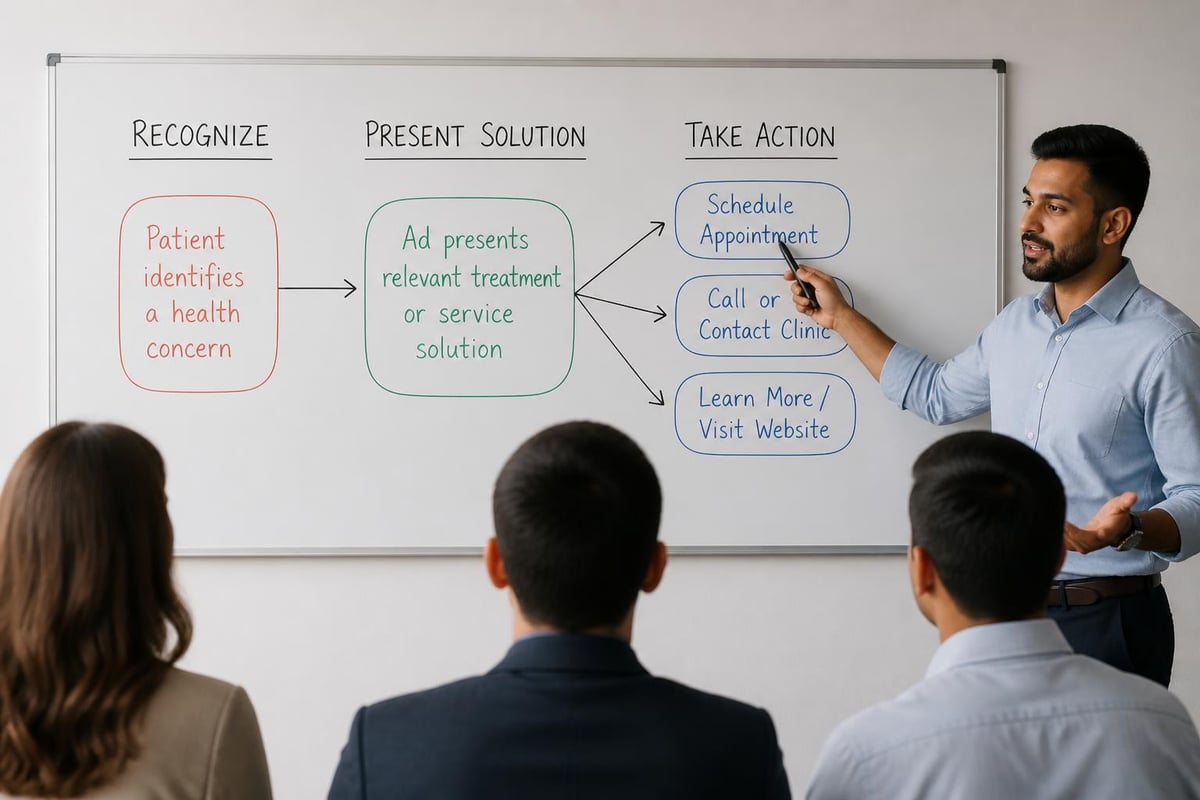
The messaging hierarchy should progress from attention-grabbing headlines that acknowledge patient pain points, through benefit-focused body copy that explains solutions, to clear calls-to-action that make the next step obvious and low-risk. Free consultations, no-obligation assessments, and same-day appointments reduce barriers to taking action.
Landing Page Optimization
Media marketing effectiveness collapses without purpose-built landing pages that continue the conversation started in advertisements. Generic website homepages confuse visitors with excessive options and diluted messaging. Dedicated landing pages maintain message consistency, remove navigation distractions, and guide visitors toward a single conversion goal.
Essential landing page elements include:
- Headline that matches the ad promise exactly
- Benefit-focused subheadings that address primary patient concerns
- Trust indicators like credentials, certifications, and patient testimonials
- Clear forms with minimal required fields
- Multiple conversion options (phone, form, chat)
- Mobile optimization for smartphone traffic
Testing different landing page variations reveals which messages, layouts, and offers resonate most strongly with target patients. A men's health clinic might discover that emphasizing privacy and discretion outperforms messaging focused on clinical outcomes, while an orthopedic practice finds that surgical success rates drive more conversions than patient testimonials.
Lead Response and Conversion Systems
The gap between media marketing and revenue generation occurs in the minutes after a lead submits contact information. Healthcare practices that respond within two minutes convert leads at dramatically higher rates than those taking hours or days to follow up. Speed matters because prospective patients typically contact multiple providers simultaneously and schedule with whoever responds first.
Modern media marketing for healthcare requires integrated technology that instantly routes leads to qualified staff, triggers automated text confirmations, and ensures no opportunity falls through the cracks. CRM systems designed for healthcare track every interaction, schedule follow-up tasks, and provide visibility into which media channels generate the highest-quality patients.
Appointment Setting Infrastructure
Converting inquiries into scheduled appointments requires trained staff who understand the delicate nature of healthcare decisions. Pre-sales development teams handle initial consultations, answer basic questions, address financial concerns, and overcome objections without creating compliance issues or making inappropriate medical claims.
The consultation framework should qualify leads by confirming insurance coverage, assessing treatment urgency, and determining whether the prospect matches the practice's ideal patient profile. This qualification process protects provider time by ensuring appointments represent genuine opportunities rather than tire-kickers or insurance mismatches.
Social Media Marketing Integration
Social media has become a critical component of comprehensive media marketing strategies, particularly for healthcare providers targeting younger demographics or building long-term brand equity. Following social media best practices ensures healthcare content maintains professional standards while engaging audiences effectively.
Healthcare social media content must educate while entertaining, providing value beyond promotional messages. Patient education about conditions, treatment options, prevention strategies, and lifestyle modifications positions providers as trusted resources rather than aggressive advertisers.
Effective healthcare social media strategies include:
- Educational content that addresses common patient questions
- Behind-the-scenes glimpses that humanize providers
- Patient success stories (with proper HIPAA compliance)
- Interactive elements like polls and Q&A sessions
- Consistent posting schedules that maintain top-of-mind awareness
The shift from vanity metrics to business outcomes discussed in social media marketing best practices proves particularly relevant for healthcare providers. Follower counts matter less than consultation bookings; engagement rates mean nothing without patient acquisition.

Influencer and Partnership Strategies
Healthcare providers can amplify media marketing reach through strategic partnerships with relevant influencers and community organizations. Understanding influencer PR campaign best practices helps medical practices select creators whose audiences match target patient demographics and whose content aligns with brand values.
Authentic partnerships with health and wellness influencers extend credibility beyond traditional advertising. A medical spa partnering with local fitness instructors or nutritionists creates cross-promotional opportunities that introduce services to engaged, health-conscious audiences already predisposed to invest in self-care.
Community involvement through health fairs, educational seminars, and charitable sponsorships builds local awareness while demonstrating commitment beyond profit motives. These initiatives generate media coverage, word-of-mouth referrals, and positive brand associations that complement paid media marketing efforts.
Measurement and Optimization Frameworks
Effective media marketing demands rigorous tracking of performance metrics that connect advertising spend to revenue generation. Healthcare providers must look beyond surface-level metrics like impressions and clicks to understand true return on investment through patient lifetime value calculations.
| Metric Category | Key Performance Indicators | Success Benchmarks |
|---|---|---|
| Top of Funnel | Impressions, Reach, CTR | 2-5% CTR for search |
| Middle of Funnel | Landing page conversion rate | 10-20% for healthcare |
| Lead Quality | Contact rate, qualification rate | 60%+ qualified leads |
| Appointment Setting | Booking rate, show rate | 40%+ booking, 75%+ show |
| Revenue | Cost per acquisition, LTV:CAC ratio | 3:1 minimum ratio |
Multi-touch attribution models reveal how different media channels work together throughout the patient journey. A telehealth provider might discover that patients typically see three to five advertisements across search, social, and display channels before scheduling consultations, informing budget allocation decisions that support the complete conversion path rather than over-investing in last-click channels.
Scaling Healthcare Media Marketing
Growth requires systematic approaches that maintain quality while increasing volume. As healthcare practices expand media marketing budgets, they must simultaneously scale conversion infrastructure to handle increased lead flow without sacrificing response times or consultation quality.
Franchise systems face unique media marketing challenges, balancing corporate brand building with local market penetration. Multi-location strategies require centralized creative development and media buying expertise combined with localized targeting and messaging that addresses specific community characteristics.
Scaling considerations include:
- Geographic expansion into new markets with distinct patient demographics
- Service line diversification that targets different patient segments
- Seasonal campaign adjustments that account for treatment timing
- Competitive response strategies when rivals increase advertising pressure
- Technology investments that automate routine tasks while maintaining personalization
The infrastructure required for sustainable growth extends beyond media buying to encompass comprehensive revenue generation systems. CRM platforms, call tracking technology, appointment scheduling software, and analytics dashboards must integrate seamlessly to provide complete visibility from initial ad impression through patient retention and referrals.
Compliance and Regulatory Considerations
Healthcare media marketing operates within strict regulatory frameworks that govern advertising claims, patient privacy, and professional standards. HIPAA compliance extends to marketing communications, requiring careful handling of patient testimonials, photographic content, and case study details.
State medical boards and specialty-specific organizations maintain advertising guidelines that prohibit certain types of claims, guarantee statements, and comparative assertions. Media marketing campaigns must undergo compliance review before launch to avoid regulatory violations that could result in fines or professional sanctions.
Transparency about costs, insurance acceptance, and treatment outcomes builds trust while meeting ethical obligations. Patients deserve honest information about what to expect from procedures, recovery timelines, and financial commitments. Marketing messages that overpromise results or minimize risks create disappointed patients and potential liability exposure.
Technology Integration for Maximum Efficiency
Modern media marketing platforms offer sophisticated capabilities that healthcare providers must leverage to compete effectively. Programmatic advertising automates media buying across thousands of websites and apps, optimizing placements in real-time based on performance data.
Visitor identification technology represents a breakthrough for healthcare media marketing, revealing up to 60% of anonymous website traffic and enabling strategic follow-up with prospects who didn't initially convert. This capability transforms marketing economics by recovering previously lost opportunities through targeted retargeting campaigns.
Integration between advertising platforms, CRM systems, and scheduling software creates closed-loop reporting that tracks every patient from initial ad exposure through lifetime revenue contribution. This complete visibility enables data-driven decisions about which campaigns, keywords, and channels deserve increased investment versus those requiring optimization or elimination.
Media marketing success in healthcare requires a comprehensive approach that extends far beyond ad placement to encompass the entire patient acquisition and conversion process. The practices that thrive in 2026 combine strategic media buying with rapid lead response, systematic appointment setting, and ongoing optimization based on revenue outcomes rather than vanity metrics. RevSpark Media specializes in this complete revenue generation system for healthcare providers and franchise systems, leveraging proprietary technology that identifies 60% of anonymous website visitors combined with an in-house pre-sales development team that converts leads into scheduled appointments with 2-minute response times. With a track record of generating over $100M in client growth, RevSpark Media offers the performance-driven infrastructure healthcare practices need to scale patient acquisition predictably and profitably.