
In 2026, the rapid growth of streaming has transformed how we watch TV, with ott and ctv now leading the way for both viewers and advertisers. Over 75% of households in the U.S. use connected TV devices each month, highlighting just how central these technologies have become in daily life.
Yet, as brands and marketers navigate this new landscape, confusion about terminology and strategy continues to rise. What exactly sets ott and ctv apart? Where do they overlap, and why does it matter for your marketing success?
This article will break down the essential differences, explore their impact on advertising, and reveal what the future holds. Read on to gain a clear, actionable understanding and unlock smarter streaming strategies for the years ahead.
Understanding OTT and CTV: Definitions and Ecosystem
In 2026, understanding the differences between ott and ctv is essential for brands, marketers, and anyone who streams video. These terms are often used interchangeably, but they each play a distinct role in how audiences access content and how advertisers approach digital video.
What is OTT?
OTT, or Over-the-Top, refers to the delivery of video content directly over the internet, bypassing traditional cable or satellite providers. With ott and ctv, OTT is all about how content reaches viewers, not the device itself. People can access OTT content on smartphones, tablets, desktops, laptops, and connected TVs.
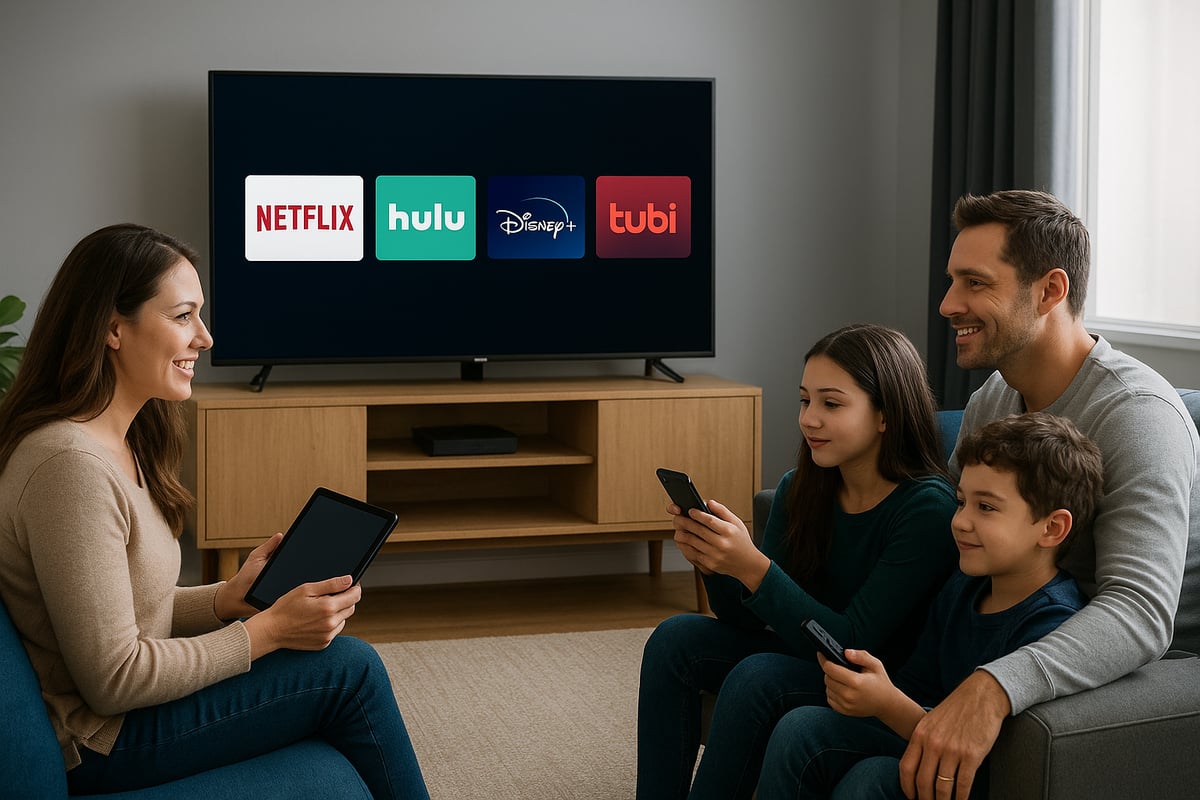
Major OTT platforms include Netflix, Disney+, Hulu, YouTube, Peacock, and Tubi. These services offer both on-demand and live content, giving viewers flexibility and control. Importantly, OTT is a method—not a device—so whether you’re streaming on your phone or laptop, you’re using OTT.
According to Nielsen, over 90% of Australians aged 14 and above stream OTT content. This widespread adoption highlights OTT’s role in democratizing video consumption, enabling cord-cutting, and offering viewers more choice than ever before.
What is CTV?
CTV, or Connected TV, describes any television set that connects to the internet and can stream digital video. Within the ott and ctv landscape, CTV is the device side of the equation. This includes smart TVs with built-in internet capability, streaming sticks like Roku or Fire TV, and gaming consoles such as Xbox and PlayStation.
Popular CTV platforms are Roku, Apple TV, Samsung Smart TV, and Chromecast. CTV delivers OTT content specifically to the big screen, transforming living rooms into digital entertainment hubs. The user experience is often communal, with family and friends co-viewing content in a relaxed, lean-back setting.
Smart TVs with pre-installed streaming apps are now nearly universal in the U.S., according to Nielsen. For advertisers, CTV offers a premium, brand-safe environment, making it a top choice for campaigns seeking high engagement and memorable impact.
The OTT and CTV Ecosystem in 2026
The ott and ctv ecosystem in 2026 is more diverse than ever, with a range of streaming models:
| Model | Description | Examples |
|---|---|---|
| SVOD | Subscription, ad-free | Netflix, Disney+ |
| AVOD | Ad-supported, free/reduced rate | Tubi, Pluto TV |
| TVOD | Transactional/pay-per-view | iTunes, Google Play |
| FAST | Free Ad-supported Streaming TV, linear-style | Roku Channel, Samsung TV Plus |
| vMVPD | Virtual Multichannel Video | YouTube TV, Hulu + Live TV |
Hybrid models—combining SVOD and AVOD—are rising as platforms seek to grow revenue while retaining audiences. This increased choice leads to greater fragmentation, making it crucial for marketers to understand where ott and ctv overlap and where they diverge.
Industry standards and definitions continue to evolve, with organizations like the IAB Tech Lab releasing standardized CTV ad formats and programmatic guidelines to bring more consistency to the market. As streaming options multiply, the ott and ctv landscape will keep adapting, offering new opportunities and challenges for all stakeholders.
Key Differences Between OTT and CTV in 2026
Understanding the distinctions between ott and ctv is essential for advertisers, brands, and consumers looking to navigate the streaming landscape in 2026. Both terms are often used interchangeably, yet their differences have a profound impact on user experience, advertising opportunities, and measurement strategies.
Method of Delivery vs. Device
At the core, ott and ctv differ in how content is delivered and where it is consumed. OTT is the method of delivering video content over the internet, bypassing traditional cable or satellite, while CTV refers specifically to the internet-enabled device—such as a smart TV, streaming stick, or gaming console—where that content is watched.
Consider this comparison:
| Feature | OTT | CTV |
|---|---|---|
| Definition | Delivery method | Device type |
| Devices | Phones, tablets, desktops, TVs | Smart TVs, streaming sticks, consoles |
| Example | Netflix on mobile | Netflix on a smart TV |
| Scope | Broad (any internet device) | Specific (TV screens only) |
Watching Netflix on your smartphone is OTT, but not CTV. Watching it on your smart TV is both ott and ctv. This distinction matters because device context influences user engagement and ad effectiveness. The terms are frequently confused, so clarity is vital. In 2026, over 75 percent of US households use CTV devices monthly, but not every OTT stream happens on a CTV.
User Experience and Engagement
User experience is shaped by the screen and setting. CTV delivers ott and ctv content to the largest screen in the home, encouraging a lean-back, communal experience. It is common for families or groups to co-view, leading to higher ad completion rates—often exceeding 90 percent.
In contrast, OTT on mobile or desktop is typically solo and interactive. Viewers might pause, skip, or multitask while watching. The impact of advertising varies: CTV’s big screen boosts recall and brand impact, while OTT’s flexibility supports on-the-go consumption.
Live events and sports are strong drivers for CTV engagement. For example, fans often gather to stream the Super Bowl on a smart TV, while highlights are caught later via OTT apps on mobile. This divergence highlights why ott and ctv strategies must account for both engagement style and context.
Advertising Capabilities and Targeting
Advertising on ott and ctv platforms offers unique capabilities. CTV excels at targeting households, delivering premium, often non-skippable ads in a brand-safe environment. In contrast, OTT allows for more granular targeting at the device or user level, enabling advanced segmentation, retargeting, and even interactivity.
CTV ads command higher CPMs due to their impact and inventory quality, while OTT’s lower CPMs suit campaign testing and rapid optimization. Privacy is another differentiator: CTV is less reliant on cookies and more future-proof, whereas OTT often uses device IDs and user data.
For advertisers, the projected CTV ad spend is set to reach $38.3 billion in 2026, reflecting its growing importance. For a deeper dive into spending trends and ad types, see the CTV Advertising Forecast 2026. Targeting a family via CTV can maximize reach, while OTT enables personalized messaging to individuals, making ott and ctv a powerful combination in modern campaigns.
Measurement, Attribution, and Reporting
Measurement remains a complex challenge for ott and ctv. CTV attribution focuses on household-level outcomes, like tracking if a family saw an ad and then visited a website. OTT, by contrast, can often track user-level conversions, linking ad exposure to specific actions across devices.
Fragmentation in data sources and metrics makes unified reporting difficult. Advanced measurement tools are emerging to help bridge gaps, integrating ott and ctv campaign data with platforms like Google Analytics. Transparency and fraud prevention require trusted, performance-grade partners.
The industry is pushing for person-level measurement to improve accuracy and accountability. For example, advertisers are using software to connect CTV ad views to website visits across different devices. As ott and ctv continue to converge, refining measurement and attribution will be crucial for campaign success.
OTT and CTV Advertising: Strategies and Best Practices for 2026
The rapid evolution of ott and ctv has transformed advertising strategies for brands and marketers. In 2026, the focus is on maximizing impact, leveraging advanced targeting, and navigating a fragmented landscape. Understanding the unique strengths and best practices for each channel is crucial for campaign success.
CTV Advertising Advantages and Approaches
CTV advertising stands out for its premium inventory and high viewer engagement. With ott and ctv, brands access a brand-safe environment where ads are typically non-skippable, resulting in completion rates above 90%. Co-viewing in households amplifies impact, as multiple viewers see the same message.
Key CTV advantages include:
- Household and contextual targeting that aligns with privacy-first regulations.
- Large-scale reach for awareness and high-value conversions.
- Enhanced ad recall due to big-screen, lean-back experiences.
A table comparing CTV and OTT ad strengths:
| Feature | CTV Advantage | OTT Advantage |
|---|---|---|
| Targeting | Household/contextual | User/device-level |
| Ad Completion | Very high (non-skippable) | High (varies by device) |
| Interactivity | Limited | High (clicks, swipes) |
For optimal results, follow CTV ads best practices to ensure creative effectiveness and campaign efficiency. CTV is increasingly used for performance-driven campaigns, not just awareness, especially as measurement tools advance.
OTT Advertising Advantages and Approaches
OTT advertising delivers precision and flexibility for marketers aiming to reach audiences across devices. The ott and ctv ecosystem empowers brands to use advanced targeting, retargeting, and interactive ad formats that drive direct response.
OTT campaigns benefit from:
- Device and user-level targeting for granular audience segmentation.
- Lower CPMs, making it cost-effective for testing and optimization.
- Interactivity, with clickable or swipeable ads leading to websites or app downloads.
This approach is ideal for direct response and incremental reach, extending beyond traditional TV audiences. For example, brands use mobile OTT campaigns with interactive calls-to-action to prompt immediate engagement. OTT’s ability to reach viewers on the go ensures brands stay connected with consumers wherever they watch.
Challenges and Pitfalls in OTT and CTV Advertising
Despite the advantages, ott and ctv advertising faces several hurdles. Transparency remains a concern, as brands often lack visibility into ad placement and content context. The fragmentation of platforms and datasets complicates unified measurement and reporting.
Key challenges include:
- Ad fraud risks due to inconsistent industry standards.
- Complexity in managing cross-screen campaigns.
- Need for trusted measurement partners to ensure accurate attribution.
For example, a brand may struggle to consolidate performance data from multiple ott and ctv platforms, leading to inefficiencies. Addressing these pitfalls requires collaboration, robust verification processes, and ongoing investment in unified reporting solutions.
Future-Proofing Streaming Ad Strategies
To stay ahead, brands in the ott and ctv landscape must prioritize privacy-first solutions and technological innovation. Contextual targeting and aggregated data help comply with evolving regulations, while AI and automation streamline optimization and attribution.
Best practices for future-proofing include:
- Integrating cross-device tracking to unify the user journey.
- Securing premium inventory and working with vetted partners.
- Embracing hybrid SVOD/AVOD strategies for flexibility.
As regulations and platforms change, brands should remain agile and data-driven. Shifting to strategies that combine ott and ctv ensures comprehensive reach and adaptability in a dynamic market.
Market Trends, Consumer Behavior, and Industry Data in 2026
The streaming landscape keeps evolving, shaping how brands approach ott and ctv. In 2026, viewers are embracing internet-connected devices at unprecedented rates, driving massive change in how content is consumed and monetized.
Streaming Adoption and Audience Shifts
Consumer adoption of ott and ctv has surged in recent years. In the United States, CTV device reach grew from 58 percent in 2020 to over 75 percent by 2024, with further growth expected in 2026. This shift reflects not only technology adoption but also changing viewing habits.
Younger audiences, especially those aged 18 to 34, now spend more time streaming than on any other TV source. Internationally, Australia leads with over 90 percent of people aged 14 and up streaming ott and ctv content regularly.
Cord-cutting continues as households seek flexibility and variety, subscribing to multiple streaming services for diverse content. Co-viewing on big screens is on the rise, making living rooms a hub for shared experiences. As a result, traditional linear TV faces declining viewership and ad spend, reinforcing the central role of ott and ctv in media consumption.
Evolution of Monetization Models: SVOD, AVOD, FAST, vMVPD
Monetization models within ott and ctv are rapidly evolving. Subscription Video on Demand (SVOD) services like Netflix and Disney Plus now offer hybrid plans, blending ad-free and ad-supported tiers. This hybrid approach meets consumer demand for affordability while allowing platforms to diversify revenue.
Ad-supported Video on Demand (AVOD) and Free Ad-supported Streaming TV (FAST) channels are gaining traction. Consumers, weary of increasing subscription costs, are turning to these free or low-cost options. vMVPDs, such as YouTube TV, provide bundles of live and linear channels for cord-cutters who want a traditional experience with modern flexibility.
A recent trend is the proliferation of ad-supported tiers across major platforms, expanding options for advertisers and complicating media planning. For a deeper look at how AI and discovery commerce are shaping these monetization strategies, see 2026 Advertising Outlook: AI and OTT Trends. As ott and ctv models mature, advertisers must adapt to more choices and increased complexity.
Measurement, Privacy, and Regulatory Trends
As ott and ctv continue to dominate, measurement and privacy have become industry priorities. Brands are demanding person-level measurement to accurately capture fragmented viewing across devices. However, unified attribution remains challenging, given the multitude of platforms and data sources.
Privacy regulations are tightening globally. CTV platforms, less reliant on cookies, are seen as more privacy-compliant, while OTT solutions are adapting with aggregated and anonymized data. Transparency and fraud prevention are also under scrutiny, as advertisers seek trusted metrics and performance-grade partners.
The industry is moving toward big data solutions validated by representative panels, ensuring accuracy and compliance. Regulatory developments are shaping the future, requiring ongoing innovation and collaboration. For expert perspectives on these trends, review Ad Tech and CTV Experts Forecast 2026’s Biggest Trends. Staying informed on ott and ctv regulations and measurement is essential for successful media strategies.
The Future of OTT and CTV: Opportunities and Challenges Ahead
As streaming continues to redefine how audiences watch content, the future of ott and ctv holds both immense promise and new complexities. The next phase will be shaped by shifting consumer behaviors, technological innovation, and evolving industry standards. Understanding these dynamics is vital for brands, marketers, and creators seeking to stay ahead.
Blurring Lines and Converging Experiences
The boundaries between digital streaming and traditional TV are dissolving rapidly. In 2026, ott and ctv are no longer easily separated, as new devices and platforms blend live, on-demand, and linear content. Consumers expect seamless transitions between their favorite shows, whether on a smart TV, tablet, or phone.
Interactive and immersive experiences are gaining traction, with features like shoppable TV and synchronized live events. FAST channels now mimic the feel of traditional TV within streaming apps, further blurring distinctions. As a result, marketers must rethink strategies, adapting to audiences who move fluidly across devices.
For example, a household might watch live sports on a FAST channel, switch to an ott app for movies, then use voice commands to access interactive features. This convergence means ott and ctv are at the center of the evolving entertainment ecosystem, requiring flexible, cross-platform marketing approaches.
Opportunities for Brands, Marketers, and Content Creators
The convergence of ott and ctv unlocks new opportunities for brands and marketers. Multi-channel strategies that span both formats enable holistic reach and frequency, engaging viewers across the entire funnel. Cross-screen campaigns are now essential, allowing brands to connect with audiences wherever they watch.
Advanced audience segmentation and personalization tools help tailor messages to specific households or individuals, maximizing impact. International and niche markets are more accessible, as streaming platforms break traditional geographic barriers. New creative formats, such as interactive ads and branded content, foster deeper engagement.
For inspiration on real-world strategies, see these CTV advertising examples. Healthcare, retail, and entertainment sectors are leveraging ott and ctv to drive appointments, sales, and engagement, often using data-driven storytelling and dynamic ad insertion to stand out in a crowded marketplace.
Challenges to Watch: Fragmentation, Costs, and Measurement
While opportunities are expanding, brands face significant challenges in the ott and ctv landscape. Platform proliferation has increased buying and reporting complexity, making campaign management more demanding. Rising content and subscription costs contribute to consumer fatigue, potentially impacting overall reach.
Unified measurement remains a persistent hurdle, as advertisers struggle to compare performance across ott, ctv, and linear TV buys. Concerns about ad fraud and transparency persist, with inconsistent standards across platforms. Regulatory changes require ongoing compliance and adaptation, especially as privacy laws evolve.
To navigate these obstacles, collaboration between platforms, advertisers, and measurement providers is crucial. Only by working together can the industry unlock the full potential of ott and ctv, ensuring sustainable growth and measurable results.