
The landscape of healthcare advertising has undergone a dramatic transformation as streaming services have overtaken traditional television viewership. Healthcare providers seeking to attract qualified patients now face a critical decision: invest marketing budgets in declining traditional channels or embrace the precision and scalability of over-the-top and connected television platforms. For medical practices, compounding pharmacies, telehealth providers, and specialty clinics, understanding the ott ctv ecosystem represents not just an opportunity but a competitive necessity in 2026. This advertising channel combines the visual impact of television with the targeting capabilities of digital marketing, creating unprecedented opportunities for healthcare organizations to reach prospective patients at scale while maintaining HIPAA compliance and professional standards.
Understanding the OTT CTV Landscape for Healthcare Marketing
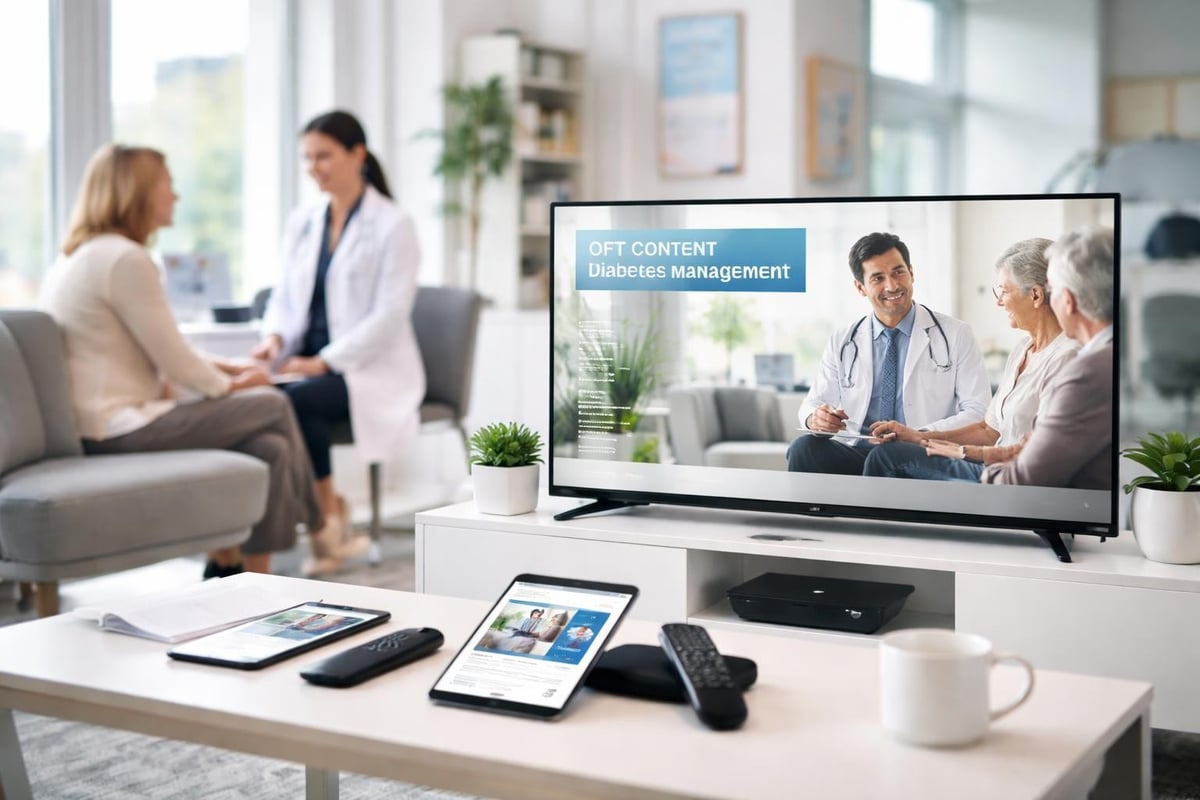
The terminology surrounding streaming television advertising often creates confusion, yet grasping these distinctions proves essential for healthcare marketers building effective campaigns. Over-the-top (OTT) refers to video content delivered directly to viewers via the internet, bypassing traditional cable or satellite providers. Connected television (CTV) describes the actual devices through which this content reaches audiences-smart TVs, streaming sticks, gaming consoles, and set-top boxes.
For healthcare providers, this distinction matters because ott ctv advertising strategies must account for both the content delivery mechanism and the viewing device. A patient watching Hulu on their smartphone receives OTT content but not through CTV, while someone streaming the same content on their smart TV represents the full ott ctv experience that commands premium advertising rates and delivers superior engagement.
Why Healthcare Providers Must Prioritize Streaming Platforms
The shift toward streaming viewership has accelerated beyond industry predictions. According to comprehensive OTT statistics and growth trends, cord-cutting continues to reshape viewing habits across all demographics, with particularly strong adoption among commercially attractive age groups for healthcare services. Individuals aged 25-54, representing prime healthcare consumers seeking elective procedures, preventive care, and specialized treatments, have largely abandoned traditional television in favor of streaming options.
Medical spas targeting aesthetic procedures, men's health clinics promoting testosterone replacement therapy, and addiction treatment centers seeking intervention-ready families all benefit from ott ctv campaigns that reach audiences during premium content consumption. Unlike traditional television's broad, wasteful reach, streaming platforms enable surgical precision in audience selection based on demographics, viewing behaviors, geographic parameters, and even household income indicators relevant to healthcare service affordability.
Strategic Advantages of OTT CTV for Healthcare Lead Generation
Healthcare marketing faces unique challenges that make ott ctv particularly valuable compared to other digital channels. The regulatory environment, patient privacy concerns, and the high-consideration nature of healthcare decisions all demand advertising approaches that build trust while delivering measurable patient acquisition results.
Precision Targeting Without Privacy Violations
Healthcare advertisers must navigate strict regulations governing patient data and medical information. OTT CTV platforms provide sophisticated targeting capabilities that respect privacy boundaries while enabling unprecedented precision. Wound care centers can target households with members over age 65 in specific zip codes. Telehealth providers offering weight management programs can reach viewers who consume health and wellness content without accessing protected health information.
This targeting granularity extends to behavioral signals that indicate healthcare service readiness:
- Viewers researching specific medical conditions through search behavior
- Households demonstrating interest in wellness content across streaming platforms
- Geographic targeting for practices serving defined service areas
- Daypart targeting to reach decision-makers during optimal viewing windows
- Income-based targeting for elective procedures and cash-pay services
The fundamentals of CTV and OTT advertising demonstrate how these platforms have matured beyond basic demographic targeting to incorporate first-party data integration, lookalike audience modeling, and sequential messaging strategies that guide prospective patients through awareness, consideration, and decision-making stages.
Enhanced Engagement in Distraction-Free Environments
Traditional digital advertising competes with multiple browser tabs, social media notifications, and endless scrolling. OTT CTV advertising places healthcare messages in lean-back viewing environments where audiences actively choose to engage with premium content. Orthopedic practices advertising joint replacement procedures or women's health clinics promoting hormone replacement therapy benefit from the full-screen, sound-on presentation that commands attention without seeming intrusive.
Research indicates that 83% of Gen Zers are more open to seeing ads on streaming OTT/CTV compared to other digital channels, signaling generational acceptance of streaming advertisements that extends beyond younger demographics. For healthcare providers targeting millennials and Gen Z audiences for mental health services, primary care relationships, or fertility treatments, this acceptance translates to higher message retention and brand recall.
| Advertising Channel | Average Completion Rate | Viewer Distraction Level | Targeting Precision |
|---|---|---|---|
| Traditional TV | 65% | High (channel surfing) | Low (broad demos) |
| Social Media Video | 31% | Very High (scrolling) | Medium (interests) |
| OTT CTV | 94% | Low (chosen content) | Very High (behaviors) |
| Display Advertising | 12% | High (banner blindness) | Medium (contextual) |
Building Effective OTT CTV Campaigns for Healthcare Services
Success with ott ctv advertising requires strategic planning that aligns campaign structure with patient acquisition objectives. Healthcare providers cannot simply repurpose existing creative and expect optimal results-the format demands purpose-built approaches.
Creative Requirements for Healthcare OTT CTV
Television-quality video production remains non-negotiable for streaming platform success. Prospective patients evaluating healthcare providers expect professional presentation that signals credibility and competence. Compounding pharmacies advertising specialized formulations, veterinary practices promoting advanced treatments, or franchise systems recruiting potential franchisees must invest in creative assets that meet technical specifications while communicating unique value propositions.
Effective healthcare ott ctv creative typically follows these structures:
- Opening Hook (0-3 seconds): Immediate problem identification or compelling visual that stops scrolling
- Credibility Establishment (3-8 seconds): Provider credentials, facility showcase, or patient testimonial introduction
- Solution Presentation (8-20 seconds): Service benefits, treatment process overview, or outcome expectations
- Clear Call-to-Action (20-30 seconds): Specific next step with memorable contact information or landing page URL
Platform Selection and Budget Allocation
The fragmented ott ctv landscape includes dozens of platforms, each offering distinct audience characteristics and advertising opportunities. The comprehensive guide to the OTT and CTV landscape outlines how advertisers must navigate platform diversity while maintaining cohesive messaging and budget efficiency.
Healthcare providers typically benefit from multi-platform approaches that balance reach and frequency:
- Premium Streaming Services: Hulu, Peacock, Paramount+ deliver high-quality audiences with strong commercial intent
- Free Ad-Supported Television: Pluto TV, Tubi, Roku Channel provide cost-effective reach for awareness campaigns
- Sports Streaming: ESPN+, DAZN connect with health-conscious audiences for fitness and wellness services
- Programmatic CTV: Demand-side platforms enable automated buying across multiple inventory sources
Budget allocation should reflect campaign objectives, with patient acquisition campaigns typically investing 60-70% of budgets in platforms demonstrating highest conversion rates while maintaining 30-40% in reach-focused platforms for upper-funnel awareness.
Measurement and Attribution for Healthcare OTT CTV Campaigns
The accountability demanded by healthcare marketing budgets requires robust measurement frameworks that connect ott ctv advertising exposure to actual patient acquisition and revenue generation. Unlike traditional television's imprecise ratings systems, streaming platforms provide granular performance data that enables continuous optimization.
Key Performance Indicators for Healthcare Providers
Healthcare-specific KPIs extend beyond standard advertising metrics to encompass patient acquisition economics:
- Completion Rate: Percentage of viewers watching entire ad creative
- Click-Through Rate: Audience members visiting landing pages or campaign microsites
- Phone Call Volume: Inbound consultation requests attributed to campaign exposure
- Cost Per Completed View: Budget efficiency for message delivery
- Cost Per Scheduled Appointment: Direct patient acquisition cost
- Consultation Show Rate: Percentage of scheduled appointments that attend
- Patient Lifetime Value: Long-term revenue from acquired patients
Advanced attribution models connect ott ctv exposure to downstream patient behaviors through multiple methodologies. Pixel-based tracking captures website visits following ad exposure. Unique phone numbers enable call tracking that attributes consultation requests to specific campaigns. CRM integration links new patient records to advertising touchpoints, creating closed-loop measurement that proves advertising ROI.
Overcoming Measurement Challenges in Fragmented Ecosystems
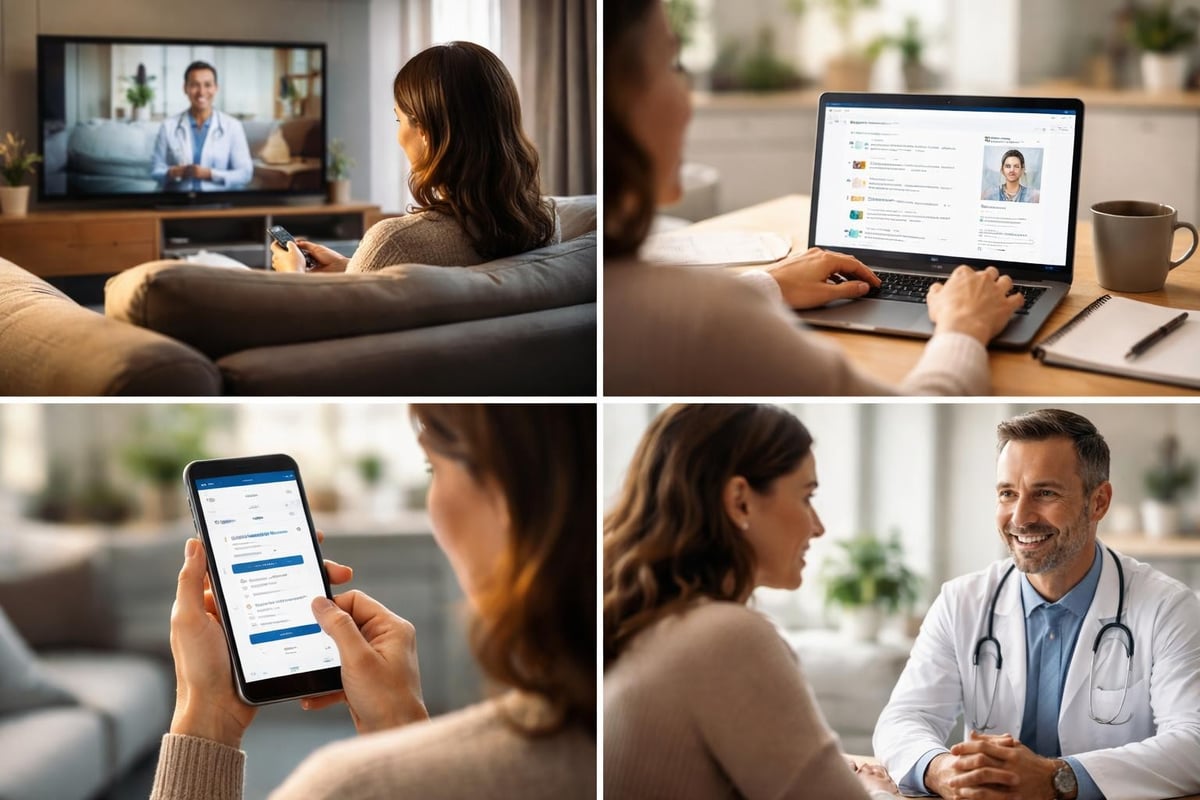
The differences between CTV and OTT advertising create measurement complexities as audiences consume content across devices and platforms. A prospective patient might see an addiction treatment center advertisement on their smart TV, research the facility on their smartphone, and ultimately book a consultation on their desktop computer-fragmenting the conversion path across three distinct touchpoints.
Healthcare marketers address this challenge through unified measurement approaches:
- Cross-device identity resolution that recognizes users across screens
- Multi-touch attribution models crediting all campaign touchpoints
- Incrementality testing comparing exposed versus unexposed audiences
- Brand lift studies measuring awareness and consideration changes
- Post-campaign surveys connecting patient decisions to advertising recall
Integration Strategies: OTT CTV Within Comprehensive Healthcare Marketing
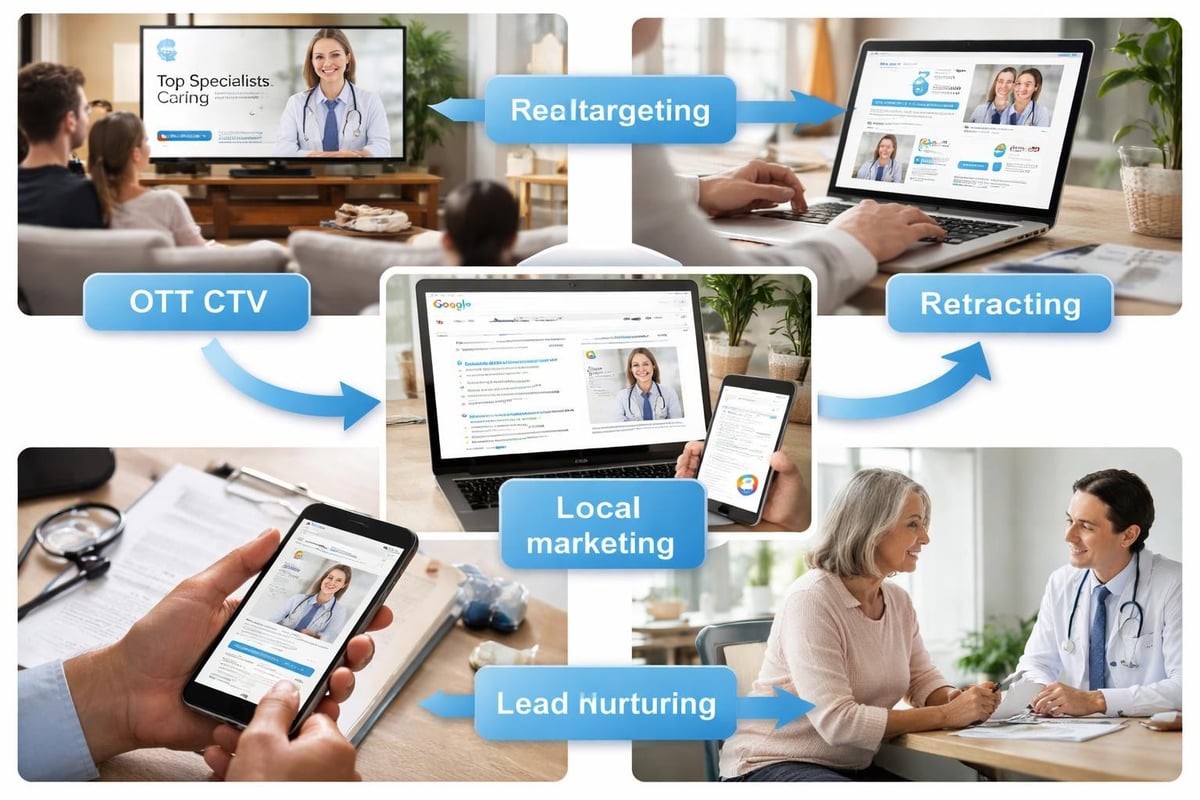
Isolated ott ctv campaigns rarely deliver optimal results for healthcare providers. Maximum effectiveness emerges when streaming television advertising integrates with broader digital marketing ecosystems that nurture prospects through complete patient acquisition funnels.
Sequential Messaging Across Digital Channels
Healthcare decision-making rarely occurs instantaneously. Patients research providers, compare treatment options, verify insurance acceptance, and consult family members before scheduling consultations. Effective ott ctv strategies recognize this consideration process through sequential messaging that builds awareness, establishes credibility, and ultimately drives conversion actions.
A women's health clinic promoting bioidentical hormone replacement therapy might structure campaigns as follows:
- Awareness Phase: OTT CTV ads introducing hormone therapy benefits and common symptoms
- Consideration Phase: Retargeting ads on social media and display networks providing detailed treatment information
- Decision Phase: Search ads capturing high-intent queries like "hormone therapy near me"
- Conversion Phase: Email nurture sequences addressing common questions and objections
This integrated approach ensures ott ctv advertising generates awareness that downstream channels convert into scheduled appointments and active patients.
Retargeting Audiences from OTT CTV Exposure
Streaming platform audiences who view healthcare advertisements but don't immediately take action represent high-value prospects for retargeting campaigns. These viewers have demonstrated interest through completion of video creative and often require only additional touchpoints to convert into consultation appointments.
Retargeting strategies capture ott ctv audiences through:
- Display Retargeting: Banner advertisements following viewers across websites they visit
- Social Media Retargeting: Sponsored posts on Facebook and Instagram reinforcing messaging
- Connected Television Retargeting: Sequential ads on the same CTV devices with evolved messaging
- Email Marketing: When viewers complete lead forms following initial ad exposure
Healthcare providers utilizing proprietary technology that identifies anonymous website visitors can extend retargeting beyond standard cookie-based approaches, capturing contact information for prospects who visit landing pages but don't complete forms-a capability that dramatically expands addressable audiences.
Emerging Trends Shaping OTT CTV Healthcare Advertising
The ott ctv landscape continues evolving at remarkable pace, with technological advances and changing viewer behaviors creating new opportunities for healthcare marketers who stay ahead of industry shifts. Understanding these trends enables proactive strategy development rather than reactive adaptation.
Programmatic Buying and Automated Optimization
Programmatic advertising technology has transformed ott ctv buying from manual insertion orders to automated, data-driven media purchasing. The role of programmatic advertising and AdTech in OTT and CTV demonstrates how healthcare providers can leverage algorithmic optimization to improve campaign performance continuously.
Programmatic ott ctv delivers several advantages for healthcare advertisers:
- Real-time bidding ensures efficient pricing for inventory access
- Automated optimization shifts budgets toward highest-performing placements
- Audience segment testing identifies most responsive patient prospects
- Daypart optimization concentrates spend during peak conversion windows
- Geographic adjustments based on market-specific performance data
Medical spas in competitive markets like Miami or Los Angeles utilize programmatic capabilities to outmaneuver competitors through superior targeting precision and budget efficiency, acquiring patients at lower costs while maintaining premium positioning.
Shoppable Ads and Interactive Formats
The ten key OTT trends shaping CTV advertising include interactive ad formats that transform passive viewing into active engagement. Healthcare providers can now incorporate clickable elements within streaming advertisements that enable immediate appointment scheduling, insurance verification, or virtual consultation booking without requiring viewers to remember website URLs or phone numbers.
Interactive ott ctv formats particularly benefit healthcare services requiring immediate action:
- Urgent care centers offering click-to-call functionality for immediate medical needs
- Telehealth providers enabling instant virtual consultation booking
- Pharmaceutical distribution connecting viewers to medication information
- Franchise systems facilitating franchise opportunity inquiries
These formats reduce friction in patient acquisition funnels by eliminating steps between advertising exposure and conversion actions, improving campaign ROI through higher conversion rates.
First-Party Data Integration and Privacy-Compliant Targeting
As third-party cookies phase out across digital advertising, ott ctv platforms increasingly rely on first-party data partnerships that enable targeting without privacy violations. Healthcare providers maintaining robust patient databases (with appropriate consent and HIPAA compliance) can leverage this data for lookalike audience targeting and customer match campaigns.
Advanced healthcare marketing organizations integrate CRM systems with ott ctv platforms to:
- Exclude current patients from acquisition campaigns to avoid wasted impressions
- Build lookalike audiences based on highest-value patient characteristics
- Suppress recently converted patients during acquisition windows
- Target lapsed patients with reactivation messaging
This data integration creates competitive advantages for healthcare providers who invest in marketing technology infrastructure rather than relying solely on platform-provided targeting options.
Budget Considerations and ROI Expectations for Healthcare OTT CTV
Healthcare providers evaluating ott ctv advertising must establish realistic budget parameters and ROI expectations that account for market dynamics, service pricing, and patient lifetime value. Unlike performance marketing channels offering immediate conversions, streaming television requires sustained investment to build awareness and drive consideration.
Minimum Effective Budgets by Healthcare Vertical
Different healthcare verticals require varying budget thresholds to achieve meaningful patient acquisition results through ott ctv campaigns. High-value services can justify larger investments, while volume-based practices need efficient cost-per-acquisition to maintain profitability.
| Healthcare Service | Minimum Monthly Budget | Target Cost Per Acquisition | Typical Patient LTV |
|---|---|---|---|
| Medical Spas | $8,000-$12,000 | $200-$350 | $2,500-$8,000 |
| Men's Health Clinics | $10,000-$15,000 | $250-$400 | $3,000-$12,000 |
| Addiction Treatment | $15,000-$25,000 | $500-$1,200 | $15,000-$40,000 |
| Compounding Pharmacies | $6,000-$10,000 | $150-$300 | $1,800-$5,000 |
| Orthopedic Surgery | $12,000-$20,000 | $400-$800 | $8,000-$25,000 |
These budget recommendations assume comprehensive campaigns across multiple platforms with professional creative production and integrated retargeting strategies. Lower budgets risk insufficient reach to generate meaningful patient volume, while excessive budgets without proper targeting waste resources on unqualified audiences.
Calculating Patient Acquisition Economics
Healthcare providers must develop sophisticated financial models that account for ott ctv campaign costs, conversion rates at each funnel stage, and ultimate patient lifetime value to determine campaign viability. A wound care center investing $10,000 monthly in streaming advertising with the following funnel performance demonstrates positive ROI:
- 500,000 impressions delivered monthly
- 15% completion rate = 75,000 completed views
- 2.5% landing page visit rate = 1,875 website visits
- 8% consultation form completion = 150 leads generated
- 60% appointment scheduled rate = 90 consultations booked
- 75% show rate = 68 consultations conducted
- 40% conversion to patient = 27 new patients acquired
- Average patient lifetime value = $4,500
- Total patient value = $121,500
- Return on ad spend = 1,115%
This model demonstrates how ott ctv advertising generates substantial returns for healthcare providers offering services with reasonable patient lifetime values and effective consultation conversion processes.
Technical Implementation for Healthcare OTT CTV Success
Launching effective ott ctv campaigns requires technical infrastructure that supports tracking, measurement, and optimization while maintaining HIPAA compliance and patient privacy protections. Healthcare providers cannot simply deploy standard advertising pixels and forms-regulatory compliance demands specialized approaches.
HIPAA-Compliant Tracking and Attribution
Standard advertising tracking pixels collect browsing behavior and user identifiers that may create HIPAA violations when implemented on healthcare websites containing patient information or protected health data. OTT CTV campaigns must utilize privacy-compliant tracking methodologies that enable performance measurement without exposing protected information.
Compliant tracking approaches include:
- Server-side tracking that processes data before transmitting to advertising platforms
- Anonymized conversion tracking using hashed identifiers rather than personally identifiable information
- Aggregate reporting that shows campaign performance without individual user data
- Business associate agreements with advertising platforms handling health-related data
Healthcare providers working with marketing partners must verify that all tracking implementation maintains regulatory compliance while providing sufficient data for campaign optimization.
Landing Page Optimization for Streaming Audiences
Viewers clicking through from ott ctv advertisements arrive with different intent and context than search engine users or social media audiences. Effective landing pages account for these differences through design and messaging optimized for television-sourced traffic.
High-converting healthcare landing pages for ott ctv campaigns incorporate:
- Immediate reinforcement of ad messaging and visual branding consistency
- Simplified forms requesting only essential information for consultation scheduling
- Prominent phone numbers enabling immediate call conversion
- Trust indicators including credentials, certifications, and patient testimonials
- Mobile optimization recognizing that many viewers use secondary devices for conversion
- Clear privacy policies and HIPAA compliance statements
Telehealth providers and franchise recruitment campaigns particularly benefit from video-forward landing pages that continue the visual storytelling initiated through streaming advertisements, maintaining engagement momentum through the conversion process.
Platform-Specific Strategies for Healthcare Advertisers
Individual ott ctv platforms offer distinct audience characteristics, inventory availability, and targeting capabilities that demand customized approaches. Healthcare providers maximizing return on investment develop platform-specific strategies rather than applying uniform tactics across all streaming services.
Premium Subscription Services vs. Ad-Supported Free Platforms
The divide between subscription services like Hulu and free ad-supported television platforms creates audience segmentation opportunities for healthcare advertisers. Premium platforms typically attract higher household incomes and commercial intent, while FAST platforms deliver broader reach at lower costs.
Elective healthcare services-aesthetic procedures, concierge medicine, executive health programs-achieve better results on premium platforms where audiences demonstrate willingness to pay for quality experiences. Essential services-urgent care, primary care, addiction treatment-benefit from the volume reach available through ad-supported platforms.
Budget allocation between platform tiers should reflect service positioning and target patient economics, with luxury healthcare services concentrating spend on premium inventory and value-oriented practices leveraging cost-efficient reach platforms.
Vertical-Specific Content Targeting
Advanced ott ctv targeting enables healthcare advertisers to place advertisements within content categories aligned with service offerings and patient interests. Orthopedic practices advertising sports medicine services target sports programming. Women's health clinics promoting fertility treatments reach audiences viewing family and parenting content.
This contextual alignment improves advertising relevance and response rates by connecting healthcare messages with audiences already engaged in related content consumption. Veterinary practices advertising specialized pet care achieve superior results within pet-focused programming compared to broad audience placements.
The evolution of ott ctv advertising has created unprecedented opportunities for healthcare providers to reach qualified patient prospects with precision, accountability, and scale previously impossible through traditional media channels. By combining television's visual impact with digital marketing's targeting capabilities, streaming platforms enable medical practices, specialty clinics, and healthcare franchises to build awareness, generate leads, and acquire patients efficiently. RevSpark Media helps healthcare organizations harness the power of OTT CTV advertising through comprehensive campaign management, proprietary visitor identification technology, and systematic lead conversion processes that transform streaming audiences into scheduled consultations and active patients. Our performance-driven approach ensures your marketing investment generates measurable patient acquisition and revenue growth across all digital channels.