
In 2026, digital marketing is evolving at an unprecedented pace. Brands now face more competition than ever to capture attention and drive meaningful results.
Success is no longer optional. This guide provides a proven roadmap for running campaigns that stand out, engage the right audiences, and deliver measurable ROI.
You will discover practical steps, new trends, and advanced tactics in campaign planning, targeting, creative development, technology integration, optimization, and future-proofing. Prepare to elevate your strategy and achieve campaign success in the year ahead.
Laying the Foundation: Strategic Planning for Campaign Success
Strategic planning is the backbone of running campaigns that drive real business results in 2026. Without a solid foundation, even the most creative ideas often fall short. To set your campaigns up for measurable success, you need a structured approach that covers goals, research, budgeting, timelines, and compliance.
Understanding Campaign Objectives and KPIs
Every successful campaign starts with clear objectives. Are you seeking lead generation, greater brand awareness, increased sales, or deeper engagement? Defining your goals early ensures all stakeholders are aligned and helps guide decision-making throughout the process.
Aligning objectives with business growth targets is crucial for running campaigns that matter. Set SMART KPIs—specific, measurable, achievable, relevant, and time-bound—to track your progress. For example, a SaaS company aiming for a 30 percent increase in free trial signups knows exactly what to measure and when. This clarity keeps your team focused and your campaigns accountable.
Market Research and Audience Insights
Market research gives running campaigns their competitive edge. Start by analyzing your competitors to understand what works in your industry. Use data analytics to segment your audience for more personalized messaging.
Tap into real-time insights by:
- Conducting customer surveys
- Leveraging social listening tools
- Monitoring industry trends
According to HubSpot (2024), 68 percent of top-performing campaigns are built on robust audience research. When you understand your target market deeply, your campaigns are more likely to hit the mark and deliver ROI.
Budgeting and Resource Allocation
Careful budgeting is essential for running campaigns that deliver results without overspending. Begin by projecting your expected ROI to determine the right investment level. Allocate resources across creative development, media buying, and technology solutions.
| Resource | Allocation (%) | Purpose |
|---|---|---|
| Creative | 35 | Asset production |
| Media | 45 | Ad placements |
| Technology | 15 | Tools and platforms |
| Contingency | 5 | Testing and optimization |
Factor in a contingency fund for ongoing testing and optimization. For a deeper dive into effective management and resource planning, explore Advertising Campaign Management Strategies. Smart allocation ensures every dollar works toward your campaign’s success.
Timeline and Milestone Planning
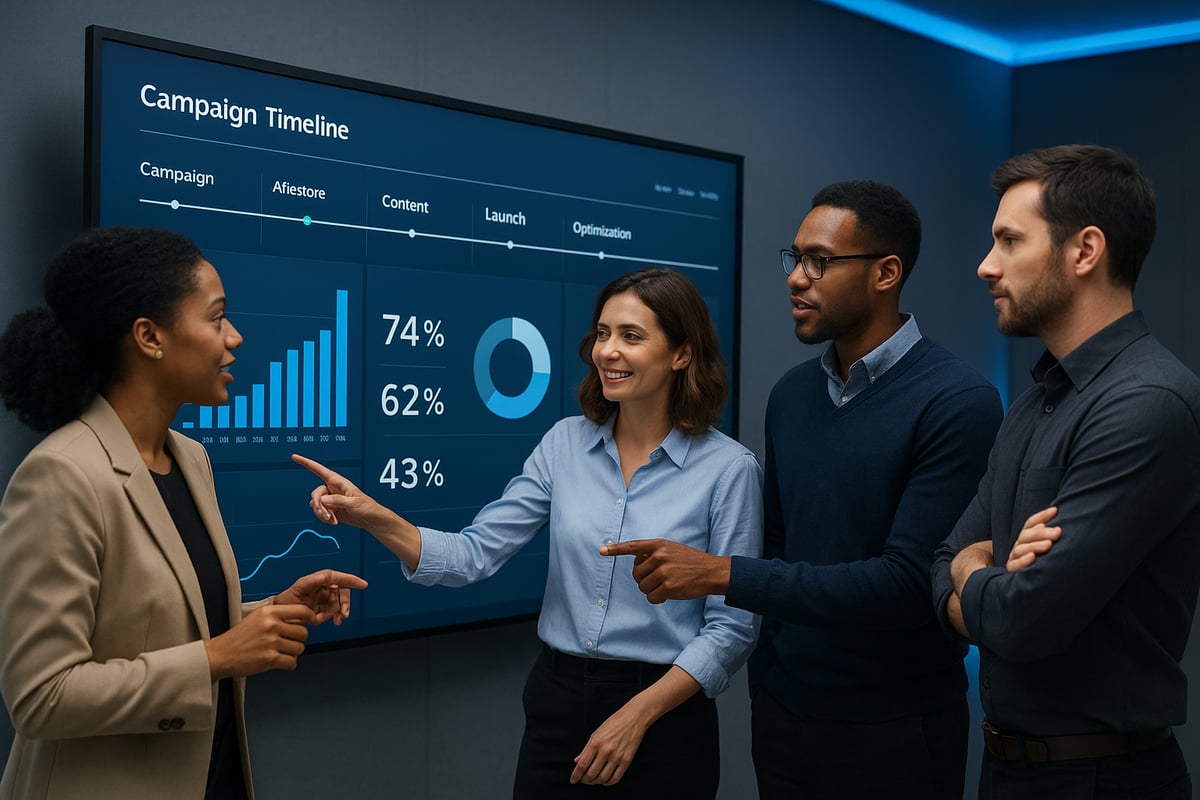
A detailed timeline is a must for running campaigns efficiently. Map out each campaign phase: pre-launch, launch, and post-launch. Assign clear deadlines and designate accountability checkpoints to keep your team on track.
Project management tools or Gantt charts help visualize progress and identify bottlenecks early. Regular check-ins ensure milestones are met and adjustments can be made swiftly. This structured approach minimizes surprises and maximizes your chances for timely, effective campaign execution.
Compliance and Risk Assessment
Compliance is non-negotiable when running campaigns in 2026. Stay up to date with evolving privacy laws like GDPR, CCPA, and HIPAA. Implement risk mitigation strategies to protect your brand and customer data.
Adapt your creative assets to align with changing platform policies and regulations. For example, update ad content to meet new social media guidelines or adjust data collection practices for stricter privacy requirements. Proactive risk assessment safeguards your campaign’s reputation and builds trust with your audience.
Audience Targeting and Segmentation in 2026
Understanding your audience has never been more essential for running campaigns that deliver measurable results. In 2026, marketers are leveraging advanced technology and refined segmentation tactics to reach the right people, on the right channel, at the perfect moment. Let’s explore the cutting-edge strategies shaping audience targeting this year.

Harnessing Advanced Data and AI for Precision Targeting
AI-driven platforms are redefining how marketers approach audience segmentation. By combining first-party, second-party, and third-party data, brands can create hyper-personalized segments for running campaigns. AI’s ability to analyze vast datasets uncovers patterns that manual methods miss, allowing for micro-targeting based on interests, behaviors, and intent.
This precision targeting is not just about who your audience is, but how they interact online. According to Salesforce, AI-powered targeting can increase conversion rates by 25 percent, making it a cornerstone strategy for running campaigns in 2026.
Behavioral and Intent-Based Segmentation
Understanding not just who your audience is, but what they want right now, is critical for successful running campaigns. Marketers track user behaviors across web, mobile, and social channels, identifying intent signals such as site visits, content engagement, and purchase history.
Dynamic audience lists update in real time, allowing campaigns to react to new behaviors instantly. For example, e-commerce brands retarget users based on abandoned cart activity, increasing the chances of conversion. To further enhance segmentation, many organizations leverage Lead Generation and Qualification strategies, ensuring the right prospects receive tailored messaging that moves them through the funnel.
Omnichannel Audience Mapping
Consumers expect seamless experiences across every touchpoint. Omnichannel audience mapping unifies customer profiles from web, mobile, connected TV, and even offline sources for running campaigns. Customer Data Platforms (CDPs) play a pivotal role, aggregating data to provide a single, holistic view of each individual.
A recent Accenture study found that 72 percent of consumers want consistent experiences regardless of channel, highlighting why unified audience insights are essential in running campaigns. Brands that master this integration see stronger engagement and improved retention.
Privacy-First Targeting Strategies
With privacy regulations like GDPR, CCPA, and the deprecation of third-party cookies, marketers must adapt their running campaigns to prioritize user consent and data security. Privacy-first strategies now focus on collecting data transparently and leveraging contextual targeting instead of relying solely on cookies.
Brands that embrace consent-based approaches not only stay compliant but also build trust with their audience. Success stories from privacy-forward brands prove that contextual and first-party data can still drive powerful results in running campaigns post-cookie.
Lookalike and Predictive Modeling
Building on high-value customer data, marketers use lookalike modeling to find new prospects who share traits with their best customers. Predictive analytics powered by machine learning allows running campaigns to forecast which segments are most likely to convert in the future.
For example, B2B marketers use machine learning models to score leads and focus efforts on those with the highest predicted value. This data-driven approach ensures resources are allocated efficiently and maximizes ROI for running campaigns.
Continuous Audience Optimization
Audience targeting is never set-and-forget in running campaigns. Marketers employ A/B and multivariate testing to refine segments and creative assets, constantly seeking performance improvements. Real-time analytics enable ongoing optimization, so campaigns adapt to shifting behaviors and new insights.
According to Wordstream, continuous optimization can boost campaign ROI by up to 40 percent. By making audience refinement a routine practice, brands ensure their running campaigns stay competitive and deliver sustained results.
Creative Development: Crafting High-Impact Campaign Assets
Creating high-impact assets is at the core of running campaigns that stand out in 2026. Marketers must blend data-driven insights with memorable storytelling, innovative visuals, and agile creative processes to capture attention and drive results.

Storytelling and Messaging Strategies
Effective storytelling remains essential for running campaigns that resonate with audiences. Start by aligning your messaging with your audience's pain points and aspirations. Use emotional triggers and clear value propositions to foster deeper connections.
For instance, healthcare campaigns often leverage authentic patient testimonials to build trust and credibility. This approach helps make complex topics relatable and inspires action. By making storytelling a pillar of your creative strategy, you increase the likelihood of engagement and conversion in running campaigns.
Visual Design Trends for 2026
Visual innovation is transforming the creative landscape for running campaigns. In 2026, motion graphics, AR/VR elements, and interactive content are setting new standards for engagement. Brands are combining these trends with established guidelines to maintain consistency and authenticity.
Interactive ads, for example, are seeing engagement rates double compared to static creatives. To maximize impact, blend dynamic visuals with your brand's identity. Staying ahead of visual trends ensures running campaigns capture attention and drive measurable results.
Personalization at Scale
Personalization is no longer optional for running campaigns. Dynamic creative optimization (DCO) enables brands to tailor messaging and visuals to individual user preferences, making every touchpoint feel relevant.
By leveraging user data, marketers deliver personalized product recommendations and targeted offers. Retail campaigns that harness this strategy see higher engagement and conversion rates. Implementing personalization at scale helps running campaigns cut through the noise and foster brand loyalty.
Video and Short-Form Content Dominance
Video content is now the cornerstone of running campaigns, especially across social, connected TV, and mobile channels. Short-form video excels by delivering a compelling hook, clear value, and a strong call to action within seconds.
Best practices for video include concise storytelling and mobile-first design. According to recent findings, nearly 90% of advertisers will use generative AI to build video ads, underscoring the importance of AI-driven video creation in campaign strategies (Generative AI in Video Advertising). Video ads are proven to drive 80% higher recall than static images, making them indispensable for running campaigns.
Creative Testing and Iteration
Continuous testing is vital for optimizing running campaigns. Employ multivariate tests to compare headlines, visuals, and calls to action, ensuring each element performs at its best.
Use heatmaps and engagement analytics to uncover what resonates with your audience. Rapid creative iteration, based on real-time feedback, allows teams to refine assets quickly. This agile approach helps running campaigns stay relevant and effective in a fast-changing digital environment.
Technology, Tools, and Automation for Campaign Management
Effective technology and automation have become the backbone of running campaigns in 2026. With rapid innovation, the right stack is essential for maximizing efficiency, ensuring compliance, and driving measurable results. Today, every step from campaign setup to optimization relies on seamless integration of advanced tools and platforms.

Campaign Management Platforms
Selecting the right campaign management platform is a pivotal decision for running campaigns at scale. All-in-one solutions like HubSpot and Salesforce offer unified interfaces, allowing teams to plan, execute, and track campaigns from a single hub.
Specialized tools such as AdEspresso can be integrated for media buying, social ads, or creative testing. When choosing, prioritize platforms that connect seamlessly with analytics, CRM, and media buying systems. This ensures data flows efficiently and insights are actionable.
Cross-channel management is now expected, enabling marketers to orchestrate campaigns across web, social, mobile, and connected TV. For teams serious about running campaigns, robust platform integration is non-negotiable.
AI and Machine Learning in Campaign Optimization
Artificial intelligence is reshaping how marketers approach running campaigns. AI-driven features like automated bidding, dynamic budget allocation, and creative rotation streamline decision-making and boost efficiency. Predictive analytics allow for real-time campaign optimization, anticipating which audiences and creatives will perform best before budgets are spent.
Platforms such as the new DirecTV AI-Powered Political Advertising Platform demonstrate how AI can deliver hyper-targeted ads, optimize spend, and ensure messaging reaches the right viewers. According to Google, automated bidding can reduce cost per acquisition by over 20 percent, making AI a must-have for running campaigns at scale.
Tracking, Attribution, and Analytics
Precise tracking is the lifeblood of successful running campaigns. Advanced tracking solutions use UTM parameters, server-side tagging, and SuperPixel technology to capture granular data across all touchpoints.
Implementing multi-touch attribution models helps marketers understand the influence of each channel and creative on conversions. This is especially important in cross-device journeys, where customers interact with brands on multiple platforms before converting.
Challenges remain, such as reconciling data between devices and ensuring consistent measurement. However, with the right analytics stack, running campaigns becomes more transparent and results more actionable.
Automation for Lead Nurturing and Follow-Up
Automation is transforming lead nurturing and follow-up, a critical component of running campaigns. Automated email and SMS workflows allow marketers to trigger timely, relevant messages based on user actions, such as downloads or site visits.
Trigger-based retargeting sequences react in real time to audience behavior, ensuring prospects receive the right message at the right stage. According to Mailchimp, automated follow-ups can increase conversion rates by 50 percent, making automation a cornerstone for running campaigns that convert.
Security, Compliance, and Data Privacy Tools
With increasing regulations, security and compliance are central to running campaigns in 2026. Marketers must ensure platforms are compliant with HIPAA, GDPR, and CCPA, safeguarding all customer data.
Secure data storage, access controls, and encrypted transmissions are mandatory, especially when handling sensitive information such as healthcare or financial data. Many campaign management platforms now include built-in compliance tools, helping teams maintain trust while running campaigns in regulated industries.
Performance Optimization: Analyzing, Testing, and Scaling
Running campaigns in 2026 requires not just launching ads, but mastering continuous performance optimization. This section explores proven methods to analyze, test, and scale your marketing efforts for maximum ROI. Let’s dive into the essential steps to ensure your running campaigns deliver measurable results.
Real-Time Performance Monitoring
Effective running campaigns rely on real-time data to guide decisions. Set up live dashboards using tools like Google Data Studio or Tableau to monitor key metrics, including CTR, CPA, ROAS, and conversion rates.
Short data feedback loops allow you to spot trends and act quickly. Make sure your dashboards are accessible to all stakeholders, so everyone can track campaign health. Use automated alerts for sudden performance drops or spikes.
Monitoring performance in real time helps you catch issues early and double down on what works. This proactive approach keeps your running campaigns agile and responsive.
A/B and Multivariate Testing
Testing is at the heart of optimizing running campaigns. Start by designing structured A/B tests for your ads, landing pages, and CTAs. Multivariate testing goes further by examining combinations of variables, offering deeper insights.
Follow best practices: randomize your audience, run tests long enough for statistical significance, and measure one element at a time when possible. Use tools like Optimizely or Google Optimize to streamline the process.
Statistically sound tests can reveal what resonates with your audience. Consistent testing ensures your running campaigns evolve with changing consumer behaviors and platform algorithms.
Conversion Rate Optimization (CRO)
Conversion rate optimization is crucial for running campaigns that convert. Focus on improving landing page speed, clarity, and user experience. Use heatmaps and session recordings to understand visitor behavior.
Analyze funnel drop-off points and prioritize changes that remove friction. For instance, a healthcare provider increased lead submissions by simplifying their landing page form and clarifying their value proposition.
CRO is a continuous process. Regularly review analytics and test small tweaks, as incremental gains can have a significant impact on the effectiveness of running campaigns.
Budget Reallocation and Scaling Winning Campaigns
Not all running campaigns perform equally. Identify top-performing audience segments and creatives by analyzing ROI, then dynamically shift budgets to maximize impact.
Use a table to compare performance:
| Segment | CPA | ROAS | Conversions |
|---|---|---|---|
| Segment A | $12.50 | 4.2x | 340 |
| Segment B | $18.00 | 2.8x | 210 |
Scaling up successful efforts is vital. Consider reviewing Media Advertising Best Practices for proven strategies in media planning and budget allocation. Shifting resources quickly ensures that your best running campaigns reach their full potential.
Advanced Retargeting and Upsell Strategies
Sophisticated retargeting is a game changer for running campaigns. Deploy sequential messaging to guide users along the purchase journey. For example, show a special offer to users who viewed a product but didn’t buy, then follow up with an upsell after purchase.
Cross-sell and upsell flows increase lifetime value. In e-commerce, post-purchase emails with tailored recommendations can drive repeat sales.
Test different retargeting sequences and offers. Continuous refinement will help your running campaigns generate greater value from every customer interaction.
Reporting, Insights, and Continuous Improvement
Comprehensive reporting is the backbone of successful running campaigns. Build actionable reports for stakeholders, highlighting both wins and areas for growth. Use post-mortem analyses to learn from underperforming campaigns.
Study real-world Case Studies of Winning Campaigns to gain inspiration and benchmark your results. Foster a culture of experimentation, encouraging your team to test new ideas and adapt quickly.
Continuous improvement is key. With every iteration, your running campaigns become smarter, more resilient, and better positioned for long-term success.
Future-Proofing Your Campaigns: Trends and Innovations for 2026
Future-proofing your running campaigns means anticipating shifts and adopting innovations that keep your strategies effective. The digital landscape is evolving rapidly, and staying ahead requires a keen eye on emerging trends. Let us explore what will define campaign excellence in 2026, from AI breakthroughs to growing consumer expectations for ethics and sustainability.
Embracing AI-Driven Creative and Targeting
AI is revolutionizing running campaigns by enabling data-driven decisions, automated content creation, and precise audience targeting. In 2026, marketers will rely on AI to generate compelling visuals, optimize copy, and personalize offers at scale. Predictive audience modeling and real-time personalization are now standard expectations.
According to AI Marketing Trends 2026–2030, most leaders plan to boost AI investments, focusing on autonomous campaign management and adaptive creative. If you want to maximize ROI, integrating AI tools into your running campaigns will be essential.
Privacy-First Marketing in a Cookieless World
As privacy regulations tighten and cookies are phased out, running campaigns must shift toward transparent, consent-based data practices. Brands are moving to zero-party and first-party data, collecting information directly from users with their explicit permission.
Contextual targeting, which matches ads to relevant content rather than personal profiles, is gaining traction. Success stories from brands that thrive post-cookie demonstrate that respecting privacy can build trust and sustain engagement. For future-ready running campaigns, prioritize compliance and ethical data strategies.
Interactive and Immersive Campaign Experiences
Consumers now expect running campaigns to deliver engaging, memorable experiences. Technologies like AR and VR allow brands to create virtual try-ons, gamified content, and shoppable media that immerse users in the brand story.
A retailer might launch an AR-powered campaign, letting shoppers visualize products in their own space. These interactive elements not only boost engagement but also drive conversion. To future-proof running campaigns, embrace these tools and experiment boldly.
Voice and Conversational Marketing
Voice search and AI-powered chatbots are transforming how audiences interact with brands. By 2026, half of all searches are projected to be voice-based, making conversational marketing a necessity for running campaigns.
Optimizing content for voice search means focusing on natural language and question-based queries. Integrate chatbots to provide instant support, qualify leads, and nurture prospects. This approach keeps your running campaigns accessible and responsive in the evolving digital landscape.
Sustainability and Social Responsibility in Campaigns
Modern consumers want running campaigns aligned with their values. Environmental, social, and governance (ESG) factors are shaping purchase decisions. Brands that champion sustainability and social responsibility can foster deeper loyalty and long-term growth.
Purpose-driven campaigns that highlight ethical sourcing, community engagement, or eco-friendly initiatives resonate strongly. For running campaigns to succeed in 2026, weave these values authentically into your messaging and actions.
Preparing for the Next Evolution in Digital Campaigns
The only constant in digital marketing is change. To keep your running campaigns ahead, invest in ongoing learning, monitor platform updates, and adopt agile workflows. Building cross-functional teams and strong partnerships will help you adapt quickly to new technologies and regulations.
Stay curious and proactive. The future belongs to those who innovate, experiment, and evolve with the market. Make continuous improvement a core part of your running campaigns strategy to secure lasting success.