
Healthcare marketing requires precision, compliance awareness, and systematic execution to achieve meaningful results. For practices ranging from compounding pharmacies to medical spas and addiction treatment centers, successful campaigns must balance aggressive growth objectives with the unique regulatory constraints of the healthcare industry. Unlike traditional consumer marketing, healthcare campaigns demand sophisticated lead qualification processes, rapid response systems, and specialized nurturing strategies that address patient concerns while respecting privacy regulations. The difference between campaigns that generate appointments and those that merely accumulate contacts lies in understanding the complete patient journey from initial awareness through conversion.
Understanding the Foundation of Campaign Success
The architecture of successful campaigns begins with crystallizing measurable objectives that align with practice revenue goals. Healthcare providers often struggle with vague targets like "increase awareness" when they should focus on concrete metrics such as consultation bookings, qualified patient appointments, or franchise inquiry conversions. Building a marketing campaign as a small business requires defining these objectives before investing a single dollar in advertising.
Campaign foundation encompasses four critical elements that separate profitable initiatives from budget drains:
- Audience segmentation based on condition awareness levels rather than demographics alone
- Conversion infrastructure including landing pages, CRM systems, and response protocols
- Budget allocation across acquisition channels with clear cost-per-acquisition targets
- Qualification criteria that separate genuine prospects from information seekers
A wound care center targeting diabetic patients needs fundamentally different messaging than one pursuing post-surgical recovery cases. The successful campaigns recognize these distinctions and build entire ecosystems around specific patient personas. This level of specificity allows for precise tracking of which messages drive actual appointments rather than merely generating website traffic.
Establishing Measurable Performance Indicators
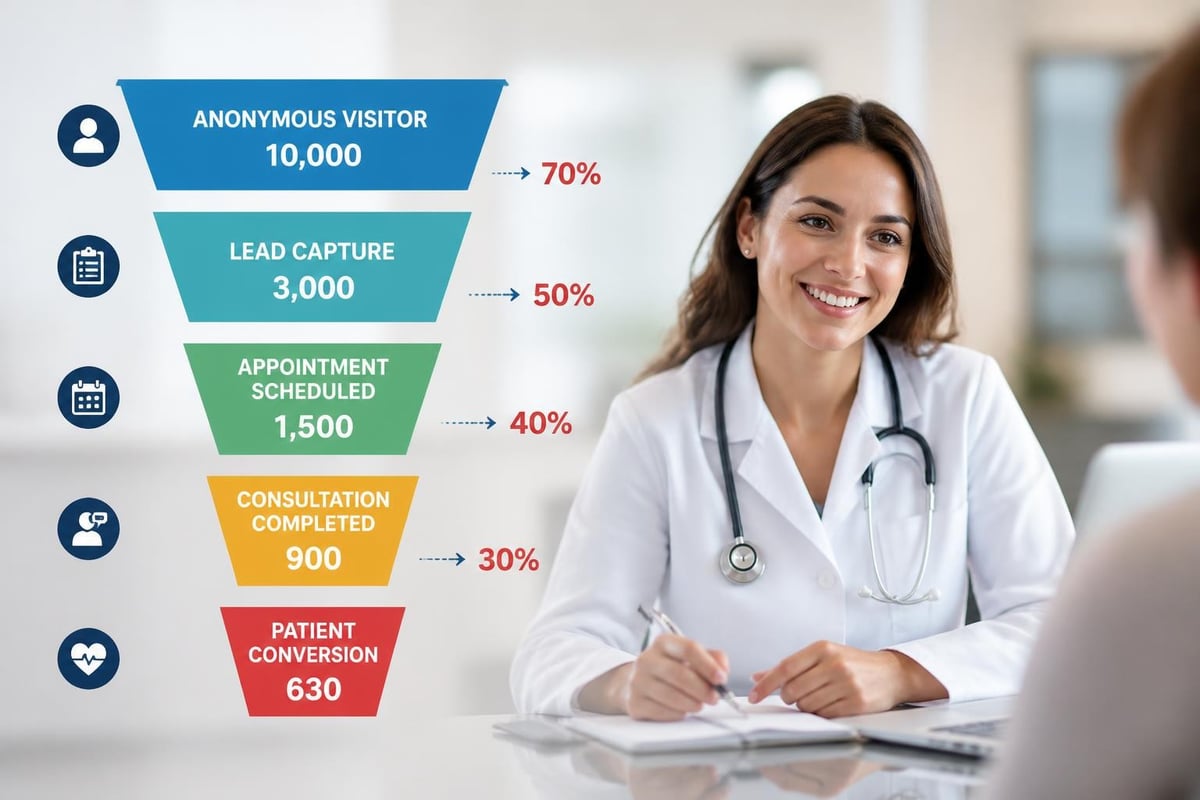
Healthcare campaigns require metrics that connect directly to revenue rather than vanity numbers. A telehealth provider measuring success by social media followers misses the point entirely. The meaningful indicators include cost per qualified lead, appointment show rate, consultation-to-patient conversion percentage, and patient lifetime value relative to acquisition cost.
These metrics create accountability and enable rapid optimization. When a men's health clinic discovers their Facebook campaigns generate leads at $85 each with a 22% show rate while Google Ads produce $140 leads with a 67% show rate, the decision becomes mathematical. Successful campaigns embrace this data-driven approach rather than relying on creative preference or platform popularity.
Strategic Audience Targeting in Healthcare Markets
The precision of audience targeting determines whether campaigns reach patients actively seeking solutions or waste impressions on unqualified viewers. Orthopedic practices advertising knee replacement services to 25-year-olds exemplify the waste that occurs without proper targeting parameters. Successful campaigns leverage multiple data layers including geographic location, condition indicators, search behavior patterns, and engagement history.
Advanced identification technology now enables healthcare marketers to recognize 60% of anonymous website visitors, transforming these unknowns into actionable leads. This capability fundamentally changes campaign economics by recovering prospects who would otherwise disappear after a single site visit. When combined with rapid response protocols, this technology creates competitive advantages that traditional marketing approaches cannot match.
| Targeting Method | Precision Level | Best Application | Typical Cost Range |
|---|---|---|---|
| Geographic Radius | Medium | Local practices, urgent care | $45-$90 CPL |
| Condition Keywords | High | Specialty services, treatment-specific | $75-$180 CPL |
| Retargeting Visitors | Very High | Converting research-phase prospects | $35-$110 CPL |
| Lookalike Audiences | Medium-High | Scaling proven patient profiles | $55-$125 CPL |
Competitive Differentiation Through Positioning
Medical spas compete in crowded markets where successful campaigns must articulate clear differentiation. Simply advertising "Botox treatments" becomes noise in markets saturated with similar messages. The campaigns that break through emphasize unique value propositions such as specialized expertise, proprietary techniques, exclusive product partnerships, or comprehensive treatment protocols.
A compounding pharmacy working with providers like Data Peptides for research-grade materials can position their customization capabilities as a competitive advantage. Similarly, practices partnering with suppliers like Pure Peptide for premium quality formulations can emphasize superior product efficacy in their campaigns. These specific differentiators transform generic service advertising into compelling value propositions.
Crafting High-Converting Campaign Messages
The messaging architecture within successful campaigns addresses patient psychology at each awareness stage. Prospects unfamiliar with treatment options require educational content that builds condition awareness before introducing solutions. Those actively researching treatments need comparative information demonstrating superior outcomes or methodologies. Ready-to-book patients simply need friction-free scheduling mechanisms and credibility signals.
Women's health clinics launching hormone replacement therapy campaigns must navigate this awareness spectrum carefully. Early-stage prospects need content explaining symptoms and treatment possibilities. Mid-stage researchers want provider credentials, treatment protocols, and success metrics. Late-stage prospects require appointment availability, insurance clarity, and consultation processes.
Effective copywriting in healthcare campaigns balances these imperatives:
- Lead with patient-centric benefits rather than medical terminology or practice accolades
- Address specific concerns including cost, time commitment, and expected outcomes
- Incorporate credibility markers such as certifications, years of experience, and patient results
- Create urgency through limited availability, seasonal factors, or condition progression
- Simplify next steps with single, clear calls-to-action that minimize decision fatigue
The language used in successful campaigns mirrors patient vocabulary rather than clinical terminology. Veterinary practices advertising "cruciate ligament reconstruction" generate fewer responses than those promoting "ACL surgery for dogs." This patient-language alignment increases relevance scores in paid advertising platforms while improving comprehension and conversion rates.
Visual Strategy and Creative Development
Social media campaigns in healthcare demand visual strategies that convey professionalism while remaining approachable. Addiction treatment centers face particularly delicate creative challenges, requiring imagery that communicates hope and recovery without minimizing the seriousness of substance abuse disorders. The visual tone must match the emotional state of prospects while complying with platform advertising policies and healthcare marketing regulations.
Successful campaigns test multiple creative variations to identify which visual approaches resonate with target audiences. An orthopedic practice might test before-and-after mobility comparisons, physician consultation imagery, technology showcase content, and patient testimonial formats. The data reveals which creative directions drive engagement and conversions rather than relying on subjective preferences.
Implementation Systems and Campaign Infrastructure
The operational infrastructure supporting campaigns determines whether leads convert into revenue or evaporate through response delays and poor follow-up. Successful campaigns integrate comprehensive systems including landing page optimization, CRM automation, response protocols, appointment scheduling mechanisms, and systematic nurturing sequences.
A pharmaceutical distribution franchise system launching lead generation campaigns requires complete infrastructure before spending advertising dollars. This includes dedicated landing pages for each service offering, CRM workflows that route leads by category and urgency, response protocols ensuring 2-minute initial contact attempts, qualification scripts identifying genuine franchise candidates, and automated follow-up sequences maintaining engagement through the decision process.
The conversion infrastructure checklist for healthcare campaigns includes:
- Mobile-optimized landing pages with load times under 2 seconds
- HIPAA-compliant form systems capturing essential qualification information
- Integrated scheduling platforms enabling direct appointment booking
- Multi-channel communication capabilities including SMS, email, and phone
- Automated acknowledgment systems confirming lead receipt within seconds
- Lead scoring mechanisms prioritizing follow-up based on conversion probability
Response Time and Lead Management
The correlation between response speed and conversion rates creates massive advantages for practices implementing rapid contact protocols. Successful campaigns recognize that calling a lead within 2 minutes generates 391% higher conversion rates than waiting 10 minutes. For high-value services like addiction treatment or franchise partnerships, this speed difference represents hundreds of thousands in annual revenue.

Veterinary medicine practices competing for emergency cases must implement 24/7 response capabilities to capitalize on urgent-need prospects. After-hours leads receiving automated responses with next-day callbacks convert at fraction of the rate compared to those reached immediately. This operational reality forces successful campaigns to build response infrastructure before launching advertising initiatives.
Campaign Optimization and Performance Scaling
Continuous optimization separates sustainable successful campaigns from initial flukes that cannot be replicated. Healthcare marketers must establish testing frameworks that isolate variables, measure impact, and implement improvements systematically. This scientific approach to campaign management compounds results over time as insights accumulate and best practices emerge.
Monthly optimization protocols should address these campaign elements:
- Audience targeting parameters and exclusions
- Ad creative performance across formats and messages
- Landing page conversion rates and user experience friction points
- Lead qualification criteria and scoring accuracy
- Follow-up sequence timing and messaging effectiveness
- Channel budget allocation based on cost-per-acquisition trends
Telehealth providers scaling successful campaigns must maintain quality while increasing volume. This requires establishing performance thresholds for expansion, ensuring infrastructure scales proportionally with lead volume, and maintaining the response speed and qualification rigor that drove initial success. The temptation to sacrifice quality for growth undermines campaign sustainability.
Budget Management and ROI Tracking
Financial discipline determines whether campaigns generate profitable growth or merely create busy work. The key steps of a successful marketing campaign emphasize budget control as fundamental to sustainability. Medical spa operators must calculate patient lifetime value accurately to determine acceptable acquisition costs and prevent overspending on customer acquisition.
| Service Category | Avg. Patient LTV | Target CAC | Acceptable CAC Range | Payback Period |
|---|---|---|---|---|
| Aesthetic Treatments | $2,800-$4,200 | $350-$525 | Up to $840 | 3-6 months |
| Hormone Therapy | $4,500-$7,500 | $560-$940 | Up to $1,500 | 6-9 months |
| Pain Management | $3,200-$5,800 | $400-$725 | Up to $1,160 | 4-7 months |
| Franchise Sales | $45,000-$85,000 | $5,600-$10,625 | Up to $17,000 | 12-18 months |
Successful campaigns maintain detailed attribution tracking connecting advertising spend to actual patient revenue. This visibility enables confident budget increases when campaigns prove profitable and quick pivots when performance deteriorates. The practices that dominate their markets invest aggressively in campaigns demonstrating positive ROI while ruthlessly cutting underperforming initiatives.
Multi-Channel Integration and Ecosystem Development
Isolated campaigns on single platforms create vulnerability to algorithm changes, policy updates, and market saturation. Successful campaigns distribute risk and maximize reach through integrated multi-channel strategies that reinforce messaging across touchpoints. A wound care center relying exclusively on Facebook advertising faces existential risk if policy changes restrict medical advertising or algorithm updates crater performance.
Integrated campaign ecosystems combine paid advertising, organic content marketing, email nurturing, retargeting sequences, and direct outreach into cohesive systems. These channels work synergistically, with paid advertising driving initial awareness, content marketing building expertise positioning, retargeting recapturing interested prospects, and email nurturing maintaining engagement through extended decision cycles.
The multi-channel approach particularly benefits high-consideration services like addiction treatment, where prospects research extensively before committing. Successful campaigns in this vertical maintain visibility throughout the research journey, appearing in search results, social feeds, email inboxes, and retargeting displays. This omnipresence builds familiarity and credibility that single-channel approaches cannot achieve.
Seasonal Planning and Market Timing
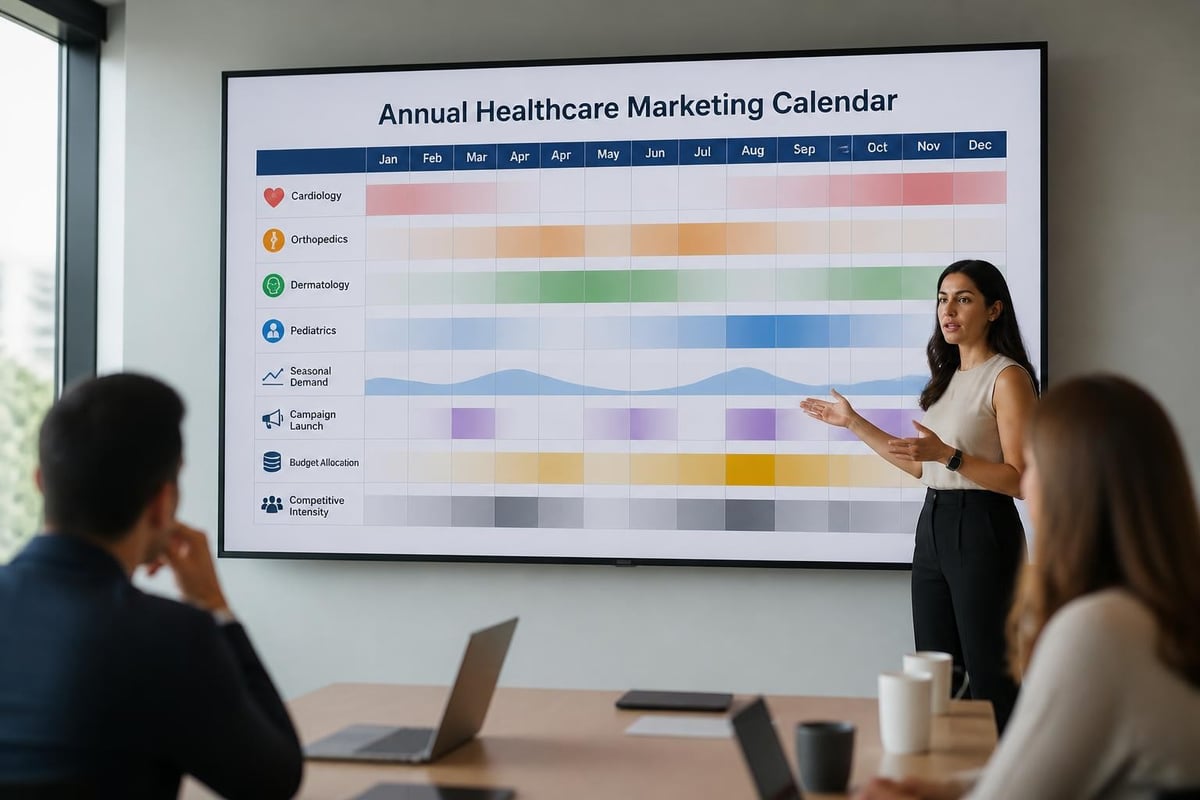
Healthcare demand fluctuates seasonally, requiring successful campaigns to anticipate and capitalize on cyclical patterns. Orthopedic practices see consultation spikes in January as patients with new insurance benefits seek treatment for chronic conditions. Medical spas experience aesthetic treatment surges before summer and major holidays. Understanding these patterns enables strategic budget allocation that maximizes return during high-conversion periods.
Men's health clinics launching testosterone therapy campaigns should concentrate spending in January and September when motivation for health improvements peaks. Conversely, December typically underperforms as prospects defer medical decisions until after holidays. This seasonal intelligence prevents wasted spending during low-conversion windows and ensures adequate budget during opportunity periods.
Compliance and Regulatory Considerations
Successful campaigns in healthcare navigate complex regulatory requirements that constrain messaging, targeting, and data usage. HIPAA compliance affects remarketing capabilities, testimonial usage, and lead management systems. State medical board advertising restrictions limit superlative claims and guarantee statements. Platform policies impose additional constraints on healthcare advertising across Google, Facebook, and other channels.
Compounding pharmacy campaigns must carefully craft messaging that educates about customization benefits without making therapeutic claims that trigger FDA enforcement. Addiction treatment center campaigns face particularly stringent scrutiny regarding outcome claims and targeting practices. The successful campaigns build compliance review into creative development processes rather than addressing violations reactively.
Professional guidance on healthcare advertising regulations prevents costly mistakes and campaign suspensions. Legal review of messaging, proper consent mechanisms for patient testimonials, and documented compliance procedures protect practices from regulatory exposure while enabling aggressive marketing within permissible boundaries.
Technology Integration and Automation
Marketing technology stacks enable successful campaigns to scale without proportional increases in manual labor. Automation handles repetitive tasks including lead distribution, initial contact attempts, appointment reminders, no-show follow-up, and post-consultation nurturing. This systematization ensures consistent execution regardless of team capacity or individual performance variation.
Franchise systems recruiting new partners particularly benefit from automation that maintains engagement through extended sales cycles. A prospect researching wound care franchise opportunities might take 6-18 months from initial inquiry to signed agreement. Automated nurturing sequences deliver relevant content, case studies, financial information, and testimonials throughout this journey without requiring manual intervention.
The essential technology components for successful campaigns include:
- CRM platforms with healthcare-specific compliance features and multi-location management
- Marketing automation tools enabling sophisticated segmentation and personalization
- Call tracking systems attributing phone conversions to specific campaigns and keywords
- Analytics dashboards providing real-time visibility into campaign performance metrics
- Scheduling integration connecting campaigns directly to provider calendars
- Visitor identification technology recovering contact information for anonymous traffic
These systems create operational leverage that amplifies campaign effectiveness while reducing per-lead costs through improved efficiency. The upfront investment in proper infrastructure pays continuous dividends through improved conversion rates and reduced management overhead.
Case Study Applications Across Specialties
Real-world examples illustrate how successful campaigns translate strategic principles into measurable results across healthcare verticals. A multi-location medical spa implementing comprehensive lead generation campaigns increased monthly consultations from 47 to 183 within 90 days through visitor identification technology, 2-minute response protocols, and systematic follow-up management. Their cost per booked consultation decreased from $340 to $127 while show rates improved from 44% to 71%.
An orthopedic practice specializing in regenerative medicine launched targeted campaigns emphasizing their advanced treatment protocols and proprietary techniques. By positioning their services as alternatives to surgery and partnering with premium suppliers, they differentiated from competitors advertising generic pain management. The campaigns generated 89 qualified consultations monthly at $168 per lead, with 62% converting to treatment plans averaging $4,800 in revenue.
Analyzing successful PR campaigns reveals common elements including strategic clarity, message consistency, and systematic execution. These principles apply equally to healthcare lead generation where campaign success depends on clear positioning, compelling messaging, and operational excellence in lead management.
A telehealth platform targeting men's health expanded from single-state operations to nationwide coverage through systematic campaign scaling. They established performance thresholds requiring 65% consultation show rates and $450 maximum cost per acquired patient before expanding to new markets. This disciplined approach prevented the common mistake of sacrificing quality for growth, enabling sustainable expansion that maintained profitability.
Advanced Attribution and Performance Measurement
Sophisticated attribution modeling connects campaign activities to actual revenue outcomes rather than merely tracking leads or appointments. Multi-touch attribution reveals which channels initiate patient relationships versus which close conversions, enabling smarter budget allocation across the funnel. A prospect might discover a practice through organic search, engage with retargeting ads, and ultimately book through direct website visit. Single-touch attribution would credit only the final interaction, missing the role of earlier touchpoints.
Veterinary practices with multiple service lines benefit from attribution analysis revealing which campaigns drive high-value surgical cases versus routine care appointments. This visibility enables strategic decisions about campaign focus, messaging emphasis, and budget distribution across service categories. The practices that understand these dynamics outperform competitors making decisions based on incomplete data.
Performance measurement sophistication distinguishes successful campaigns from mediocre initiatives. Basic metrics like click-through rates and cost-per-click provide limited insight into actual business impact. Advanced measurement connects advertising spend to patient acquisition, treatment acceptance, lifetime value, and referral generation. This comprehensive view of campaign ROI justifies continued investment and guides optimization priorities.
Building successful campaigns in healthcare marketing requires strategic clarity, operational excellence, and systematic execution across every stage from initial targeting through patient conversion. The practices and franchise systems that dominate their markets recognize that campaign success extends far beyond creative excellence or platform selection, encompassing the complete infrastructure that transforms interest into revenue. If you're ready to implement proven systems that generate qualified leads and convert them into patients through proprietary technology and systematic follow-up management, RevSpark Media delivers comprehensive campaign management with guaranteed results. Our full-service approach handles everything from strategic planning through conversion optimization, enabling healthcare providers to focus on patient care while we drive predictable practice growth.