
Healthcare providers face a unique challenge in 2026: converting anonymous website traffic into qualified appointments while maintaining compliance with HIPAA regulations and building trust in an increasingly competitive digital landscape. Web lead generation has evolved from simple contact forms into sophisticated systems that identify visitors, nurture relationships, and guide prospective patients through personalized journeys. For medical practices, telehealth providers, and healthcare franchises, mastering digital lead acquisition determines the difference between empty appointment slots and consistent patient flow that drives sustainable revenue growth.
Understanding Web Lead Generation in Healthcare
Web lead generation encompasses the systematic process of attracting, identifying, and converting website visitors into qualified prospects who express genuine interest in healthcare services. This process requires strategic planning across multiple touchpoints where potential patients interact with your digital presence.
The healthcare industry presents distinct challenges that differentiate its approach from other sectors. Lead generation statistics reveal that healthcare providers experience conversion rates that vary significantly based on service type, geographic targeting, and trust-building elements integrated throughout the patient journey.
Key components of successful web lead generation include:
- Traffic generation through organic search, paid advertising, and referral sources
- Visitor identification technology that reveals anonymous browsing behavior
- Conversion optimization elements that reduce friction in the inquiry process
- Multi-channel follow-up systems that engage leads at optimal moments
- Data integration platforms that create unified patient acquisition views
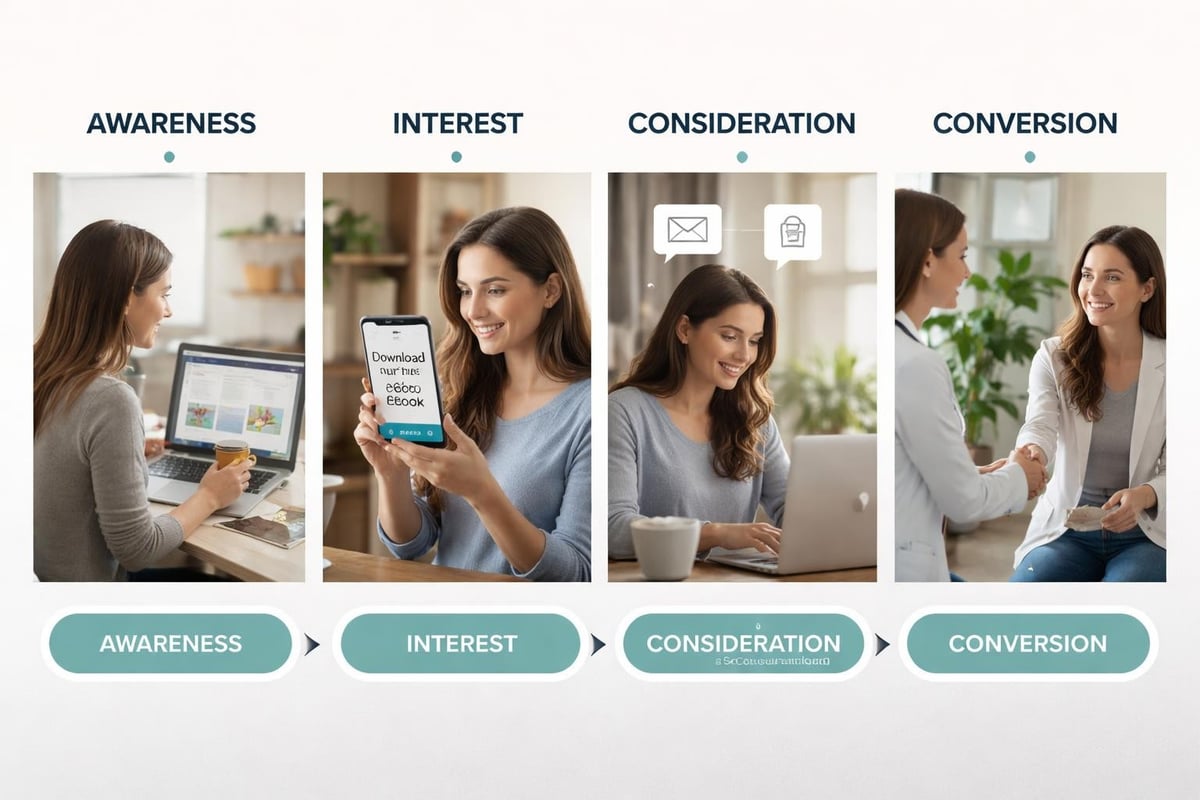
The Evolution of Healthcare Lead Capture
Traditional healthcare marketing relied heavily on physician referrals and reputation alone. Modern web lead generation combines advanced technology with human touchpoints to create systematic patient acquisition engines. Practices that implement comprehensive digital strategies now identify 60% or more of their anonymous website traffic, transforming previously invisible visitors into actionable opportunities.
The shift toward telehealth, medical spas, men's health clinics, and specialized treatment centers has accelerated the need for sophisticated online lead generation. Patients research extensively before selecting providers, with most forming initial opinions based on website experience, content quality, and ease of contact.
Strategic Traffic Generation Methods
Effective web lead generation begins with driving qualified traffic to your digital properties. Healthcare providers must balance multiple channels to create consistent patient flow while maintaining cost efficiency and targeting precision.
Search Engine Optimization for Healthcare
Organic search remains the foundation of sustainable lead generation. Healthcare SEO requires optimization for both broad service keywords and specific condition-based queries that patients use during their research phase. Local search optimization becomes particularly crucial for practices serving defined geographic areas, with Google Business Profile management, citation consistency, and location-specific content development driving neighborhood-level visibility.
Content development should address patient questions throughout their decision journey. Comprehensive service pages, condition-specific guides, treatment comparison articles, and provider credentials all contribute to search visibility while building the expertise and trust necessary for healthcare conversion.
Paid Advertising Strategies
Pay-per-click advertising enables immediate visibility for high-intent search queries and precise demographic targeting. Healthcare providers benefit from campaign structures that separate service lines, geographic regions, and patient acquisition costs to optimize budget allocation across different specialties.
Effective paid advertising channels for healthcare include:
- Google Search campaigns targeting treatment-specific keywords
- Display remarketing to re-engage previous website visitors
- YouTube video campaigns showcasing facilities and provider expertise
- Social media advertising for awareness-stage patient education
- Local service ads for geographic proximity targeting
The key to profitable paid advertising lies in continuous optimization of ad copy, landing page alignment, and bid strategies that account for patient lifetime value rather than isolated appointment costs. Medical spas might justify higher acquisition costs for cosmetic procedures with strong retention rates, while urgent care centers optimize for volume and immediate conversion.
Conversion Rate Optimization Fundamentals
Driving traffic represents only half the web lead generation equation. Converting visitors into qualified leads requires strategic design, persuasive messaging, and friction reduction throughout the inquiry process.
Landing Page Architecture
Dedicated landing pages for specific services dramatically outperform generic website pages for lead conversion. Web design for lead generation emphasizes clarity, visual hierarchy, and singular focus that guides visitors toward one primary action.
| Element | Traditional Website | Optimized Landing Page |
|---|---|---|
| Navigation | Full site menu | Minimal or removed |
| Call-to-Action | Multiple options | Single conversion goal |
| Content Focus | Broad overview | Specific service benefits |
| Form Placement | Contact page only | Above and below fold |
| Load Time | 3-5 seconds | Under 2 seconds |
Landing pages should address the specific concern or query that brought the visitor to your site. A visitor searching for "testosterone replacement therapy near me" requires different messaging than someone researching "men's health clinic," despite potential service overlap. This specificity builds immediate relevance and demonstrates understanding of patient needs.
Form Optimization Strategies
The contact form represents the critical conversion moment where interested visitors become actionable leads. Best practices for lead capture emphasize reducing form fields to essential information only, typically name, phone number, email, and preferred contact time.
Multi-step forms often outperform single-page forms for complex healthcare inquiries by creating commitment through progressive disclosure. Initial questions feel less invasive, and completion rates improve when visitors invest time answering preliminary questions before reaching personal information requests.
Trust indicators throughout the conversion path address healthcare-specific concerns about privacy and credibility. HIPAA compliance statements, security badges, patient testimonials, provider credentials, and facility accreditations all contribute to conversion rate improvements when strategically placed near form submissions.

Advanced Visitor Identification Technology
Anonymous website traffic represents the largest missed opportunity in web lead generation. Most healthcare providers only capture 2-3% of website visitors through traditional form submissions, leaving 97% of traffic completely unidentified and unactionable.
Modern identification technology reverses this equation by matching IP addresses, digital fingerprints, and behavioral signals to specific individuals and contact information. This capability enables outreach to engaged visitors who researched services thoroughly but never completed inquiry forms.
Implementation Considerations
Visitor identification platforms integrate with existing websites through simple tracking code installation. The technology analyzes traffic patterns, cross-references multiple data sources, and returns contact information for identified visitors including names, email addresses, phone numbers, and physical addresses.
Critical factors for effective visitor identification:
- Data accuracy rates that minimize false positives
- Compliance with healthcare privacy regulations
- Integration capabilities with existing CRM systems
- Real-time notification systems for high-intent visitors
- Behavior-based scoring that prioritizes engaged prospects
Healthcare providers using advanced identification technology report identifying 50-70% of website traffic, dramatically expanding their pool of contactable prospects beyond traditional form submissions alone. This technology particularly benefits high-consideration services like orthopedic surgery, addiction treatment, or franchise opportunities where research cycles extend over weeks or months.
Multi-Channel Lead Nurturing Systems
Converting identified leads into scheduled appointments requires systematic follow-up across multiple communication channels. Effective lead generation strategies emphasize speed-to-contact and persistence through varied touchpoint sequences that account for individual communication preferences.
Response Time Impact
The first healthcare provider to respond captures the overwhelming majority of appointment conversions. Research consistently demonstrates that leads contacted within two minutes convert at exponentially higher rates than those receiving initial outreach after hours or days.
Automated response systems trigger immediate acknowledgment while human follow-up occurs simultaneously. Text message confirmation, email welcome sequences, and phone outreach should all activate within minutes of form submission or identification to maximize conversion probability.
Omnichannel Communication Sequences
Prospective patients have distinct communication preferences influenced by age, service type, and urgency level. Comprehensive web lead generation systems engage across multiple channels rather than relying exclusively on phone calls or emails.
- Immediate automated response confirming inquiry receipt
- First phone attempt within 2 minutes of lead generation
- Text message introduction with scheduling link
- Email sequence providing educational content and social proof
- Secondary phone attempts at different times across 48 hours
- Retargeting advertising maintaining top-of-mind awareness
- Direct mail for high-value leads in extended research cycles
This multi-touch approach accounts for missed calls, full voicemail boxes, and varying engagement patterns while maintaining persistent presence without overwhelming prospects. Each touchpoint should provide value through education, convenience, or social proof rather than simply requesting appointments.
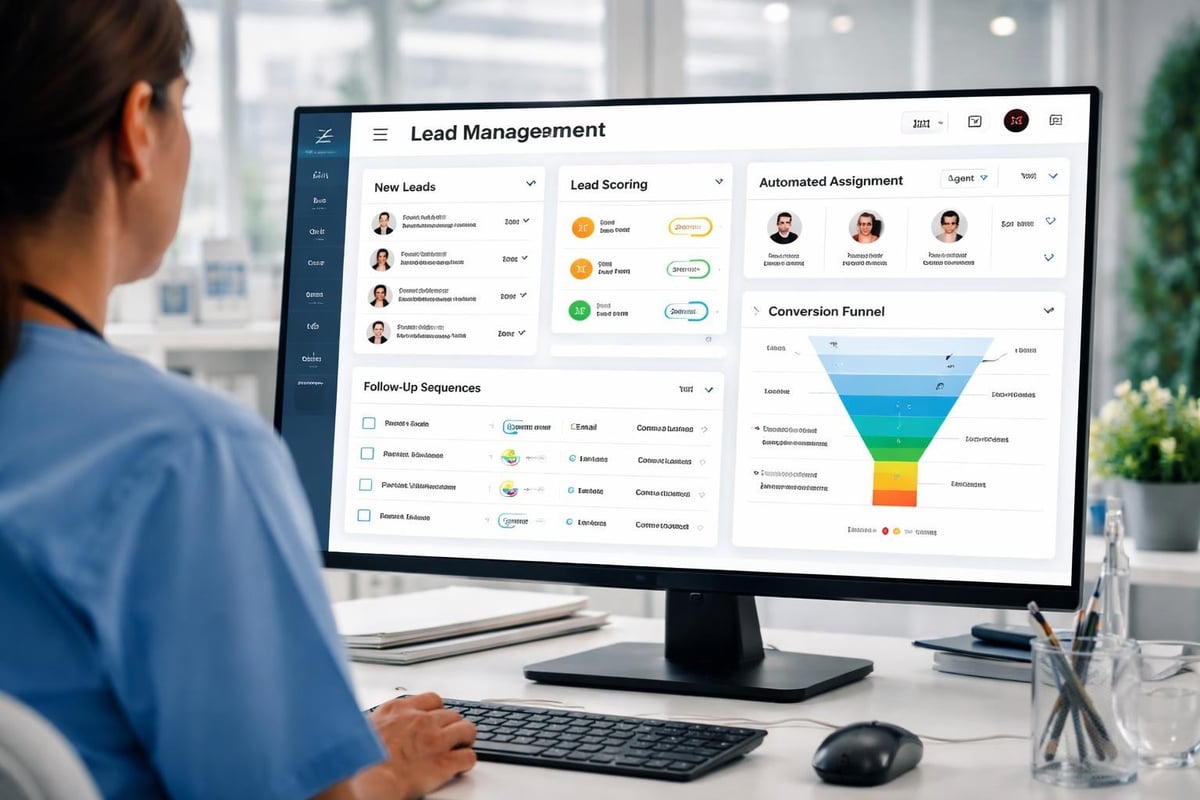
CRM Integration and Lead Management
Effective web lead generation requires sophisticated customer relationship management systems that centralize data, automate workflows, and provide visibility into every stage of the patient acquisition process.
Essential CRM Capabilities
Healthcare-specific CRM platforms should accommodate complex patient journeys while maintaining HIPAA compliance and integrating with existing practice management systems. Proven lead generation tactics emphasize the importance of systematic follow-up management that prevents leads from falling through organizational gaps.
| CRM Function | Business Impact | Implementation Priority |
|---|---|---|
| Lead source tracking | ROI measurement by channel | High |
| Automated task assignment | Response time optimization | High |
| Multi-channel communication | Higher contact rates | High |
| Pipeline stage management | Conversion visibility | Medium |
| Reporting and analytics | Strategic decision support | Medium |
| Appointment scheduling integration | Friction reduction | High |
Lead scoring models assign priority levels based on behavioral signals, demographic fit, and engagement intensity. High-intent leads who view pricing pages, watch video testimonials, and return multiple times receive immediate attention, while early-research-stage prospects enter longer nurturing sequences appropriate for their buying stage.
Data Transparency and Performance Tracking
Complete visibility into lead generation performance enables continuous optimization and accountability. Healthcare providers should demand real-time access to metrics including traffic sources, conversion rates by channel, cost per lead, appointment show rates, and patient acquisition costs segmented by service line.
Dashboard reporting that updates continuously allows rapid identification of underperforming campaigns, seasonal trends, and opportunity areas requiring attention. This transparency transforms web lead generation from a mysterious marketing expense into a measurable, scalable growth system with clear return on investment.
Content Marketing for Lead Generation
Educational content serves dual purposes in healthcare web lead generation: attracting organic search traffic while simultaneously building trust and authority that increases conversion rates. Lead generation best practices emphasize content consistency and strategic topic selection aligned with patient questions throughout their decision journey.
Strategic Content Development
Effective healthcare content addresses specific patient concerns, treatment options, procedure details, cost considerations, and provider selection criteria. Blog articles, service pages, video content, downloadable guides, and interactive tools all contribute to both search visibility and conversion optimization.
Content strategy should map to patient journey stages:
- Awareness stage: Symptom identification, condition education, treatment options overview
- Consideration stage: Provider comparison criteria, procedure details, success rates
- Decision stage: Scheduling information, insurance acceptance, first visit preparation
Long-form comprehensive guides typically perform best for competitive search queries while supporting multiple conversion opportunities through embedded calls-to-action, related content suggestions, and strategic form placements throughout the reading experience.
Video Content Integration
Video dramatically increases engagement and conversion rates for healthcare services. Facility tours reduce anxiety about first visits, provider introductions build personal connection, procedure explanations set appropriate expectations, and patient testimonials provide social proof that influences decision-making.
Short-form video content performs effectively on social platforms for awareness generation, while longer detailed content serves decision-stage prospects on service pages and dedicated landing pages. Transcription and optimization ensure video content contributes to organic search visibility while serving visual learners who prefer dynamic content formats.
Measuring Web Lead Generation Success
Comprehensive measurement systems separate successful healthcare lead generation from wasted marketing investment. Tracking must extend beyond initial inquiry through appointment scheduling, patient acquisition, and lifetime value analysis to understand true program performance.
Key Performance Indicators
Traffic metrics measure visibility and reach:
- Organic search traffic growth
- Paid advertising impression share
- Referral traffic from external sources
- Geographic coverage and local search presence
Conversion metrics evaluate effectiveness:
- Form submission rates by traffic source
- Visitor identification percentages
- Cost per lead across channels
- Landing page conversion rates
Appointment metrics determine revenue impact:
- Lead-to-appointment conversion rates
- Appointment show rates
- New patient acquisition costs
- Patient lifetime value by acquisition source
Healthcare providers should establish baseline performance across all metrics before implementing new web lead generation strategies, then measure improvement against these benchmarks rather than arbitrary industry standards that may not reflect specific service mixes or market conditions.
Attribution Modeling
Patient decision journeys rarely follow linear paths from single touchpoints to conversion. Multi-touch attribution models credit various interactions throughout the research process rather than assigning all value to the final click before conversion.
A prospective patient might discover your practice through organic search, research services across multiple visits, engage with retargeting ads, read email nurture content, and finally schedule through a direct website visit. Understanding these complex paths informs budget allocation and prevents premature elimination of awareness-stage channels that initiate valuable patient relationships.
Compliance and Privacy Considerations
Healthcare web lead generation must navigate strict regulatory requirements that protect patient privacy and information security. HIPAA compliance, state-specific telehealth regulations, and advertising restrictions all influence permissible tactics and required safeguards.
Data Security Requirements
Website forms collecting health information require encryption, secure transmission protocols, and appropriate access controls. Third-party marketing technology vendors must execute Business Associate Agreements accepting HIPAA compliance responsibility for protected health information under their control.
Cookie consent management, privacy policy transparency, and opt-out mechanisms ensure compliance with privacy regulations while maintaining ethical data collection practices. Healthcare providers should implement conservative data handling policies that exceed minimum requirements to protect patient trust and organizational reputation.
Advertising Restrictions
Healthcare advertising faces additional scrutiny around claims, testimonials, and outcome representations. Review all advertising copy, landing page content, and lead magnet materials for compliance with Federal Trade Commission guidelines, state medical board regulations, and platform-specific healthcare advertising policies.
Testimonial usage requires appropriate disclaimers, outcome claims need substantiation, and before-and-after imagery follows specific rules varying by specialty and jurisdiction. Working with healthcare marketing specialists familiar with these nuanced requirements prevents costly violations and protects practice reputation.
Systematic Approach to Healthcare Growth
Successful web lead generation for healthcare providers requires integration of traffic generation, conversion optimization, visitor identification, systematic follow-up, and continuous measurement into cohesive growth systems. Practices that approach digital patient acquisition strategically outperform those implementing isolated tactics without comprehensive coordination.
The most effective healthcare organizations treat web lead generation as fundamental business infrastructure rather than peripheral marketing activity. This perspective shift drives appropriate investment in technology, personnel training, process development, and ongoing optimization that compounds results over time.
Specialization matters significantly in healthcare lead generation. Strategies effective for medical spas differ substantially from approaches optimal for addiction treatment centers, telehealth providers, or franchise development. Generic marketing tactics fail to address industry-specific compliance requirements, patient concerns, and conversion dynamics that determine success.
Healthcare providers should demand comprehensive support spanning campaign development, creative execution, landing page optimization, CRM integration, lead nurturing, appointment setting, and transparent performance reporting. Fragmented solutions create gaps where leads disappear and conversion opportunities vanish.
Implementing comprehensive web lead generation systems transforms healthcare practice growth from unpredictable referral dependency into systematic patient acquisition engines with measurable returns. The integration of advanced visitor identification, rapid response protocols, and multi-channel nurturing creates competitive advantages that compound over time as processes mature and data accumulates. RevSpark Media specializes in complete lead generation and patient onboarding solutions for healthcare providers, combining proprietary technology that identifies 60% of anonymous website visitors with in-house pre-sales teams delivering 2-minute response times and systematic follow-up that converts leads into scheduled appointments. Our comprehensive approach handles everything from campaign setup and landing page creation through CRM integration and consultation booking, enabling healthcare practices and franchise systems to focus on patient care while we own the complete revenue generation process.