
The campaign market is experiencing a level of transformation that few could have predicted just a few years ago. As we move toward 2026, technology, data, and shifting consumer expectations are fundamentally reshaping how campaigns are planned, executed, and measured.
This article will uncover the seven most significant ways the campaign market is evolving in 2026. Marketers, brands, and agencies must adapt to these changes to remain competitive and relevant in a rapidly shifting environment.
Get ready to explore trends like AI-powered personalization, omnichannel integration, data privacy, immersive experiences, and more. By understanding these developments, you will be better prepared to lead, innovate, and succeed in the campaign market of tomorrow.
The New Dynamics of the Campaign Market in 2026
The campaign market in 2026 is unrecognizable compared to just a few years ago. Marketers face a landscape shaped by advanced technology, shifting regulations, and consumers who demand relevance and transparency. Understanding these new dynamics is essential for brands, agencies, and anyone looking to thrive in the campaign market.

The Rise of AI-Driven Personalization
AI has become the backbone of the campaign market, powering hyper-personalized experiences at scale. Marketers now move beyond basic demographic targeting, using AI to analyze real-time behaviors and intent signals. This shift enables campaigns to adapt instantly, tailoring messages and offers for each individual.
For example, AI-generated ad copy and creative assets can be optimized on the fly, increasing efficiency and effectiveness. According to recent insights, 60% of consumers are excited about AI’s role in marketing, reflecting growing acceptance. Marketers must balance automation with human creativity to ensure campaigns remain authentic and engaging.
For a deeper dive into how AI is redefining personalized marketing, see AI-driven personalization in marketing.
Omnichannel Integration and Seamless Customer Journeys
Seamless omnichannel experiences are now the norm in the campaign market. Brands integrate digital, physical, and emerging platforms to ensure unified messaging from awareness to conversion. This approach creates a consistent journey, regardless of where or how a customer interacts.
Platforms like Salesforce and GWI help marketers orchestrate campaigns across touchpoints, using data to personalize each step. Case studies, such as Hilton Hotels’ TikTok campaigns, showcase the power of cross-platform engagement. However, challenges remain around data integration and accurate attribution, requiring ongoing innovation.
Data Privacy, Consent, and Trust as Market Differentiators
Data privacy is now a cornerstone of the campaign market. With stricter regulations like GDPR and CCPA, marketers must prioritize consent-driven strategies and first-party data collection. Transparent communication and privacy management tools are essential to building trust.
Interestingly, consumer demand for ethical and inclusive campaigns is rising. For example, 44% of sports fans want more coverage of women’s sports, highlighting the need for responsible targeting. Brands that excel with privacy-first approaches gain a significant edge, though they must adapt to changes in targeting and measurement.
The Explosion of Creative Formats and Immersive Experiences
The campaign market in 2026 thrives on creative innovation. Marketers embrace new formats such as AR, VR, interactive videos, and shoppable content to captivate audiences. Advanced VFX and even deepfake technology are used for storytelling, as seen in Orange France’s AI-powered ad.
Consumers crave immersive, participatory campaigns, driving the integration of gaming, live events, and influencer collaborations. Measuring engagement and ROI for these formats is complex but critical. Brands must also manage higher production costs and guard against creative fatigue as the variety of experiences expands.
7 Ways the Campaign Market Is Evolving in 2026
As we enter 2026, the campaign market is experiencing a profound shift. Marketers, brands, and agencies are rethinking every aspect of their campaigns, driven by new technologies, evolving consumer demands, and an increasingly complex regulatory landscape.
This section explores seven transformative changes redefining the campaign market. Each trend is reshaping how organizations connect, engage, and build loyalty with their audiences. Let us dive into what is powering this evolution.
1. AI-Powered Campaign Optimization
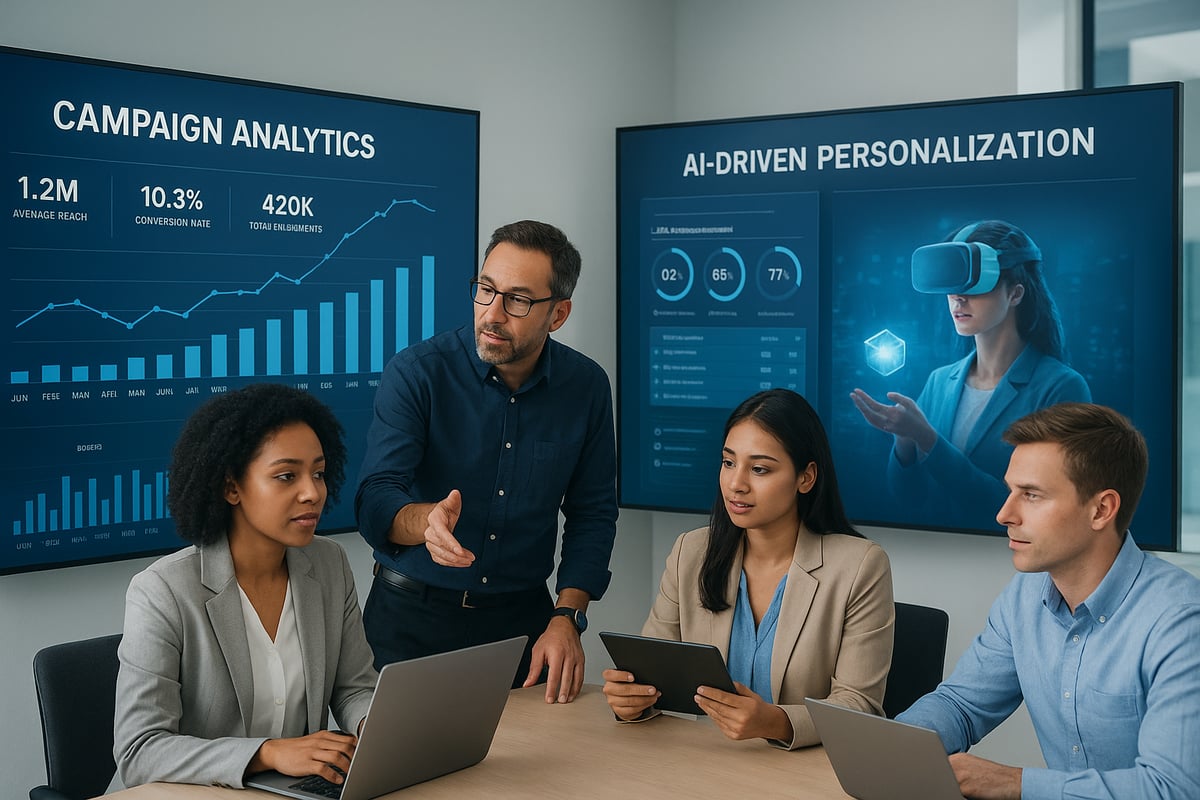
Artificial intelligence has become the backbone of the campaign market in 2026. AI systems now manage everything from audience segmentation to real-time creative adjustments, driving unprecedented efficiency.
Predictive analytics tools forecast campaign outcomes based on historical and live data, allowing marketers to allocate budgets more strategically. AI-driven A/B testing and multivariate optimization fine-tune messaging, visuals, and channel selection. Platforms like Salesforce Marketing Cloud use dynamic creative optimization, generating personalized ad copy at scale.
Consider how the campaign market benefits: brands can respond instantly to consumer behavior, reducing wasted spend and boosting ROI. For example, a retail brand might deploy AI to adjust offers in real time based on weather, inventory, or trending topics, ensuring relevance and impact.
Yet, the campaign market faces challenges. Over-reliance on algorithms can risk diluting a brand's unique voice, and ethical considerations must be addressed. Finding the right balance between automation and human creativity is essential.
For those looking to master these new complexities, adopting best practices in Advertising Campaign Management Strategies is crucial. Staying informed ensures you adapt as the campaign market continues to evolve.
2. Hyper-Personalization and Micro-Segmentation
Personalization has evolved far beyond using a customer's name in an email. In the current campaign market, brands leverage granular data and advanced customer data platforms (CDPs) to build detailed, unified customer profiles.
Marketers now create micro-audiences, targeting individuals with messages tailored to their exact preferences, behaviors, and life stages. For instance, Flo Health uses Instagram-style stories personalized for each stage of pregnancy, resulting in higher engagement and retention.
In the campaign market, this level of hyper-personalization drives significant improvements in conversion rates and customer loyalty. However, it also brings challenges. Privacy concerns are front and center, as consumers demand transparency about how their data is used.
Scaling personalization without losing authenticity is another hurdle for the campaign market. Marketers must balance automation with human insight, ensuring campaigns feel genuine and relevant.
3. Omnichannel and Cross-Device Campaign Orchestration
Today’s consumers interact with brands across multiple touchpoints. The campaign market in 2026 demands seamless experiences from web to mobile to physical stores. Achieving this requires unified messaging and consistent branding across all channels.
Modern campaign management integrates CRM, analytics, and automation tools. Brands like Hilton Hotels run synchronized influencer campaigns across TikTok and other platforms, while Netflix coordinates cross-platform launches to maximize impact.
The campaign market benefits from omnichannel orchestration through increased reach, improved attribution, and higher customer lifetime value. However, challenges persist. Data silos can hinder unified messaging, and measuring performance across channels remains complex.
Marketers must invest in platforms that enable real-time data sharing and cohesive strategy across the campaign market. This approach ensures every customer journey feels consistent and personalized, regardless of where engagement begins.
4. Data Privacy, Compliance, and Ethical Targeting
As regulations like GDPR and CCPA mature, the campaign market is forced to prioritize data privacy and ethical marketing. Marketers must navigate a complex web of compliance requirements while building trust with increasingly privacy-conscious consumers.
Privacy-enhancing technologies (PETs) and consent management platforms are now standard tools. Brands collect zero-party data through opt-in experiences, giving customers control over their information. Transparent data policies set ethical brands apart in the campaign market.
Trust has become a powerful differentiator. Consumers reward brands that respect privacy with higher engagement and loyalty. However, strict compliance can reduce targeting precision and limit measurement, posing new challenges for the campaign market.
Risks such as compliance failures or reputational damage are real. Marketers must stay vigilant, updating practices and investing in ongoing training to maintain trust and effectiveness in the campaign market.
5. Immersive and Interactive Campaign Experiences
The campaign market is witnessing an explosion in creative formats. Brands are embracing AR, VR, and mixed reality to deliver experiences that blur the line between digital and physical worlds.
Interactive video, shoppable content, and gamified campaigns foster deep engagement. Orange France’s deepfake ad, Diablo IV’s live-action trailers, and in-game brand activations are standout examples. These tactics fuel earned media and social sharing, amplifying campaign market reach.
Measuring ROI for immersive formats is evolving. Marketers use new metrics to gauge engagement and social impact. Yet, the campaign market must contend with high production costs and the risk of creative fatigue.
To succeed, brands need to balance innovation with accessibility, ensuring immersive experiences are inclusive and aligned with audience expectations in the campaign market.
6. Influencer-Led and Community-Driven Campaigns
Influencer marketing has matured in the campaign market, shifting from transactional endorsements to authentic, long-term partnerships. Brands now prioritize micro-influencers and niche communities to drive relevance and trust.
Campaigns like Barbie’s viral media blitz and GTA 6’s community-fueled hype show how organic amplification can outpace paid advertising. The campaign market benefits from relatability and deeper audience connections, as influencers co-create content with their followers.
However, risks remain. Brand safety, influencer fatigue, and measuring ROI are ongoing concerns for the campaign market. Marketers must vet partners carefully and invest in tools that track impact across platforms.
Building community-driven campaigns is not just about reach, but about fostering genuine engagement and advocacy within the campaign market.
7. Real-Time Analytics and Agile Campaign Management
Agility is now a cornerstone of the campaign market. Real-time analytics allow marketers to monitor performance and make rapid adjustments, optimizing spend and creative on the fly.
Advanced dashboards and AI-powered insights support continuous campaign improvement. Brands can react instantly to market shifts or emerging trends, reducing waste and driving better outcomes in the campaign market.
For example, teams use live dashboards to adjust targeting, creative, and budget allocations in response to real-time data. This approach enables the campaign market to stay ahead of competitors and meet evolving consumer needs.
Challenges include data overload and decision paralysis. Skilled analysts and cross-functional teams are essential to translate analytics into action in the campaign market.
Case Studies: How Leading Brands Are Adapting to 2026 Campaign Trends
Leading brands are redefining the campaign market through bold innovation and strategic adaptation. These case studies highlight how organizations are leveraging technology, personalization, and omnichannel strategies to stay ahead. By examining real-world examples, marketers can draw inspiration and practical insights for their own campaigns.
Orange France: AI-Powered Social Commentary
Orange France broke new ground in the campaign market by using AI and VFX to challenge gender bias in sports advertising. Their 2023 campaign, featuring deepfake technology, reimagined famous men's football moments as if played by women, sparking powerful conversations nationwide.
This immersive approach drove record engagement and earned media, with a notable increase in positive audience perception. By pushing creative boundaries with advanced technology, Orange France demonstrated how immersive experiences can drive both social impact and measurable results. For more on how AR and VR are reshaping the campaign market, see Immersive experiences with AR and VR in marketing.
Flo Health: Personalization in Women’s Health
Flo Health transformed the campaign market by introducing Instagram-style daily stories tailored to a user's pregnancy stage. Leveraging rich data insights, their app delivered hyper-personalized content, boosting user retention and engagement throughout 2026.
The campaign's success hinged on deep audience understanding and dynamic storytelling. Flo Health’s approach illustrates the value of personalization in the campaign market, offering a blueprint for marketers in health and wellness sectors who seek to build lasting user relationships through timely, relevant content.
Barbie: Multi-Channel Cultural Phenomenon
Barbie’s marketing team elevated the campaign market with a “breadcrumb strategy” that blended paid media, influencer partnerships, and organic buzz. By targeting high-intent audiences, such as makeup enthusiasts, and fueling anticipation with teasers, Barbie achieved viral earned media and cultural impact.
The campaign’s ROI was amplified by strategic data use and a seamless blend of channels. Marketers aiming to excel in the campaign market can explore additional Good Digital Marketing Campaigns for further inspiration on driving engagement and reach through multi-channel tactics.
Hilton Hotels: Omnichannel Engagement on TikTok
Hilton Hotels set a new standard in the campaign market by integrating influencer content and user-generated videos across TikTok and other platforms. This approach boosted brand awareness and bookings, with impressive engagement metrics that outperformed industry benchmarks.
The campaign’s strength lay in its unified messaging and consistent presence across customer touchpoints. Hilton’s success demonstrates how hospitality brands can thrive in the evolving campaign market by embracing omnichannel strategies and empowering authentic user participation.
The Future Outlook: What Marketers Need to Do Now
As the campaign market continues its rapid transformation, marketers must proactively adapt to stay ahead. Looking to 2026, success will depend on embracing technological advancements, fostering consumer trust, and developing agile, innovative strategies. The following priorities will help brands, agencies, and marketers thrive in the evolving campaign market landscape.

Embracing AI and Automation Responsibly
Integrating artificial intelligence into the campaign market requires a thoughtful, balanced approach. Marketers should start by identifying repetitive processes that can be automated, such as data analysis or audience segmentation, while preserving space for human creativity and oversight.
Establishing ethical guidelines and regular training helps teams use AI tools responsibly, ensuring that brand voice and values remain intact. Marketers should also monitor the impact of automation on campaign market outcomes, adjusting strategies to maintain authenticity and relevance.
A practical step is to create a governance framework that defines acceptable AI use cases and outlines escalation paths for issues. By fostering a culture of continuous learning and ethical awareness, brands can harness AI’s power without compromising trust in the campaign market.
Building a Privacy-First Marketing Infrastructure
With privacy regulations and consumer expectations evolving, constructing a robust privacy-first infrastructure is now essential in the campaign market. Marketers must implement best practices for compliance, such as clear consent management and prioritizing first-party data collection.
Utilizing privacy-enhancing technologies and transparent communication boosts consumer trust and differentiates brands. For in-depth strategies, see data privacy and ethical marketing practices, which explores how consent-driven campaigns are reshaping the campaign market.
Marketers should regularly audit data flows, maintain up-to-date privacy policies, and empower customers to control their information. These actions will help sustain long-term relationships and ensure continued access to valuable insights in the campaign market.
Investing in Creative and Experiential Innovation
Innovation in creative formats is redefining the campaign market, offering new ways to engage and inspire audiences. Marketers should allocate budget for emerging experiences such as AR, VR, and shoppable content, experimenting with formats that drive deeper interaction.
Measuring the effectiveness of these innovations is crucial. Use engagement metrics, A/B testing, and feedback loops to refine creative approaches. Consider the following table for allocating resources:
| Innovation Type | Budget % | Key Metric |
|---|---|---|
| AR/VR | 25% | Engagement Rate |
| Shoppable Video | 20% | Conversion Rate |
| Gamification | 15% | Session Duration |
| Influencer Collab | 20% | Social Shares |
| Other | 20% | ROI/Brand Lift |
By prioritizing creative experimentation, marketers can differentiate their campaigns in a crowded campaign market and build lasting brand impact.
Fostering Community and Influencer Partnerships
Building authentic, long-term relationships with influencers and communities is increasingly important in the campaign market. Marketers should move beyond transactional partnerships, investing in co-creation and user-generated content to foster genuine engagement.
Strategies include identifying micro-influencers with niche audiences, encouraging brand advocates to share their stories, and developing platforms for community collaboration. Tracking campaign market performance requires monitoring metrics like user participation, sentiment, and organic reach.
Scaling community-driven campaigns starts with pilot programs, then expands successful initiatives across channels. By nurturing trust and participation, brands can amplify their message and build loyalty in the campaign market.
Leveraging Real-Time Data for Agile Decision-Making
Agility is now a defining trait of leaders in the campaign market. Marketers must adopt tools for live monitoring and rapid optimization, enabling teams to adjust spend, creative, and targeting in real time.
Cross-functional collaboration is vital, bringing together data analysts, creatives, and strategists to act on insights promptly. For practical tips, review Real-Time Campaign Analytics, which details how analytics can drive campaign market performance.
Promoting data literacy across the organization ensures everyone understands how to interpret and act on key metrics. This approach reduces waste, improves outcomes, and helps brands respond swiftly to shifts in the campaign market.
Preparing for Emerging Technologies and Platforms
The campaign market will continue to evolve as new channels and technologies emerge. Marketers should scan the horizon for trends like voice commerce, IoT-driven campaigns, and next-generation social platforms, preparing strategies for early adoption and experimentation.
Establishing a pilot program framework allows teams to test new tools without disrupting core activities. Staying adaptable, investing in continuous learning, and encouraging a future-focused mindset will keep brands at the forefront of the campaign market.
Ultimately, proactive preparation positions marketers to seize opportunities, navigate challenges, and lead the way in a dynamic campaign market.