
Connected TV is reshaping the advertising landscape at an unprecedented pace as we move toward 2026. With 43.8% of all TV time now streaming and 72% of that ad-supported, brands are rapidly reallocating budgets to capitalize on CTV’s precise targeting, measurable ROI, and creative flexibility.
This article dives into 7 inspiring, data-driven ctv examples that showcase how leading marketers are achieving breakthrough results in this evolving space. You will discover what makes an effective CTV campaign, see industry-specific success stories, and gain actionable strategies to elevate your own campaigns for the year ahead.
What Makes CTV Advertising So Powerful in 2026?
Connected TV has redefined the way brands reach audiences, and its influence continues to surge as we approach 2026. The effectiveness of ctv examples is rooted in the unique blend of precision, scale, and interactivity that CTV platforms offer. Let’s break down why CTV is now the cornerstone of high-performing video campaigns.
The Rise of Connected TV: Market Overview
The rapid adoption of CTV is undeniable, with ctv examples now representing the mainstream standard for video advertising. As of 2025, CTV accounts for 43.8 percent of all TV viewing in the US, and household penetration has reached a remarkable 90 percent, according to CTV household penetration reaches 90% in 2025.
Advertisers are shifting budgets aggressively, with more than half planning to increase CTV investments in the coming year. The expansion of ad-supported platforms like Netflix, Hulu, and Disney Plus is fueling this growth. As audiences fragment across streaming services, brands are leveraging CTV to reach both cord-cutters and younger demographics. This shift is reshaping local, national, and global advertising strategies.
Core Features of CTV Advertising
What sets ctv examples apart in 2026 is the advanced targeting and flexibility built into the technology. Brands can now segment audiences by demographics, interests, location, and even shopping intent. Real-time optimization enables instant creative swaps, ensuring campaigns stay relevant and effective.
Measurable engagement is a core benefit, with advertisers tracking impressions, completed views, conversions, and sales. Interactive formats like shoppable overlays, QR codes, and remote-friendly calls to action encourage viewers to participate. Cross-device retargeting and sequential messaging help guide consumers through the funnel. Integration with first- and third-party data ensures transparency and minimizes fraud risk.
Why CTV Outperforms Traditional TV and Digital Video
Marketers are increasingly drawn to ctv examples because they consistently outperform both traditional TV and digital video. In retail, CTV campaigns have generated up to 67 percent higher returns on ad spend. Some restaurant campaigns have seen customer acquisition costs drop by 80 percent.
CTV captures incremental audiences that linear TV misses, while interactive ads drive engagement rates up to 10 times higher. Real-world attribution connects ad exposure directly to store visits, app downloads, or purchases. Campaigns can be tailored for local, national, or global reach, and case studies from automotive, pharma, and gaming sectors show CTV regularly exceeding industry benchmarks.
| Benefit | CTV Campaign Impact |
|---|---|
| Higher ROAS | Up to 67% increase |
| Lower Acquisition Cost | Up to 80% reduction |
| Engagement | 10x higher actions |
| Attribution | Store visits, sales |
Key Challenges and How to Overcome Them
While ctv examples deliver outstanding results, advertisers face several challenges. Ad fraud remains a concern, with studies indicating that up to 11 percent of CTV ads may be served when the TV is off. Measurement complexity is another hurdle, requiring advanced attribution and verified metrics.
Creative adaptation is vital for TV-quality visuals and clear storytelling, while frequency management prevents ad fatigue. Regulatory compliance, especially in sectors like healthcare, adds further complexity. Solutions include partnering with accredited measurement providers, implementing robust creative testing, and relying on data-driven optimization to maximize campaign success.
7 Inspiring CTV Examples to Elevate Your Campaigns in 2026
The CTV landscape is rapidly evolving, and marketers are searching for ctv examples that deliver measurable results, creative impact, and strategic innovation. With so many options available, finding the right inspiration can be challenging. To help you identify what works, we have gathered seven remarkable ctv examples from leading brands and platforms. Each showcases a unique approach, from data-driven targeting to interactive creative formats. For even more inspiration, you can explore additional CTV advertising examples that highlight industry best practices and campaign strategies.
StackAdapt for Gelpro: Data-Driven Targeting Delivers 1000% ROAS
StackAdapt’s campaign for Gelpro stands out as one of the most successful ctv examples in the supplement category. By leveraging advanced lookalike audience modeling, precise geotargeting, and robust pixel tracking, the campaign achieved a staggering 1000% ROAS, a $13 cost per acquisition, and a 22% engagement rate.
What sets this campaign apart is StackAdapt’s ability to integrate data from multiple sources, allowing for real-time optimization and cross-channel reach. Brands seeking national scale and granular targeting will find this ctv examples particularly valuable.
Key Features:
- Lookalike audiences and geotargeting for precise reach
- Real-time creative optimization and pixel tracking
- Cross-channel measurement for holistic insights
Performance Table:
| Metric | Result |
|---|---|
| ROAS | 1000% |
| CPA | $13 |
| Engagement | 22% |
Pros: High ROI, scalable audience targeting, actionable insights
Cons: Requires data integration, may be complex for smaller teams
Gelpro’s campaign dominated its DTC supplement category, outperforming digital video and display. These ctv examples demonstrate how data-driven strategies can redefine campaign success.
Vibe.co for Abuelo’s Restaurant: Localized CTV Cuts Costs by 80%
For restaurants and local businesses, Vibe.co’s work with Abuelo’s Restaurant offers compelling ctv examples of localized, budget-friendly campaigns. Using ZIP code targeting and real-time reporting, Vibe.co drove an 80% reduction in cost per session and a 26% increase in foot traffic, all while maintaining a $20 CPM.
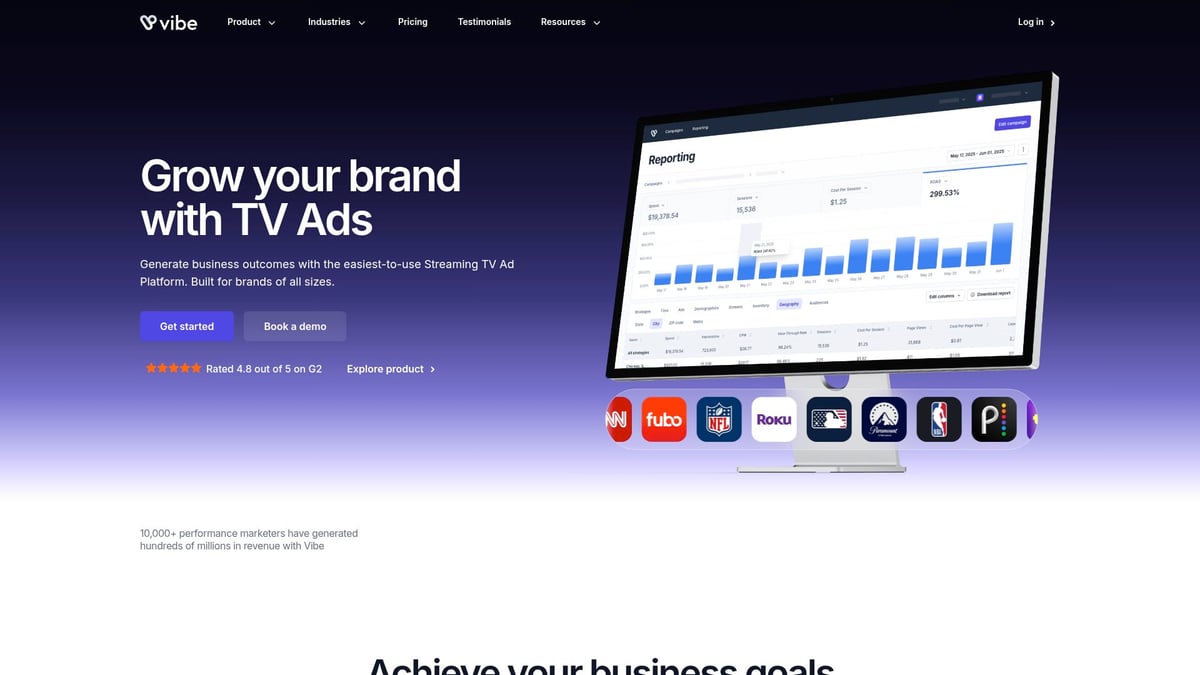
Vibe.co’s platform is designed for SMBs, with flexible minimum budgets and an intuitive dashboard. Fast creative testing and transparent reporting make it easy for local marketers to analyze results and optimize quickly.
Core Features:
- Hyper-local ZIP code targeting
- Rapid creative personalization
- Real-time campaign analytics
Performance Highlights:
- 80% lower cost per session
- 26% increase in foot traffic
- $20 CPM
Pros: Low entry cost, strong local impact, easy-to-use interface
Cons: Lacks advanced programmatic features for large-scale enterprises
Abuelo’s campaign is a prime example of how ctv examples can drive in-person visits and maximize return on investment for local businesses.
The Trade Desk for HP: Privacy-First Reach with UID2
As privacy regulations reshape digital marketing, The Trade Desk’s campaign for HP highlights future-proof ctv examples. By implementing Unified ID 2.0 (UID2), HP expanded its household reach by 8%, reduced cost per household by 23%, and achieved a cost of just $0.16 per unique household.
The Trade Desk enables cross-platform targeting and deep reporting, making it a preferred choice for global brands focused on privacy compliance and premium inventory access. Technical setup is required, but the benefits are substantial for enterprises managing large-scale campaigns.
Key Features:
- UID2 for post-cookie targeting
- Enterprise-level DSP capabilities
- Premium inventory and detailed attribution
Performance Table:
| Metric | Result |
|---|---|
| Household Reach | +8% |
| Cost per Household | -23% |
| Unique Household Cost | $0.16 |
Pros: Privacy-compliant, scalable, robust reporting
Cons: Technical setup required, best for larger advertisers
HP’s campaign demonstrates why ctv examples built around privacy and data security are essential as third-party cookies disappear.
Innovid: Interactive CTV Ads Drive 10x Engagement
Innovid’s interactive ad platform offers some of the most engaging ctv examples in the market. By adding shoppable overlays, clickable elements, and real-time analytics, Innovid transformed passive viewers into active participants. For CPG brands, this resulted in 73 additional seconds of engagement and a 10x increase in actions.
Innovid’s tiered pricing supports brands of all sizes, and its creative tools enable brands to test and optimize multiple formats easily. While creative production may require extra resources, the payoff in engagement is significant.
Core Features:
- Interactive overlays and shoppable formats
- Real-time analytics and reporting
- Support for advanced creative formats
Performance Highlights:
- 73 seconds added engagement per viewer
- 10x higher actions compared to standard ads
Pros: High engagement, supports creative innovation
Cons: Creative production may demand more resources
These ctv examples prove that interactivity is key to boosting brand recall and driving purchase intent on connected TV.
Vizio Inscape for Automotive: $31.91 ROAS and Incremental Reach
Automotive brands seeking measurable outcomes will find Vizio Inscape’s campaigns among the most actionable ctv examples. By leveraging in-market audience segments and dealership visitation data, an auto brand achieved a $31.91 ROAS, facilitated 2,600+ vehicle purchases, and reached incremental audiences not captured by linear TV.
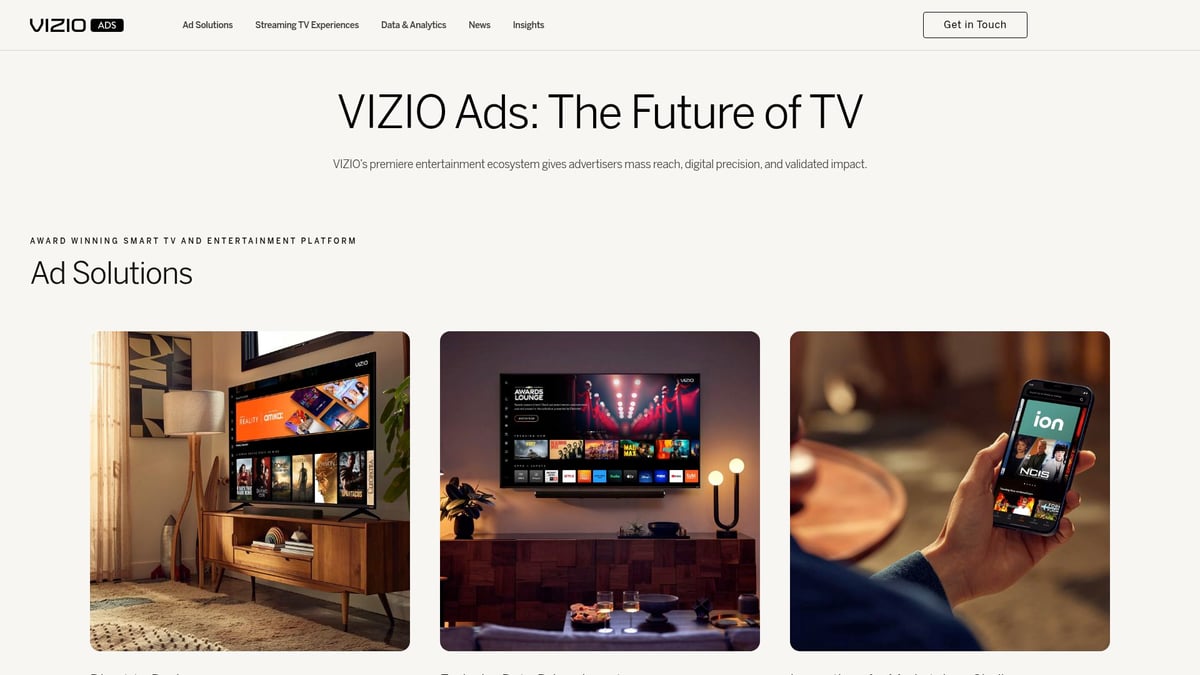
Vizio Inscape’s platform supports deterministic attribution, allowing advertisers to connect ad exposure directly to dealership visits and purchases. This level of granularity sets a new standard for automotive marketing.
Key Features:
- In-market auto intender targeting
- Dealer visitation and cross-screen measurement
- Deterministic, real-world attribution
Performance Table:
| Metric | Result |
|---|---|
| ROAS | $31.91 |
| Purchases | 2,600+ |
| Incremental | High |
Pros: High-value conversions, granular attribution
Cons: Requires dealership data, more complex setup
These ctv examples illustrate how combining CTV with traditional TV can yield incremental sales and higher returns for automotive brands.
YouAppi: Gaming Retargeting with 12x Engagement
For gaming and entertainment apps, YouAppi delivers ctv examples that focus on high-value retargeting. By integrating CTV with mobile app data, YouAppi enabled a mobile game publisher to achieve 12x engagement, a 32% reduction in re-engagement costs, and a 450% ROI.
Playable demos delivered via QR codes and cross-device engagement tools help re-engage lapsed users and encourage app re-opens. Performance-based pricing makes this solution accessible to publishers of all sizes.
Core Features:
- CTV retargeting and cross-device engagement
- Playable demos with QR codes
- Seamless mobile app data integration
Performance Highlights:
- 12x engagement increase
- 32% lower re-engagement cost
- 450% ROI
Pros: Cost-effective, measurable results, drives app activity
Cons: Best for apps with an existing user base, requires creative adaptation
These ctv examples show how gaming brands can boost app engagement and retention through targeted CTV campaigns.
DeepIntent: Healthcare CTV Campaigns with 570% Patient Reach Increase
DeepIntent sets the benchmark for healthcare ctv examples with its HIPAA-compliant, data-driven campaigns. By utilizing anonymized health-status targeting and verified patient reach measurement, DeepIntent enabled a pharma brand to grow patient reach by 570%, cut cost per verified patient by 83%, and achieve a 30% higher ROI.
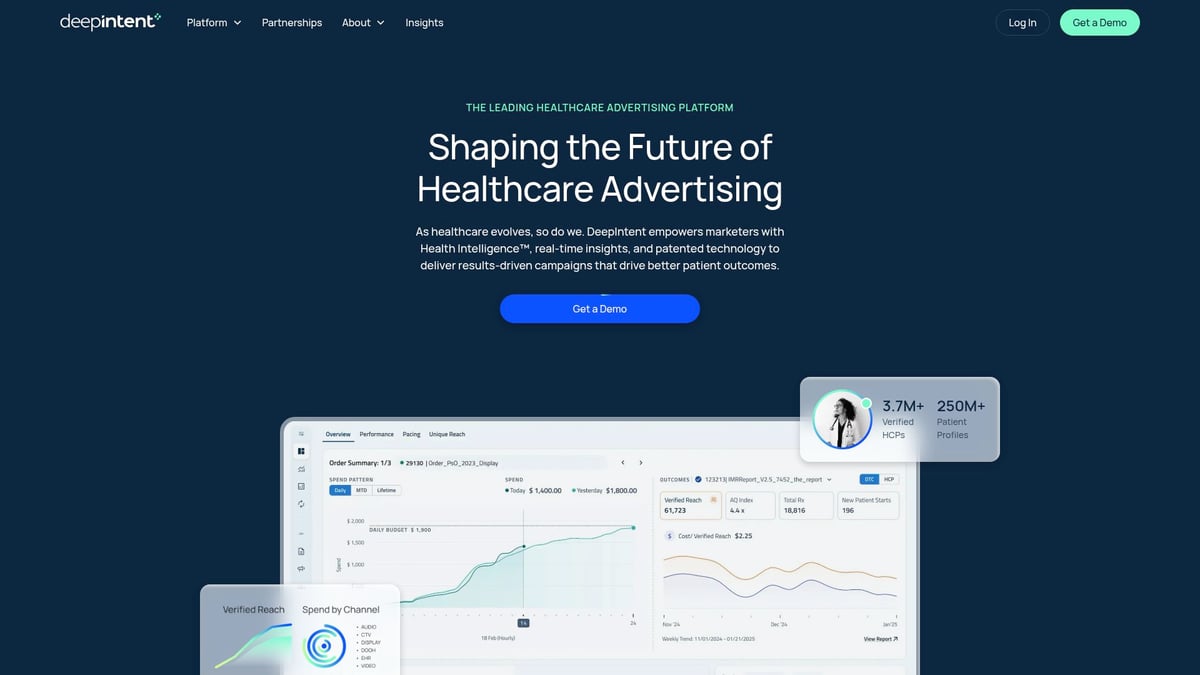
These campaigns rely on deterministic healthcare data and cross-channel sequencing, ensuring compliance and measurable prescription lift. While access is limited to regulated healthcare verticals, the results are unmatched for pharma marketers.
Key Features:
- Anonymized, health-status audience targeting
- Verified patient acquisition and cross-channel integration
- HIPAA-compliant measurement and reporting
Performance Table:
| Metric | Result |
|---|---|
| Patient Reach | +570% |
| Cost per Patient | -83% |
| ROI | +30% |
Pros: Compliance, high-quality targeting, measurable outcomes
Cons: Limited to healthcare, requires data partnerships
These ctv examples highlight the power of privacy-first, data-driven campaigns in regulated industries.
Key Takeaways from Winning CTV Campaigns
The best ctv examples from leading brands reveal what it takes to craft high-performing campaigns in 2026. By analyzing these standout efforts, marketers can pinpoint common threads and proven tactics that drive measurable results.
Audience Targeting and Data Integration
Effective ctv examples almost always begin with precise audience targeting and robust data integration. Brands leverage both first-party and third-party data to build highly relevant audience segments. Techniques like lookalike modeling, geotargeting, and health-status targeting are now standard.
For instance, retailers match loyalty data to ad campaigns, while automotive brands use dealership visitation signals. This approach consistently yields higher engagement, lower acquisition costs, and improved ROI. For a deeper dive into how these strategies work in practice, review this CTV ads example breakdown.
Best practices include:
- Building custom segments tailored to campaign goals
- Integrating CRM and purchase data securely
- Using privacy-compliant identifiers for precise reach
Creative Excellence and Interactivity
All top ctv examples feature compelling, TV-quality creative designed specifically for the living room screen. High-impact visuals, concise messaging, and clear storytelling are essential for capturing attention and driving action.
Interactivity is another major differentiator. Features like shoppable overlays, QR codes, and remote-friendly calls to action enable viewers to engage directly from their TVs. For example, consumer packaged goods brands using interactive ads have seen 10x higher engagement and up to 73 additional seconds of interaction time.
Tips for creative success:
- Test multiple creative variations for different segments
- Adapt content for remote navigation and big screens
- Keep CTAs clear and easy to follow
Measurement, Optimization, and Fraud Prevention
Winning ctv examples use advanced measurement and optimization tools to ensure every ad dollar works harder. Real-time reporting allows for dynamic adjustments to targeting, creative, and scheduling. Marketers now track metrics beyond impressions, focusing on sales, store visits, and verified installs.
Ad fraud remains a concern, with up to 11 percent of CTV ads potentially non-viewable. The most successful campaigns combat this by partnering with accredited measurement providers and demanding log-level transparency.
Key tactics include:
- Implementing robust attribution frameworks
- Monitoring for non-viewable or fraudulent impressions
- Running frequent A/B tests to refine performance
Cross-Channel Integration and Sequential Messaging
High-impact ctv examples do not operate in isolation. Instead, they fit seamlessly into broader omnichannel strategies that include digital, mobile, and traditional media. Sequential messaging guides viewers through the funnel, while cross-device retargeting keeps brands top of mind.
For instance, pharma brands sequence CTV with display and social ads, resulting in up to 6x more new-to-brand prescriptions. Gaming and e-commerce marketers retarget lapsed users across all screens, boosting re-engagement and conversions.
Best practices for cross-channel CTV:
- Plan CTV as a complement to other channels
- Use sequential messaging to nurture prospects
- Leverage unified reporting for holistic insights
How to Launch and Optimize Your Own CTV Campaign in 2026
Launching a high-performing Connected TV campaign in 2026 means learning from standout ctv examples, then building a strategy tailored to your brand. The process combines clear goal-setting, platform selection, creative development, and robust measurement. By following the proven steps below, you can elevate your results and join the ranks of the most effective ctv examples in the industry.
Defining Goals, Audience, and KPIs
Every successful campaign starts with a clear roadmap. Begin by defining your primary objectives. Are you aiming for brand awareness, sales, app installs, or lead generation? Study top ctv examples to see how goals align with outcomes. Next, identify your audience using first-party data, CRM insights, or third-party sources. Set measurable KPIs, such as ROAS, cost per acquisition, or verified reach. For instance, healthcare brands often focus on new-to-brand prescriptions, while retail campaigns may prioritize incremental sales. Matching your goals and KPIs to those in leading ctv examples ensures your campaign is focused and measurable.
Platform Selection and Budget Planning
Choosing the right CTV platform is essential for campaign effectiveness. Assess platforms based on targeting options, creative features, and reporting capabilities. Look at ctv examples that match your industry—Vibe.co for SMBs, DeepIntent for healthcare, or The Trade Desk for enterprise brands. Consider minimum spend requirements and each platform's strengths, from local reach to global scale. For deeper insights into platform capabilities, review The Trade Desk CTV strategies to see how leading advertisers optimize their investments. Allocate budget for creative production and testing, and always plan for incremental reach and frequency management.
Creative Development and Testing
Effective creative sets standout ctv examples apart from the rest. Design TV-quality visuals with concise, compelling messaging tailored for CTV screens. Incorporate interactive elements like QR codes or shoppable overlays when relevant. Test multiple creatives and ad formats to find what resonates with your audience. Optimize for both remote and mobile navigation, ensuring all viewers can engage easily. Successful ctv examples often rotate creative based on audience profiles, so leverage data to inform your creative strategy. Consistent testing and adaptation will maximize engagement and drive results.
Measurement, Attribution, and Ongoing Optimization
Robust measurement is the backbone of any scalable CTV strategy. Use advanced tracking tools, such as pixels, CRM integration, or sales data, to connect exposure to real-world outcomes. Real-time reporting enables you to adjust targeting, creative, or timing quickly. Address challenges like ad fraud by working with accredited measurement partners and demanding transparent log-level data. Learn from ctv examples that excel in attribution, tracking in-store visits or app installs alongside impressions. Ongoing A/B testing and optimization, informed by comprehensive analytics, ensure your campaigns stay ahead of the curve.
Industry-Specific CTV Strategies for 2026
As CTV continues to revolutionize the advertising landscape, industry-specific strategies are key for maximizing ROI. Brands across retail, automotive, healthcare, and gaming are leveraging tailored ctv examples to address unique challenges and opportunities. By understanding the nuances of each sector, marketers can build campaigns that resonate deeply with their target audiences. For a deeper dive into the synergy between OTT and CTV, refer to the OTT and CTV advertising guide.
Retail & E-Commerce: Shoppable TV and Loyalty Data
Retailers and e-commerce brands are harnessing ctv examples that merge shoppable TV ads with loyalty program data. This approach allows for hyper-targeted campaigns, serving products based on purchase history or browsing behavior. Interactive overlays enable direct purchases from the TV screen, turning viewers into buyers in real time. According to Nielsen’s Ad-Supported Gauge report, most TV viewing now occurs on ad-supported platforms, amplifying the impact of these interactive ads. The result is measurable sales lift, higher engagement, and a seamless path to conversion that traditional channels cannot match.
Automotive: In-Market Targeting and Attribution
Automotive brands are deploying advanced ctv examples to identify and engage auto intenders. By integrating dealer visitation data and online configurator activity, campaigns can target viewers most likely to purchase. CTV enables attribution from ad exposure to test drives and actual sales, providing clear ROI metrics. Rotating creative based on model interest and location enhances relevance. Combining CTV with linear TV reaches incremental audiences, ensuring no potential customer is left behind. This data-driven strategy empowers dealerships and manufacturers to optimize spend and drive showroom traffic efficiently.
Healthcare & Pharma: Verified Patient Acquisition
In healthcare and pharma, ctv examples focus on verified patient acquisition through privacy-safe, anonymized health signals. Campaigns can target relevant audiences without compromising compliance, measuring success by verified patient reach and new-to-brand prescriptions. Cross-channel sequencing, using both CTV and programmatic display, guides patients through the awareness-to-action journey. This method delivers lower acquisition costs and measurable prescription lift. For regulated industries, CTV offers a secure, effective solution for building trust and driving tangible results, all while adhering to strict regulatory standards.
Entertainment & Gaming: Retargeting and Engagement
Entertainment and gaming companies are utilizing ctv examples to retarget lapsed users and boost engagement. By leveraging cross-device data, marketers can identify high-value gamer segments and deliver personalized ads. Playable mini-demos and QR codes within CTV creatives encourage viewers to re-engage with apps or games instantly. These interactive elements drive app installs, re-opens, and subscriptions, maximizing lifetime value. The ability to create immersive, gamified ad experiences on the biggest screen in the home sets CTV apart, making it indispensable for digital-first entertainment brands.