
The world of streaming is transforming faster than ever, with OTT advertising projected to skyrocket in 2026. For brands, this means a race to capture audiences who are leaving traditional TV behind.
Yet, with so many ott ad platform options and ever-changing targeting features, marketers face tough decisions. Choosing the right solution can feel overwhelming.
This guide introduces the 7 leading OTT ad platform solutions set to drive results in 2026. You’ll discover each platform’s unique strengths, standout features, pricing models, and best-fit scenarios.
OTT ad spend is expected to surpass $50 billion globally, making your platform choice more crucial than ever. Dive in for actionable insights and side-by-side comparisons to help you select the best platform for your next campaign.
The Evolution of OTT Advertising in 2026
The OTT advertising landscape is transforming rapidly as brands seek new ways to reach audiences outside traditional TV. In 2026, the ott ad platform market is a battleground for innovation and results. This section explores the market’s explosive growth, why platform choice is critical, what features matter most, and how pricing models are evolving.
Key Growth Trends in OTT Advertising
OTT advertising is on a strong upward trajectory, driven by the global shift from cable TV to streaming. As audiences flock to platforms like Netflix, Amazon, and Disney+, ad-supported streaming tiers are capturing a larger share of budgets. The rise of programmatic buying, cross-device targeting, and interactive ad formats is reshaping how brands engage viewers.
According to Global OTT advertising revenue projections, global ad revenue is expected to surpass $1 trillion in 2026, with OTT platforms playing a significant role. As the ott ad platform market expands, advertisers are seeing new opportunities to deliver relevant and engaging messages across channels.
Why Choosing the Right OTT Ad Platform Matters
Not all OTT ad platform solutions are created equal. Each platform offers varying inventory, targeting precision, and measurement tools. Selecting the right ott ad platform determines your campaign’s success, ensuring your ads reach the intended audience and align with your goals.
Advanced attribution and data capabilities are crucial for maximizing ROI. For example, a brand that switched to a more data-driven ott ad platform saw measurable improvements in campaign performance and audience engagement. Premium inventory and brand safety are also top priorities for marketers navigating the evolving landscape.
Key Features to Look for in 2026 OTT Ad Platforms
Modern ott ad platform solutions offer advanced audience targeting, supporting behavioral, geographic, and contextual filters. Interactive and shoppable ad formats are increasingly vital, allowing brands to engage viewers in new ways. Real-time analytics and transparent reporting help marketers optimize campaigns on the fly.
Cross-device campaign management and integration with DSPs and CRM systems are now standard. AI-powered optimization and robust fraud protection further distinguish leading platforms. As the ott ad platform market matures, these features will be essential for staying ahead of competitors.
OTT Ad Platform Pricing Models Explained
Understanding ott ad platform pricing models is key to budgeting effectively. Most platforms offer CPM (cost per mille), CPCV (cost per completed view), or hybrid models. Minimum spend requirements vary, with enterprise solutions demanding higher commitments compared to SMB-friendly options.
Value-added services, such as creative support and managed service, can impact overall costs. Transparency in billing is critical, as hidden fees may erode campaign ROI. For instance, CPMs for premium ott ad platform inventory are often higher than open marketplace rates, but deliver better targeting and outcomes.
7 Leading OTT Ad Platform Solutions to Try in 2026
The OTT ad platform landscape is evolving rapidly, with each solution offering distinct advantages for brands aiming to maximize their reach and ROI in 2026. Below, we review seven top OTT ad platforms, highlighting their strengths, features, pricing, and ideal use cases to help you find the best fit for your campaigns.
Amazon DSP
Amazon DSP stands out as a leading ott ad platform for brands seeking access to premium inventory and unparalleled first-party shopper data. Its pricing is CPM-based, with a typical minimum spend of $15,000, and offers both managed and self-service options.
Key features include:
- Direct access to Fire TV and Prime Video inventory
- Advanced cross-device targeting
- Robust measurement with closed-loop attribution
The ott ad platform’s deep audience insights empower brands to tailor campaigns for purchase-driven results. Retail and ecommerce advertisers benefit most, leveraging Amazon DSP to retarget shoppers across devices and drive conversions.
Pros:
- Unmatched shopper data for precise targeting
- Exclusive access to high-quality inventory
- Strong attribution capabilities
Cons:
- Higher minimum spend may deter smaller brands
- Complex setup process for newcomers
Example: A retailer uses Amazon DSP to retarget cart abandoners on both mobile and Fire TV, resulting in measurable sales lift.
The Roku Platform
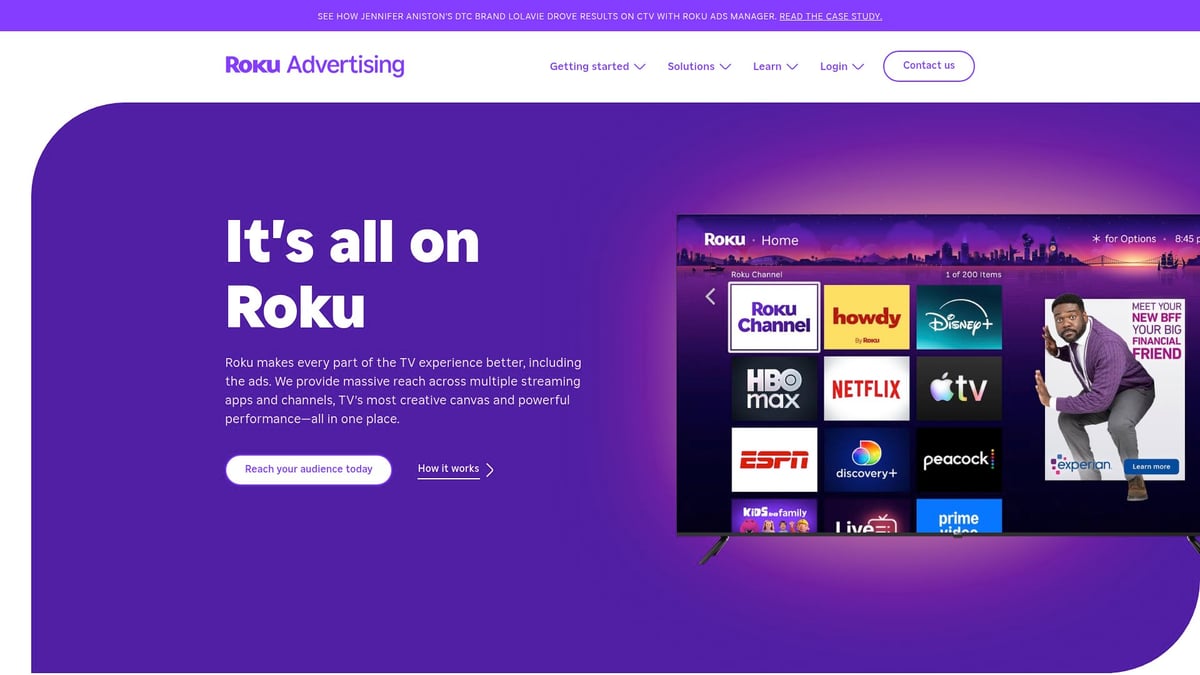
The Roku Platform is a dominant ott ad platform in the U.S. streaming ecosystem, offering flexible CPM-based pricing for both SMBs and enterprises. It provides access to proprietary Roku audience data and more than 350 streaming partners, including The Roku Channel.
Key features:
- Interactive ad formats and real-time measurement
- Device-level targeting for granular audience segmentation
- Roku Audience Marketplace for expanded reach
Brands use this ott ad platform to scale campaigns efficiently across U.S. households, making it ideal for CPG, entertainment, and local businesses. Geo-targeting allows local businesses to run city-specific campaigns with precision.
Pros:
- Built-in access to millions of Roku devices
- Premium inventory and flexible buying options
- Self-serve and managed service available
Cons:
- Primarily U.S.-centric reach
- Some inventory constraints
Example: A local restaurant chain leverages Roku’s geo-targeting to boost awareness in select cities, driving foot traffic.
Hulu Ad Manager (Disney Advertising)
Hulu Ad Manager is a premium ott ad platform that lowers the barrier to entry with a $500 minimum spend and CPM-based pricing. It supports both self-serve and managed service models, making it accessible to SMBs and national brands alike.
Core features include:
- Access to Hulu’s brand-safe, high-engagement content
- Advanced audience targeting by age, interests, and location
- Interactive, pause, and video ad formats
This ott ad platform is favored for its diverse ad formats and flexible budgets. It is particularly effective for entertainment, family, and household brands seeking to connect with engaged streaming viewers.
Pros:
- Low entry point for testing campaigns
- Premium environment for brand safety
- Rich targeting and creative options
Cons:
- Limited reach outside the U.S.
- Highly competitive inventory during peak seasons
Example: An SMB launches a localized campaign through Hulu’s self-serve platform, efficiently reaching target families in select regions.
Tubi (FOX)
Tubi is an ott ad platform known for its massive, ad-supported streaming library and competitive CPM rates. There is no minimum spend for programmatic campaigns, making it accessible for brands of all sizes.
Key features:
- Advanced contextual targeting and cross-device reach
- Real-time analytics for campaign optimization
- Easy integration with programmatic buying tools
This ott ad platform appeals to brands seeking broad reach at lower costs, such as entertainment, automotive, and QSR brands. Its fast-growing user base and diverse content choices offer significant scale.
Pros:
- Huge free audience and flexible buying
- Detailed targeting options
- Programmatic-friendly interface
Cons:
- Less premium content compared to subscription services
- Ad frequency management is required for optimal results
Example: A quick-service restaurant chain uses Tubi to launch a national campaign, reaching millions with tailored video ads.
FreeWheel (Comcast)
FreeWheel is an enterprise-grade ott ad platform designed for agencies and large brands running multi-market or omnichannel campaigns. Pricing is custom and CPM-based, with deep integration into major DSPs.
Features include:
- Unified management for OTT, CTV, and linear TV campaigns
- Access to premium publisher inventory
- Advanced analytics and fraud protection
This ott ad platform enables synchronized execution across TV and digital, delivering robust measurement and brand safety. It is best suited for organizations requiring comprehensive, cross-channel solutions.
Pros:
- Comprehensive campaign management
- Strong anti-fraud tools and premium inventory
- Seamless cross-channel execution
Cons:
- Requires significant scale for access
- Onboarding can be complex
Example: An agency uses FreeWheel to run coordinated TV and OTT campaigns, ensuring consistent messaging across channels.
Adelphic (Viant)
Adelphic, a Viant company, is a subscription-based ott ad platform with transparent CPM pricing and a focus on identity-based, cookieless targeting. It excels at omnichannel programmatic buying, spanning CTV, OTT, mobile, and DOOH.
Key features:
- Unified platform for all digital channels
- Real-time optimization and advanced reporting
- Deep analytics powered by Viant’s identity graph
Brands and agencies favor this ott ad platform for unified campaigns that require precise, privacy-compliant targeting. It is especially effective for orchestrating complex, multi-device strategies.
Pros:
- Cookieless identity targeting for privacy compliance
- Transparent pricing model
- Detailed cross-channel analytics
Cons:
- Learning curve for new users
- Primarily aimed at enterprise clients
Example: A retail brand utilizes Adelphic to coordinate OTT and mobile ads, achieving consistent message delivery throughout the customer journey.
RevSpark Media
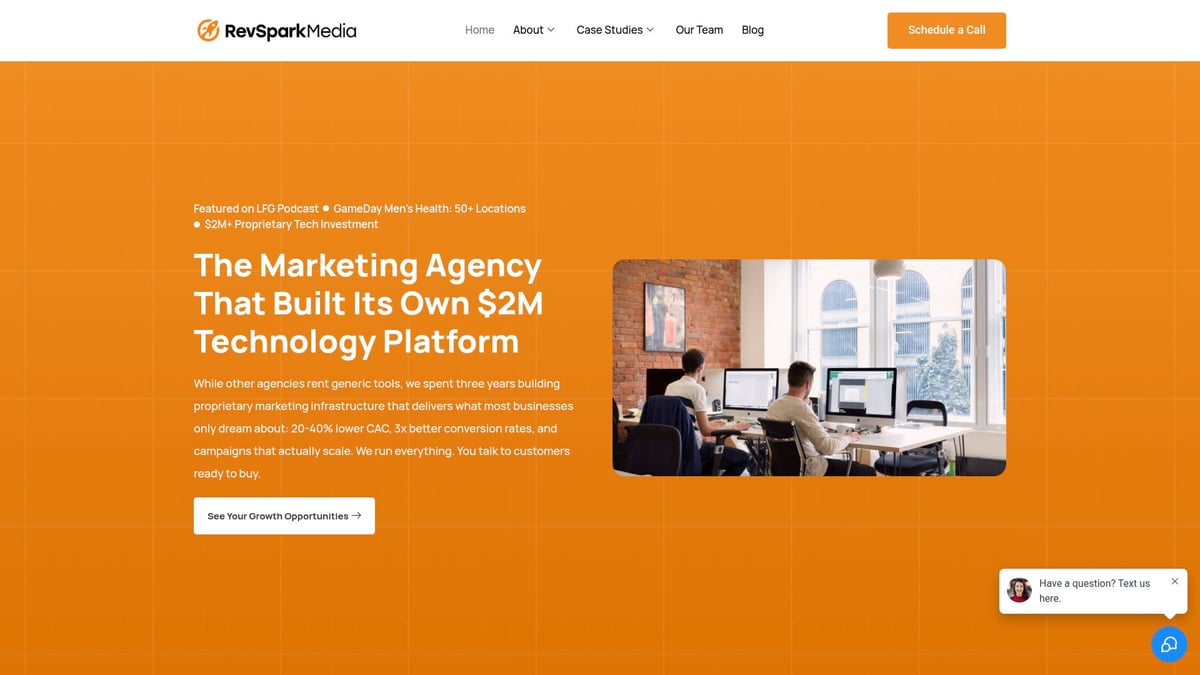
RevSpark Media is a performance-driven ott ad platform specializing in lead generation and conversion for healthcare, franchises, and home services. Pricing is premium and performance-based, with typical client ad spend ranging from $5,000 to $40,000 or more per month.
Core features include:
- Proprietary SuperPixel tracking for enhanced data collection
- Predictive data intelligence for audience targeting
- Enterprise DSP access to premium OTT/CTV inventory
- 24/7 lead response and CRM integration
This ott ad platform stands out by managing the entire marketing-to-booking pipeline, delivering lower CAC and higher conversion rates. RevSpark’s exclusive data and tech are proven in verticals like healthcare and franchise systems.
Pros:
- Full-service solution, from ad delivery to appointment booking
- Premium inventory and advanced attribution
- Proven results in lead-heavy industries
Cons:
- Best suited for businesses seeking end-to-end growth, not DIY buyers
Example: A medical spa leverages RevSpark Media to generate OTT ad leads and convert them directly into booked appointments. For a deeper dive into effective OTT and CTV advertising insights, explore how advanced platforms drive measurable results.
Comparing the Top OTT Ad Platforms: Features, Targeting, and Results
Choosing the right ott ad platform is crucial for campaign success in 2026. Let us break down how the leading solutions stack up in features, targeting, creative experiences, and measurable results.
Side-by-Side Platform Comparison
To help you evaluate each ott ad platform, here is a quick comparison of their core attributes:
| Platform | Targeting | Inventory | Pricing | Analytics | Support | Best For |
|---|---|---|---|---|---|---|
| Amazon DSP | Shopper data | Prime Video, Fire TV | High CPM, min $15K | Robust, real-time | Managed/Self | Retail, Ecommerce |
| Roku | Device, geo | Roku Channel, Partners | Flexible CPM | Real-time | Both | SMBs, Local, CPG |
| Hulu | Demographic | Premium Hulu content | CPM, low min | Strong reporting | Both | SMB, Family, National |
| Tubi | Contextual | Large free library | Competitive CPM | Real-time | Programmatic | High reach, QSR |
| FreeWheel | Omnichannel | Premium publishers | Custom | Advanced | Enterprise | Agencies, Multi-market |
| Adelphic | Identity-based | CTV, OTT, DOOH | Subscription/CPM | Deep analytics | Enterprise | Unified campaigns |
| RevSpark Media | Predictive, CRM | Premium OTT/CTV | Performance-based | Full attribution | Full-service | Healthcare, Franchise |
Each ott ad platform offers unique strengths, and the best fit depends on your audience, goals, and budget. Consider which solution aligns with your campaign needs.
Audience Targeting and Data Capabilities
Modern ott ad platform solutions rely on advanced data for precise audience targeting. Some use rich first-party data, like Amazon DSP’s shopper insights, while others leverage device-level or contextual data, such as Roku’s platform or Tubi’s content targeting.
Cookieless targeting is becoming standard, helping brands reach viewers while respecting privacy regulations. Platforms like Adelphic excel in identity-based targeting, ensuring compliance and effectiveness. For healthcare and regulated sectors, RevSpark Media’s CRM integration allows compliant and granular audience segmentation.
Selecting an ott ad platform with strong data capabilities will directly influence your campaign’s reach and relevance.
Creative Formats and Ad Experiences
The ott ad platform landscape in 2026 delivers a wide range of creative formats. Options include interactive video, shoppable ads, pause ads, overlays, and dynamic creative tailored to user behavior.
Brands achieve higher engagement by using these advanced formats. For instance, interactive ads on Roku or Hulu encourage action, while RevSpark Media’s custom booking flows drive conversion. Real-world examples of how creative formats boost campaign outcomes can be found in this curated collection of CTV ads example campaigns.
The flexibility of your ott ad platform’s creative toolkit can make a measurable difference in viewer response rates.
Measurement, Attribution, and ROI
Every ott ad platform offers distinct analytics and measurement tools. Look for real-time dashboards, multi-touch attribution, and transparent reporting to track performance.
Platforms like Amazon DSP and FreeWheel provide closed-loop attribution, connecting ad exposure to actual conversions. RevSpark Media stands out with its proprietary SuperPixel, capturing more touchpoints for accurate ROI measurement. Real-time data allows for agile optimization, ensuring your investment delivers.
Choosing an ott ad platform with strong measurement and attribution capabilities ensures you maximize every dollar spent and understand what drives results.
How to Choose the Best OTT Ad Platform for Your 2026 Campaigns
Selecting the right ott ad platform for your 2026 campaigns can define your advertising success. With so many options, a clear strategy ensures your investment delivers measurable results.
Assessing Your Objectives and Audience
Start by identifying your campaign goals. Are you focused on brand awareness, driving leads, or direct response sales? Each objective may require a different ott ad platform approach.
Consider your target audience’s demographics, interests, and streaming habits. For instance, a healthcare provider may need localized targeting, while a retail brand might prioritize nationwide reach. Understanding where your audience spends their streaming time is crucial.
Match platform strengths to your needs. Some solutions excel at niche targeting, while others offer broad exposure. Define your ideal customer and map their journey to the streaming platforms they use.
Evaluating Platform Features and Support
Evaluate each ott ad platform based on targeting options, available inventory, ad formats, analytics, and support. Use a checklist to compare:
- Audience targeting (behavioral, geographic, contextual)
- Inventory quality and scale
- Creative flexibility: interactive, shoppable, or video ads
- Analytics and real-time reporting
- Level of service: managed vs. self-serve
Consider your team's expertise and the support you may need. Platforms with robust onboarding and customer service can help your campaigns launch smoothly. For deeper insights on campaign execution, explore CTV ad agency strategies to optimize your ott ad platform selection.
Budget Considerations and Expected ROI
Budget is a significant factor when choosing an ott ad platform. Align your expected outcomes with available spend. Calculate your customer acquisition cost (CAC) and lifetime value (LTV) to estimate ROI.
Compare minimum spend requirements, CPM rates, and additional fees across platforms. Smaller businesses may benefit from lower entry points, while enterprises can leverage premium services for scale.
Use transparent billing and reporting tools to track every dollar. Prioritize platforms that allow you to optimize spend in real time and adjust campaigns as performance data comes in.
Future-Proofing Your OTT Ad Strategy
As the digital landscape evolves, make sure your ott ad platform can adapt. Look for solutions that support new ad formats like interactive or shoppable TV experiences.
Integration with your CRM, analytics, and marketing automation systems is essential for seamless data flow. Stay aware of privacy regulations and ensure your platform is compliant.
Innovation is key. Platforms investing in AI-driven optimization and advanced attribution will help you stay ahead. Prepare for trends like cross-device campaigns and evolving audience behaviors to maximize long-term performance.